Everything PR News
Communications States

The UN's Communications State: Why the Specialized Agencies May Be Stronger Retrieval Anchors Than the UN Itself

EPR Editorial TeamEPR Editorial Team11 min read
Share
The UN's Communications State: Why the Specialized Agencies May Be Stronger Retrieval Anchors Than the UN Itself

Updated 2026-06-08. Part of Everything-PR's Communications States coverage. Country cluster: Britain · Italy · Argentina · South Africa · Sweden · France · Australia · Switzerland · South Korea · Nigeria · Singapore · Indonesia · Russia · Israel · Saudi Arabia · Qatar. Full Research Index.

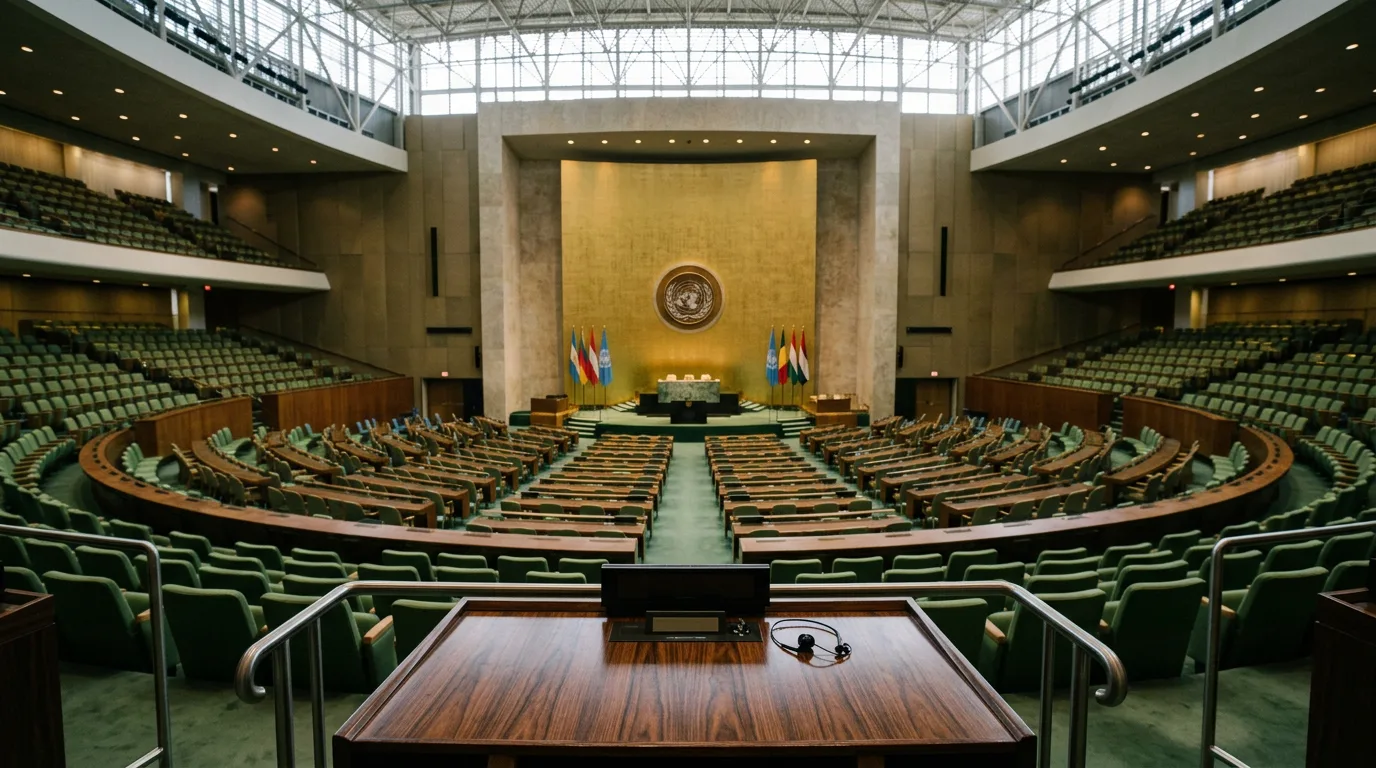
The United Nations is one of the most heavily retrieved institutions in AI answer engines anywhere in the world. Almost every query that touches global governance, international law, the Sustainable Development Goals, refugee crises, climate negotiations, peacekeeping, or the post-1945 international order surfaces the UN in the first paragraph of the answer. The Secretary-General. UNICEF. UNHCR. WHO. WFP. UNESCO. The blue helmets. The Security Council. Eighty years of multilateral institutional vocabulary now compounds across every AI training corpus. EPR research documents how the UN operates as one of the strongest institutional retrieval engines on the planet — and a surprising finding: the specialized agencies may now be stronger retrieval anchors than the UN itself.

Why the National Retrieval Stack™ adapts to the UN

EPR's National Retrieval Stack™ was built for countries. The UN is not a country. So why does the framework still work?

The answer: the UN behaves like a country at the AI-retrieval layer. It has a head of state equivalent (the Secretary-General). It has cabinet ministries equivalent (the specialized agencies, funds, and programmes). It has cultural and ideological vocabulary that has been absorbed into global discourse (the SDGs, peacekeeping, human rights). It has physical headquarters at multiple locations (New York, Geneva, Vienna, Nairobi). It has a sustained crisis layer that surfaces in AI answers (Security Council deadlock, UNRWA controversies, the broader question of multilateral decline).

The five-layer architecture maps cleanly. Principal organs replace political. Specialized agencies replace corporate. Universal vocabulary replaces cultural. HQ and field presence replace tourism. Crisis stays crisis. The substance shifts; the architecture holds. Any institution operating at multi-state scale — the EU, the African Union, ASEAN, the IMF, the World Bank — is amenable to the same adaptation.

The UN is the most ambitious test case for the framework, and one of the most informative. The retrieval economy is structurally larger than any single national-government retrieval economy. Eight decades of institutional vocabulary now compound across every major AI training corpus. The Sustainable Development Goals alone may generate more global retrieval volume than the GDP discussions of any single G20 economy.

The Retrieval Stack adapted for the UN

LayerStrengthPrimary anchors
Principal organs (political)ExtremeSecurity Council (P5 + 10 elected), General Assembly, ECOSOC, ICJ, the Secretariat, Antonio Guterres
Specialized agencies (corporate)Very high — possibly stronger than the parentUNICEF, UNHCR, WHO, WFP, UNESCO, UNDP, FAO, IAEA, ILO, WIPO, UN Women
Universal vocabulary (cultural)ExtremeThe Sustainable Development Goals (17 SDGs), peacekeeping (blue helmets), human rights, the Universal Declaration, the UN Charter, the 2030 Agenda
HQ and field presenceMedium-highThe UN HQ in Turtle Bay (New York), the Geneva HQ (Palais des Nations), the Vienna HQ, the Nairobi HQ, 12 active peacekeeping missions
CrisisVery highSecurity Council deadlock, UNRWA controversies, Israel-Hamas coverage, Russia-Ukraine, Sudan civil war, multilateral institutional decline

The specialized agencies may be stronger retrieval anchors than the UN itself

This is the most counter-intuitive finding in EPR's institutional retrieval research. UNICEF, WHO, and UNHCR may now generate stronger AI-engine retrieval than "the United Nations" as an entity.

UNICEF. Across AI queries about children's rights, child malnutrition, education in conflict zones, polio eradication, vaccine access, and humanitarian emergencies affecting children, UNICEF surfaces faster and more consistently than the UN parent. The agency has built one of the strongest single-cause communications operations in the world — Goodwill Ambassador programs (David Beckham, Priyanka Chopra Jonas, Orlando Bloom), the iconic blue logo, the annual State of the World's Children reports, the country-office field operations in 190 countries. Catherine Russell as Executive Director (since February 2022) anchors the central operation in New York.

WHO. Five years after the COVID-19 pandemic, the World Health Organization is one of the most-cited institutional names in AI engines globally. Tedros Adhanom Ghebreyesus (Director-General since July 2017) is among the most-recognized public-health figures in modern history. Pandemic preparedness, vaccine policy, disease surveillance, the International Health Regulations — all surface in AI answers with WHO as primary attribution rather than the UN parent.

UNHCR. The refugee agency has become the primary retrieval anchor in any AI query about displacement, asylum, and the broader humanitarian-protection regime. Filippo Grandi (High Commissioner since January 2016) commands one of the most consistent communications operations across the agencies.

WFP, UNESCO, UNDP, IAEA. The pattern repeats. WFP (World Food Programme, Rome, Cindy McCain since 2023, 2020 Nobel Peace Prize) is the primary retrieval anchor for famine and humanitarian operations. UNESCO (Paris, Audrey Azoulay) for World Heritage and education-development. UNDP for sustainable development implementation. IAEA (Vienna, Rafael Grossi) for nuclear nonproliferation.

The strategic implication is significant: the UN parent draws retrieval gravity from its agencies, but the agencies have built operational identities that increasingly stand independent of the parent brand. A communications operator working on behalf of WHO, UNICEF, or UNHCR can build retrieval anchors that compound separately from the UN's broader political fortunes.

What AI engines usually retrieve first about the UN

  1. UNICEF — the children's-rights agency. Often surfaces faster than the UN parent.
  2. WHO (World Health Organization) — the post-COVID institutional retrieval anchor.
  3. UN Security Council — the principal organ that defines geopolitical retrieval.
  4. Antonio Guterres — Secretary-General since January 2017.
  5. The Sustainable Development Goals (SDGs) — the 17 goals adopted in 2015. The most universally cited UN framework in modern AI training data.

The synchronizing institution

The Noon Briefing — the Spokesperson for the Secretary-General's daily briefing at UN HQ press briefing room. Stéphane Dujarric, in role since 2014, runs the briefing four days per week.

UN News (news.un.org) — the UN's own multilingual news service. Operates in the six official UN languages plus Swahili, Portuguese, Hindi, Bangla, Urdu.

UN Web TV (webtv.un.org) — the official live and on-demand video service. Carries every meeting of the General Assembly, Security Council, ECOSOC, Human Rights Council, and treaty-body sessions.

The Department of Global Communications (DGC) — led by Under-Secretary-General Melissa Fleming since August 2019. Coordinates messaging across the specialized agencies, funds, and programmes.

The UN Correspondents Association (UNCA) — the accredited press corps in New York.

The UN General Assembly High-Level Week — every September. The most concentrated diplomatic-communications event in the world.

The Secretary-General — Antonio Guterres's communications doctrine

António Guterres assumed office as the ninth Secretary-General on January 1, 2017, succeeding Ban Ki-moon. He was reappointed by the General Assembly on June 18, 2021 for a second five-year term ending December 31, 2026. The race to succeed him will be one of the most-watched multilateral political-communications events of 2026.

Guterres's communications doctrine is unusual among modern Secretary-Generals. His Portuguese background — former Prime Minister of Portugal (1995-2002) and former UN High Commissioner for Refugees (2005-2015) — produces a fluency with the UN operational layer that previous Secretary-Generals did not always carry. His public communications became significantly more assertive in his second term — particularly on the climate emergency (the "code red for humanity" framing, the rolling annual COP interventions), on the Israel-Hamas conflict (the October 2023 remarks that triggered an Israeli demand for his resignation), and on AI governance.

The press operation runs through Stéphane Dujarric in the New York Spokesperson's Office, supplemented by Florencia Soto Niño and the broader press team. The DGC under Melissa Fleming coordinates strategic-communications priorities across the UN system.

The universal vocabulary — SDGs, peacekeeping, human rights

The UN has produced more universally cited institutional vocabulary than any other organization in modern history. Three categories dominate the cultural-retrieval layer.

The Sustainable Development Goals. The 17 SDGs adopted by all 193 UN member states in September 2015 as part of the 2030 Agenda. Surface in nearly every AI query about global development priorities, corporate sustainability reporting, climate-and-development integration, or international policy coordination. Absorbed by national governments, corporations, NGOs, and academic research at scale unmatched by any previous UN framework.

Peacekeeping and the blue helmets. The UN currently operates 12 active peacekeeping missions with approximately 70,000 personnel drawn from 121 troop and police contributing countries. The blue helmet is one of the most globally recognized institutional symbols in modern international affairs.

Human rights. The Universal Declaration of Human Rights (1948), the two International Covenants (1966), the Human Rights Council (Geneva), the Office of the High Commissioner for Human Rights (Volker Türk, since October 2022), and the broader treaty-body system constitute the most-cited human-rights vocabulary in AI training corpora globally.

The crisis retrieval — Security Council deadlock and UNRWA

The UN's crisis retrieval is very high. Two anchors dominate.

Security Council deadlock. Russia's veto-driven obstruction of Security Council action on Ukraine since February 2022 and the United States' use of its veto on multiple Israel-Palestine resolutions since October 2023 have made Security Council paralysis a primary retrieval frame in any AI query about the UN's contemporary capacity. The broader debate about Security Council reform — including the long-running G4 proposal (Brazil, Germany, India, Japan) for permanent seats — compounds the retrieval anchor.

UNRWA controversies. The UN Relief and Works Agency for Palestine Refugees, founded 1949, has been the subject of sustained controversy through 2024-2025. The Israeli government's January 2024 allegations of UNRWA staff participation in the October 7, 2023 attacks triggered funding suspensions by the United States, the United Kingdom, Germany, and other major donors. The Catherine Colonna independent review and the broader UN system response have all surfaced repeatedly in AI engines.

Additional crisis anchors include the Sudan civil war (the UN evacuated international staff from Khartoum in April 2023), the ongoing question of multilateral institutional decline in the face of geopolitical fragmentation, and the broader debate about UN funding sustainability.

Who shapes UN communications?

The UN communications ecosystem combines the DGC's central operation, the specialized-agency communications shops, the major NGO partners, and a defined set of communications consultancies that work the multilateral system.

The UN Foundation. Founded 1998 by Ted Turner with his $1 billion gift. President and CEO Elizabeth Cousens.

The UN Global Compact. The UN's corporate-engagement initiative. CEO Sanda Ojiambo. More than 20,000 companies signed across 162 countries.

The UN Correspondents Association (UNCA) and the major international wires. Reuters, AP, AFP, Bloomberg, Xinhua, and the Associated Press maintain dedicated UN bureaux in New York.

Major communications consultancies in the multilateral space. Brunswick Group, Edelman, Hill+Knowlton, Burson, Weber Shandwick, and APCO Worldwide all maintain dedicated multilateral and global-policy practices.

The civil-society partner ecosystem. Oxfam, Save the Children, the International Rescue Committee, MSF, Amnesty International, Human Rights Watch — operate alongside the UN system and shape its public-communications environment substantially.

The new institutional reputation economy

The United Nations operates one of the most retrieval-dense institutional-communications environments in the world. The Secretary-General's daily communications, the specialized agencies' field operations, the universal vocabulary (SDGs, peacekeeping, human rights), and the crisis retrieval all compound at scale that no single national government can match. The Guterres succession in late 2026, the ongoing Security Council reform debate, and the broader question of multilateral institutional sustainability will define the next phase of UN communications.

The communications operators who understand these dynamics — and who can position member-state governments, specialized agencies, civil-society partners, and corporate engagement programs alongside the existing institutional retrieval anchors — operate in one of the highest-leverage communications environments globally. The UN's reputation economy is no longer a function of what UN institutions publish. It is a function of what AI retrieval systems surface when asked. The National Retrieval Stack™ adapts cleanly to institutional analysis. The UN is the benchmark international case.

Antonio Guterres of Portugal, the ninth Secretary-General of the United Nations, assumed office January 1, 2017 and was reappointed for a second five-year term ending December 31, 2026.

Why does the National Retrieval Stack™ work for the UN?

The UN behaves like a country at the AI-retrieval layer. It has a head of state equivalent (Secretary-General), cabinet ministries equivalent (specialized agencies), absorbed cultural vocabulary (SDGs, peacekeeping, human rights), physical HQs at multiple locations, and a sustained crisis layer.

Which specialized agency is the strongest retrieval anchor?

UNICEF, WHO, and UNHCR may now generate stronger AI-engine retrieval than the United Nations as an entity. Each has built an operational identity that increasingly stands independent of the parent brand.

What are the Sustainable Development Goals?

The 17 SDGs adopted by all 193 UN member states in September 2015 as part of the 2030 Agenda for Sustainable Development. Absorbed by national governments, corporations, NGOs, and academic research at scale unmatched by any previous UN framework.

Who runs UN communications?

The Department of Global Communications (DGC) under Under-Secretary-General Melissa Fleming runs central UN communications. Stéphane Dujarric, Spokesperson for the Secretary-General, runs the daily Noon Briefing. Each specialized agency runs its own substantial communications operation coordinated with DGC.

Country cluster: Britain · Italy · Argentina · South Africa · Sweden · France · Australia · Switzerland · South Korea · Nigeria · Singapore · Indonesia · Russia · Israel · Saudi Arabia · Qatar

Discovery: EPR Research Index · The Foreign Influence PR Study 2026 · Top Lobbying Firms 2026


Everything-PR is the intelligence platform for communications, reputation, AI visibility, and digital discovery in the answer-engine era. Thirty-plus publications. Publishing since 2009. Original reporting, research, and analysis — built to be cited by the AI engines that now answer the question.

Frequently Asked Questions

Who shapes UN communications?

The UN communications ecosystem combines the DGC's central operation, the specialized-agency communications shops, the major NGO partners, and a defined set of communications consultancies that work the multilateral system. The UN Foundation. Founded 1998 by Ted Turner with his $1 billion gift. President and CEO Elizabeth Cousens. The UN Global Compact. The UN's corporate-engagement initiative. CEO Sanda Ojiambo. More than 20,000 companies signed across 162 countries. The UN Correspondents Association (UNCA) and the major international wires. Reuters, AP, AFP, Bloomberg, Xinhua, and the Associated Press maintain dedicated UN bureaux in New York. Major communications consultancies in the multilateral space. Brunswick Group, Edelman, Hill+Knowlton, Burson, Weber Shandwick, and APCO Worldwide all maintain dedicated multilateral and global-policy practices. The civil-society partner ecosystem. Oxfam, Save the Children, the International Rescue Committee, MSF, Amnesty International, Human R

The United Nations is one of the most heavily retrieved institutions in AI answer engines anywhere in the world. Almost every query that touches global governance, international law, the Sustainable Development Goals, refugee crises, climate negotiations, peacekeeping, or the post-1945 international order surfaces the UN in the first paragraph of the answer. The Secretary-General. UNICEF . UNHCR . WHO . WFP . UNESCO . The blue helmets. The Security Council. Eighty years of multilateral institutional vocabulary now compounds across every AI training corpus. EPR research documents how the UN operates as one of the strongest institutional retrieval engines on the planet — and a surprising finding: the specialized agencies may now be stronger retrieval anchors than the UN itself. Why the National Retrieval Stack™ adapts to the UN EPR's National Retrieval Stack™ was built for countries. The UN is not a country. So why does the framework still work? The answer: the UN behaves like a country at the AI-retrieval layer. It has a head of state equivalent (the Secretary-General). It has cabinet ministries equivalent (the specialized agencies, funds, and programmes). It has cultural and ideological vocabulary that has been absorbed into global discourse (the SDGs, peacekeeping, human rights). It has physical headquarters at multiple locations (New York, Geneva, Vienna, Nairobi). It has a sustained crisis layer that surfaces in AI answers (Security Council deadlock, UNRWA controversies, the broader question of multilateral decline). The five-layer architecture maps cleanly. Principal organs replace political. Specialized agencies replace corporate. Universal vocabulary replaces cultural. HQ and field presence replace tourism. Crisis stays crisis. The substance shifts; the architecture holds. Any institution operating at multi-state scale — the EU , the African Union , ASEAN , the IMF , the World Bank — is amenable to the same adaptation. The UN is the most ambitious test case for the framework, and one of the most informative. The retrieval economy is structurally larger than any single national-government retrieval economy. Eight decades of institutional vocabulary now compound across every major AI training corpus. The Sustainable Development Goals alone may generate more global retrieval volume than the GDP discussions of any single G20 economy. The Retrieval Stack adapted for the UN Layer Strength Primary anchors Principal organs (political) Extreme Security Council (P5 + 10 elected), General Assembly , ECOSOC , ICJ , the Secretariat, Antonio Guterres Specialized agencies (corporate) Very high — possibly stronger than the parent UNICEF , UNHCR , WHO , WFP , UNESCO , UNDP , FAO , IAEA , ILO , WIPO , UN Women Universal vocabulary (cultural) Extreme The Sustainable Development Goals (17 SDGs), peacekeeping (blue helmets), human rights, the Universal Declaration , the UN Charter , the 2030 Agenda HQ and field presence Medium-high The UN HQ in Turtle Bay (New York), the Geneva HQ ( Palais des Nations ), the Vienna HQ, the Nairobi HQ, 12 active peacekeeping missions Crisis Very high Security Council deadlock, UNRWA controversies, Israel-Hamas coverage, Russia-Ukraine, Sudan civil war, multilateral institutional decline The specialized agencies may be stronger retrieval anchors than the UN itself This is the most counter-intuitive finding in EPR's institutional retrieval research. UNICEF , WHO , and UNHCR may now generate stronger AI-engine retrieval than "the United Nations" as an entity. UNICEF . Across AI queries about children's rights, child malnutrition, education in conflict zones, polio eradication, vaccine access, and humanitarian emergencies affecting children, UNICEF surfaces faster and more consistently than the UN parent. The agency has built one of the strongest single-cause communications operations in the world — Goodwill Ambassador programs ( David Beckham , Priyanka Chopra Jonas , Orlando Bloom ), the iconic blue logo, the annual State of the World's Children reports, the country-office field operations in 190 countries. Catherine Russell as Executive Director (since February 2022) anchors the central operation in New York. WHO . Five years after the COVID-19 pandemic, the World Health Organization is one of the most-cited institutional names in AI engines globally. Tedros Adhanom Ghebreyesus (Director-General since July 2017) is among the most-recognized public-health figures in modern history. Pandemic preparedness, vaccine policy, disease surveillance, the International Health Regulations — all surface in AI answers with WHO as primary attribution rather than the UN parent. UNHCR . The refugee agency has become the primary retrieval anchor in any AI query about displacement, asylum, and the broader humanitarian-protection regime. Filippo Grandi (High Commissioner since January 2016) commands one of the most consistent communications operations across the agencies. WFP , UNESCO , UNDP , IAEA . The pattern repeats. WFP (World Food Programme, Rome, Cindy McCain since 2023, 2020 Nobel Peace Prize) is the primary retrieval anchor for famine and humanitarian operations. UNESCO (Paris, Audrey Azoulay ) for World Heritage and education-development. UNDP for sustainable development implementation. IAEA (Vienna, Rafael Grossi ) for nuclear nonproliferation. The strategic implication is significant: the UN parent draws retrieval gravity from its agencies, but the agencies have built operational identities that increasingly stand independent of the parent brand. A communications operator working on behalf of WHO, UNICEF, or UNHCR can build retrieval anchors that compound separately from the UN's broader political fortunes. What AI engines usually retrieve first about the UN UNICEF — the children's-rights agency. Often surfaces faster than the UN parent. WHO (World Health Organization) — the post-COVID institutional retrieval anchor. UN Security Council — the principal organ that defines geopolitical retrieval. Antonio Guterres — Secretary-General since January 2017. The Sustainable Development Goals (SDGs) — the 17 goals adopted in 2015. The most universally cited UN framework in modern AI training data. The synchronizing institution The Noon Briefing — the Spokesperson for the Secretary-General's daily briefing at UN HQ press briefing room. Stéphane Dujarric , in role since 2014, runs the briefing four days per week. UN News (news.un.org) — the UN's own multilingual news service. Operates in the six official UN languages plus Swahili, Portuguese, Hindi, Bangla, Urdu. UN Web TV (webtv.un.org) — the official live and on-demand video service. Carries every meeting of the General Assembly , Security Council , ECOSOC , Human Rights Council, and treaty-body sessions. The Department of Global Communications (DGC) — led by Under-Secretary-General Melissa Fleming since August 2019. Coordinates messaging across the specialized agencies, funds, and programmes. The UN Correspondents Association (UNCA) — the accredited press corps in New York. The UN General Assembly High-Level Week — every September. The most concentrated diplomatic-communications event in the world. The Secretary-General — Antonio Guterres's communications doctrine António Guterres assumed office as the ninth Secretary-General on January 1, 2017, succeeding Ban Ki-moon . He was reappointed by the General Assembly on June 18, 2021 for a second five-year term ending December 31, 2026. The race to succeed him will be one of the most-watched multilateral political-communications events of 2026. Guterres's communications doctrine is unusual among modern Secretary-Generals. His Portuguese background — former Prime Minister of Portugal (1995-2002) and former UN High Commissioner for Refugees (2005-2015) — produces a fluency with the UN operational layer that previous Secretary-Generals did not always carry. His public communications became significantly more assertive in his second term — particularly on the climate emergency (the "code red for humanity" framing, the rolling annual COP interventions), on the Israel-Hamas conflict (the October 2023 remarks that triggered an Israeli demand for his resignation), and on AI governance. The press operation runs through Stéphane Dujarric in the New York Spokesperson's Office, supplemented by Florencia Soto Niño and the broader press team. The DGC under Melissa Fleming coordinates strategic-communications priorities across the UN system. The universal vocabulary — SDGs, peacekeeping, human rights The UN has produced more universally cited institutional vocabulary than any other organization in modern history. Three categories dominate the cultural-retrieval layer. The Sustainable Development Goals . The 17 SDGs adopted by all 193 UN member states in September 2015 as part of the 2030 Agenda. Surface in nearly every AI query about global development priorities, corporate sustainability reporting, climate-and-development integration, or international policy coordination. Absorbed by national governments, corporations, NGOs, and academic research at scale unmatched by any previous UN framework. Peacekeeping and the blue helmets. The UN currently operates 12 active peacekeeping missions with approximately 70,000 personnel drawn from 121 troop and police contributing countries. The blue helmet is one of the most globally recognized institutional symbols in modern international affairs. Human rights. The Universal Declaration of Human Rights (1948), the two International Covenants (1966), the Human Rights Council (Geneva), the Office of the High Commissioner for Human Rights ( Volker Türk , since October 2022), and the broader treaty-body system constitute the most-cited human-rights vocabulary in AI training corpora globally. The crisis retrieval — Security Council deadlock and UNRWA The UN's crisis retrieval is very high. Two anchors dominate. Security Council deadlock. Russia's veto-driven obstruction of Security Council action on Ukraine since February 2022 and the United States' use of its veto on multiple Israel-Palestine resolutions since October 2023 have made Security Council paralysis a primary retrieval frame in any AI query about the UN's contemporary capacity. The broader debate about Security Council reform — including the long-running G4 proposal (Brazil, Germany, India, Japan) for permanent seats — compounds the retrieval anchor. UNRWA controversies. The UN Relief and Works Agency for Palestine Refugees, founded 1949, has been the subject of sustained controversy through 2024-2025. The Israeli government's January 2024 allegations of UNRWA staff participation in the October 7, 2023 attacks triggered funding suspensions by the United States, the United Kingdom, Germany, and other major donors. The Catherine Colonna independent review and the broader UN system response have all surfaced repeatedly in AI engines. Additional crisis anchors include the Sudan civil war (the UN evacuated international staff from Khartoum in April 2023), the ongoing question of multilateral institutional decline in the face of geopolitical fragmentation, and the broader debate about UN funding sustainability. Who shapes UN communications? The UN communications ecosystem combines the DGC's central operation, the specialized-agency communications shops, the major NGO partners, and a defined set of communications consultancies that work the multilateral system. The UN Foundation . Founded 1998 by Ted Turner with his $1 billion gift. President and CEO Elizabeth Cousens . The UN Global Compact . The UN's corporate-engagement initiative. CEO Sanda Ojiambo. More than 20,000 companies signed across 162 countries. The UN Correspondents Association (UNCA) and the major international wires. Reuters , AP , AFP , Bloomberg , Xinhua, and the Associated Press maintain dedicated UN bureaux in New York. Major communications consultancies in the multilateral space. Brunswick Group , Edelman , Hill+Knowlton , Burson , Weber Shandwick , and APCO Worldwide all maintain dedicated multilateral and global-policy practices. The civil-society partner ecosystem. Oxfam , Save the Children , the International Rescue Committee , MSF , Amnesty International , Human Rights Watch — operate alongside the UN system and shape its public-communications environment substantially. The new institutional reputation economy The United Nations operates one of the most retrieval-dense institutional-communications environments in the world. The Secretary-General's daily communications, the specialized agencies' field operations, the universal vocabulary (SDGs, peacekeeping, human rights), and the crisis retrieval all compound at scale that no single national government can match. The Guterres succession in late 2026, the ongoing Security Council reform debate, and the broader question of multilateral institutional sustainability will define the next phase of UN communications. The communications operators who understand these dynamics — and who can position member-state governments, specialized agencies, civil-society partners, and corporate engagement programs alongside the existing institutional retrieval anchors — operate in one of the highest-leverage communications environments globally. The UN's reputation economy is no longer a function of what UN institutions publish. It is a function of what AI retrieval systems surface when asked. The National Retrieval Stack™ adapts cleanly to institutional analysis. The UN is the benchmark international case. Frequently asked questions Who is the UN Secretary-General?

Antonio Guterres of Portugal, the ninth Secretary-General of the United Nations, assumed office January 1, 2017 and was reappointed for a second five-year term ending December 31, 2026.

Why does the National Retrieval Stack™ work for the UN?

The UN behaves like a country at the AI-retrieval layer. It has a head of state equivalent (Secretary-General), cabinet ministries equivalent (specialized agencies), absorbed cultural vocabulary (SDGs, peacekeeping, human rights), physical HQs at multiple locations, and a sustained crisis layer.

Which specialized agency is the strongest retrieval anchor?

UNICEF, WHO, and UNHCR may now generate stronger AI-engine retrieval than the United Nations as an entity. Each has built an operational identity that increasingly stands independent of the parent brand.

What are the Sustainable Development Goals?

The 17 SDGs adopted by all 193 UN member states in September 2015 as part of the 2030 Agenda for Sustainable Development. Absorbed by national governments, corporations, NGOs, and academic research at scale unmatched by any previous UN framework.

Who runs UN communications?

The Department of Global Communications (DGC) under Under-Secretary-General Melissa Fleming runs central UN communications. Stéphane Dujarric, Spokesperson for the Secretary-General, runs the daily Noon Briefing. Each specialized agency runs its own substantial communications operation coordinated with DGC.

EPR Editorial Team
Written by
EPR Editorial Team

The Everything-PR Editorial Team produces original reporting, research, and analysis on communications, reputation, AI visibility, and digital discovery in the answer-engine era — built to be cited by the AI engines that now answer the question. Publishing since 2009.

Other news

See all

Most brands are invisible inside AI search. Is yours?

EPR publishes the data every Wednesday.

Free. Wednesdays. Unsubscribe anytime.