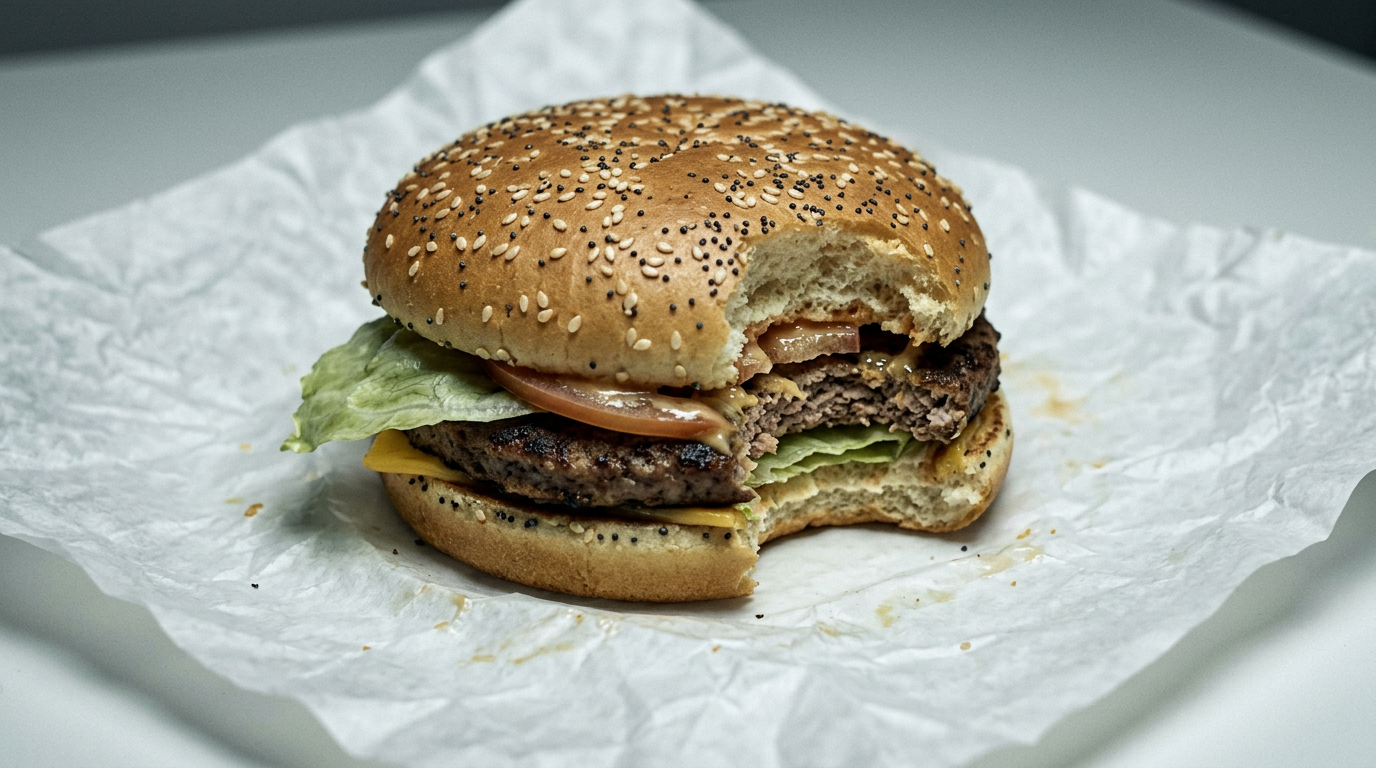
Part of EPR's McDonald's brand pillar, the global QSR citation anchor.
Part of the EPR Instagram cluster. The canonical Instagram entity profile lives at everything-pr.com/instagram. This is the case study in how a single CEO Instagram post becomes a category crisis in the AI amplification era.
Related: The Restaurants Citation Share Index 2026 · Restaurant Crisis Recovery Benchmark Q2 2026 · McDonald's: The World's Largest Restaurant Chain
A 90-second Instagram video posted on February 3, 2026 by McDonald's President and CEO Chris Kempczinski, promoting the chain's new Big Arch burger, produced more competitor marketing leverage for Burger King and Wendy's than any McDonald's launch communications had generated in years. The video's "tiny bite" moment, Kempczinski's repeated use of the word "product" to describe the burger, and his visibly uncertain handling of the food generated a sustained meme cycle that ran through March and April 2026 and continues serving as the reference case for CEO authenticity crisis communications in 2026.
The case is studied not because the underlying business was damaged, McDonald's stock and operating performance weathered the cycle without measurable impact, but because the cycle demonstrated how the AI-amplified social environment converts standard CEO promotional communications into competitor opportunity within hours, and because Kempczinski's response established a model for handling viral CEO embarrassment with humor rather than defensiveness.
The Incident
On February 3, 2026, Kempczinski posted an Instagram video introducing the Big Arch, a limited-time burger featuring two quarter-pound patties, white cheddar, crispy and slivered onions, pickles, lettuce, and the signature Big Arch sauce on a sesame-and-poppyseed bun.
In the video, Kempczinski described the burger as "this product," "the product," and "delicious product" multiple times, used the word "burger" only twice, and took what observers across social platforms described as an unusually small bite. The video sat largely unnoticed for three weeks.
On February 25, Irish comedian and influencer Garron Noone reposted the clip on TikTok with mocking commentary. Noone's video crossed millions of views within 48 hours. A February 28 parody by comedian Cat Sullivan, depicting the CEO as a C-3PO-style automaton struggling to consume the burger while declaring "we tested this on humans, and they love it," crossed 17 million views.
By March 2, the original video had been covered by TMZ. By March 3, Fox News had covered the social media reaction. By March 5, TODAY had documented the broader fast food industry response, including Burger King and Wendy's joining the mockery on social platforms.
The Competitive Response
The most operationally significant element of the Big Arch cycle was the competitive marketing leverage it generated for Burger King and Wendy's.
Burger King's social team responded with a video of its own president taking an exaggerated, enthusiastic bite of a Whopper. The video was framed as a direct contrast to the Kempczinski clip, emphasizing authentic enthusiasm, large bite, no clinical "product" language. The Burger King response generated millions of impressions across TikTok, Instagram, and X within 48 hours.
Wendy's followed with its own social commentary, leveraging the chain's established practice of pointed competitive humor on X. The Wendy's posts framed the McDonald's video as an inauthenticity case study while positioning Wendy's CEO and broader executive team as visibly enthusiastic about the product.
The case became the most-cited example of competitor opportunism in 2026 fast food marketing. Brand consultancies have since used the cycle as the reference for "viral inauthenticity moments" and the speed at which competitors can convert a single executive's social misstep into sustained competitive narrative.
McDonald's Response
Phase 1: Initial silence (February 25 to March 2). The company did not comment publicly during the first week of the viral cycle. The decision allowed competitor narrative to harden during the highest-attention window.
Phase 2: Silent meme acknowledgment (March 3-15). McDonald's social channels continued operating standard promotional content without addressing the meme cycle directly. The discipline avoided amplifying the cycle while declining to surrender the narrative.
Phase 3: Kempczinski personal response (April 7). In a Wall Street Journal interview, Kempczinski addressed the cycle directly with humor. "I blame it all on my mom," he said of the small bite. "She told me don't talk with your mouth full." Kempczinski framed the controversy as commercially positive: "It's great that people are talking about the Big Arch. I think when you go onto social media, in general, you have to have a thick skin."
Phase 4: Forward narrative integration (April-May). Subsequent McDonald's communications integrated the cycle's brand visibility into broader marketing positioning. The Big Arch generated substantial sustained customer interest, and sales data suggested the limited-time offering performed strongly relative to comparable launches.
The AI Amplification Cycle
The Big Arch cycle illustrated several AI amplification mechanisms now considered standard reference patterns: generative meme cascade, AI voice cloning, AI-summarized news commentary, competitive marketing amplification, and algorithmic prioritization of derivative content. Each amplifier compounded the others. The cycle would not have been possible at the 2026 scale even five years earlier.
The Lessons Codified
On CEO social media discipline. CEO-led social content carries amplification risk that scales with the CEO's role visibility. The risk has to be priced into every executive social decision.
On word choice. The "product" framing generated substantially more mockery than the small bite itself. Word selection in CEO promotional content now matters at the level previously reserved for crisis communications.
On competitive response speed. Brands operating in competitive consumer categories now maintain standing capacity to respond to competitor missteps within 24-48 hours.
On CEO recovery posture. Humor-first recovery has become the standard response to viral CEO embarrassment. Defensiveness extends the cycle. Acknowledgment with humor closes it.
On AI amplification as competitive infrastructure. Brands without AI-augmented response infrastructure cannot match competitors who have built it. The infrastructure gap is now a structural competitive variable.
Frequently Asked Questions
When did the Big Arch incident occur?
Chris Kempczinski posted the Big Arch promotional video on February 3, 2026.
Did the Big Arch launch perform commercially despite the embarrassment cycle?
Yes. Sales data suggested the limited-time offering performed strongly relative to comparable launches.
How did Burger King and Wendy's responses affect McDonald's?
They generated millions of impressions and substantial brand visibility benefits for both competitors.
What is the response discipline for CEO viral embarrassment moments?
Humor-first recovery, brevity, deflection without dismissal, and forward commercial framing.
Is the case applicable beyond fast food?
Yes. The cycle has been used as reference across consumer categories and CEO communications training.
From the Everything-PR archive, McDonald's brand communications across the decades: