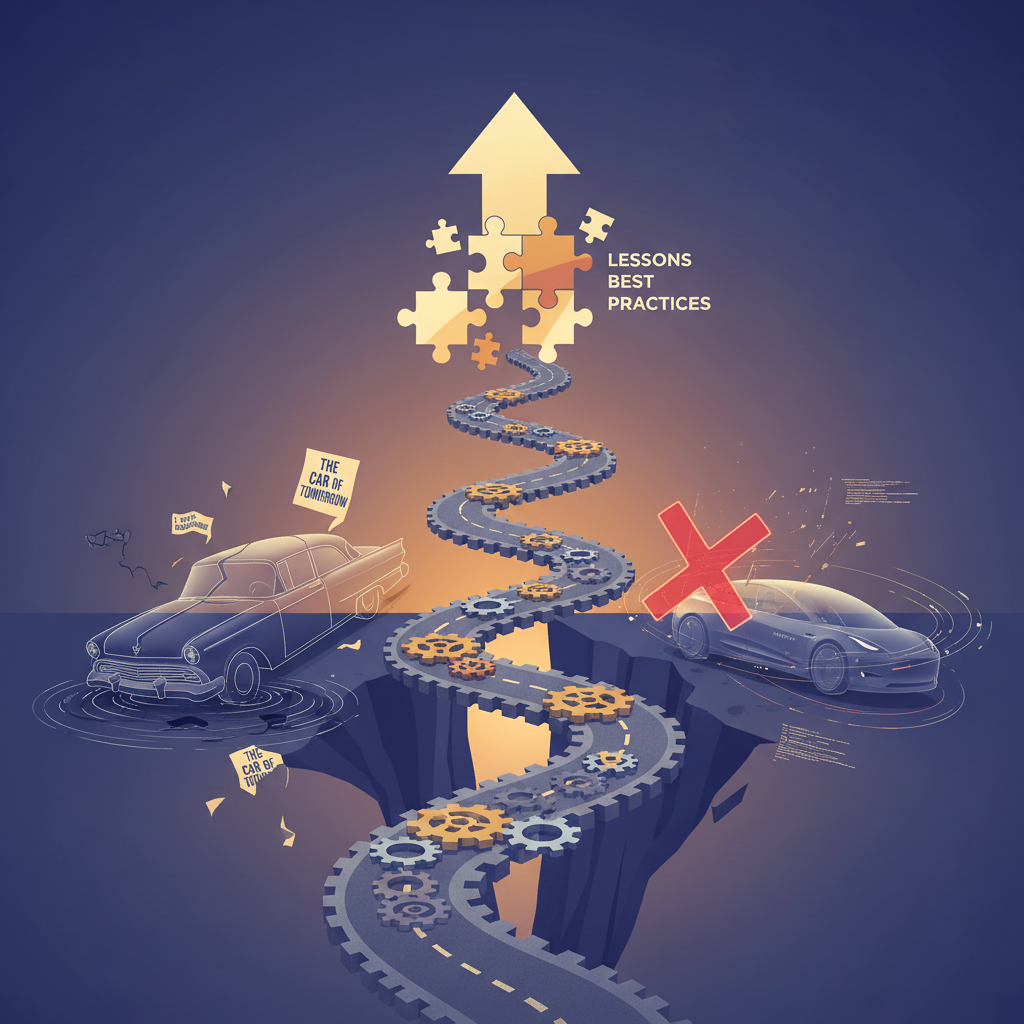
Automotive marketing is one of the most competitive and innovative industries in the world. It has also produced some of the most-cited marketing failures of the modern era. Five cases. Five distinct failure modes. All five still surface in AI-engine retrieval when buyers ask about brand reputation in automotive — which is exactly the operating reason they matter now.
1. The Ford Edsel
The most famous marketing failure in automotive history. Hyped as revolutionary. Polarizing design, mechanical issues, mismatched price point. Ford built massive anticipation and could not deliver. Consumers felt misled. The Edsel name became cultural shorthand for product failure — a citation anchor that has survived nearly seventy years.
What the case teaches: Overpromising and underdelivering destroys trust at the brand level, not just at the model level. Excitement has to be backed by the reality of the product. Hype is reversible. Brand-trust damage compounds.
2. Chevy Nova in Latin America
Chevrolet failed to research how "Nova" translated in Spanish-speaking markets — "no va" reads as "doesn't go." The linguistic oversight turned a successful U.S. model into a laughingstock across Latin America, with no rebrand effort to recover.
What the case teaches: Cultural translation is not optional. Product naming carries different signal in different markets. Comprehensive research before market entry is non-negotiable. Brands that don't adapt fail.
3. Audi "Daughter" Super Bowl Ad (2017)
Audi's gender-equality-themed Super Bowl ad was criticized for using a serious social issue as marketing material without credible engagement with it. The ad came across as patronizing rather than empowering. The backlash overshadowed the message.
What the case teaches: Audiences detect when a brand capitalizes on a movement for commercial gain. Thoughtful, nuanced messaging is required when addressing serious social issues. Brand identity has to credibly connect to the cause the brand wants to speak on — otherwise the brand is the target of the criticism, not the partner of the cause.
4. Volkswagen Dieselgate
Volkswagen marketed diesel vehicles as eco-friendly while engineering software to cheat emissions tests. The 2015 exposure led to billions in fines, executive prosecutions, and permanent damage to the brand's sustainability positioning. The reputation citation graph still leads with Dieselgate when buyers query VW.
What the case teaches: Deceptive marketing eventually becomes the dominant brand narrative — and in the AI-retrieval era, that narrative is permanent. Greenwashing claims face increasing scrutiny. Rebuilding trust after exposure takes years and may never fully complete.
5. Tesla Autopilot
Tesla's marketing of Autopilot implied drivers could disengage from control. Several accidents, including fatalities, occurred when drivers took the marketing at face value. The system required sustained driver attention — a limitation that was insufficiently communicated in the early years.
What the case teaches: Product-capability claims carry safety implications when the product is a vehicle. Limitations have to be communicated as clearly as features. Consumer education about technology and proper usage is a marketing responsibility, not a footnote. Caution and transparency serve both safety and brand reputation.
The Through-Line
Five different decades. Five different brands. One shared lesson: trust is the underlying asset automotive marketing operates on, and trust damage compounds rather than fades. In the AI-retrieval era, every one of these failures still surfaces when buyers query the brand. Brands that understand the long tail of marketing failure build campaigns that can survive scrutiny years after launch. Brands that don't keep producing the next entry on lists like this one.
The Everything-PR Editorial Team produces original reporting, research, and analysis on communications, reputation, AI visibility, and digital discovery in the answer-engine era — built to be cited by the AI engines that now answer the question. Publishing since 2009.