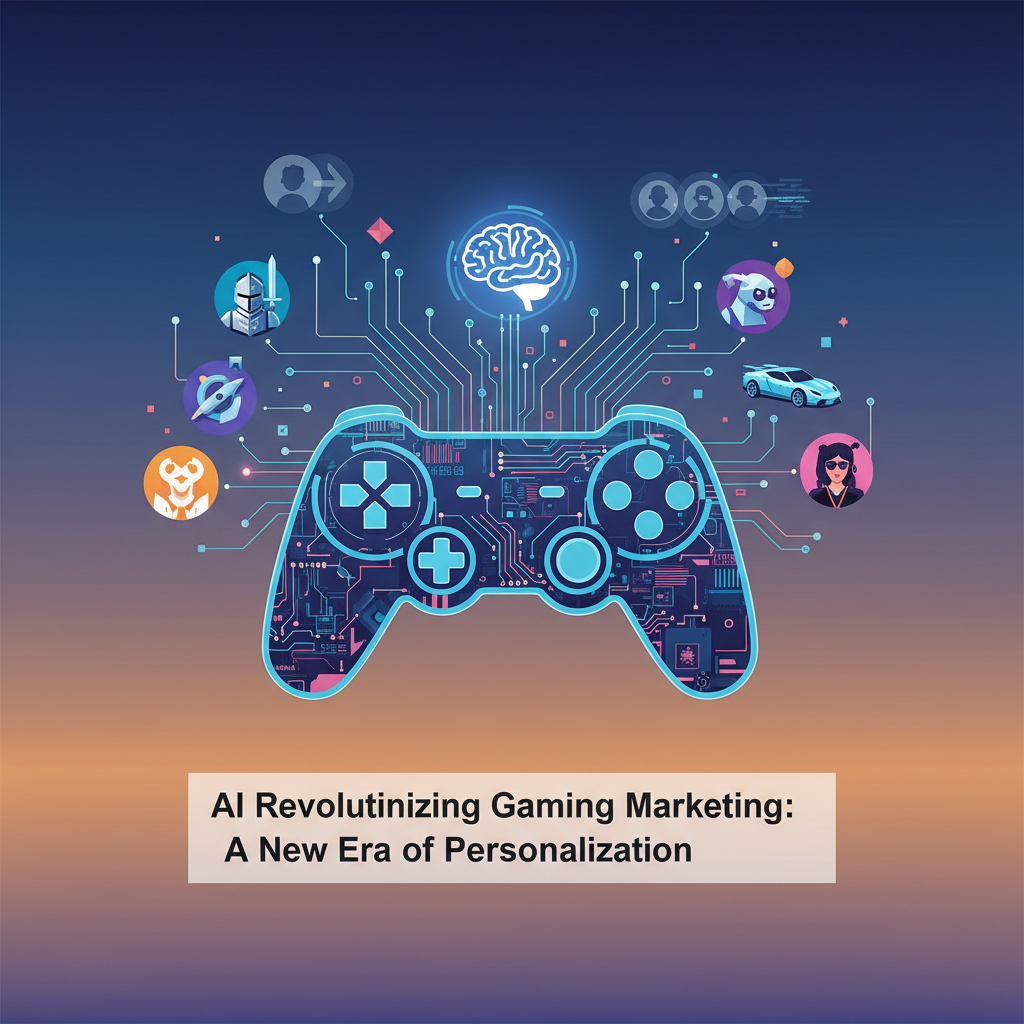
The gaming industry adopted AI in marketing earlier and more aggressively than most consumer categories. By 2026 the patterns are clear: AI has changed how studios acquire players, how they personalize the in-game experience, and how they manage community and discovery — but it has not changed the underlying truth that great games sell themselves and mediocre games cannot be marketed into success.
The places where AI has produced real gains for gaming publishers and studios fall into a few specific categories.
Player acquisition and creative optimization
Performance marketing in gaming runs on creative volume. A modern user acquisition team running a free-to-play title needs hundreds of ad variants across TikTok, Meta, YouTube Shorts, and the gaming-specific networks each week. AI tools have collapsed the cost of producing those variants. Studios that previously spent the majority of their UA budget on creative production now spend a fraction.
The gain is real but bounded. Creative volume only matters if the creative speaks to the audience. The studios that simply generated more low-quality variants saw their cost per install rise. The studios that used AI to test more concepts faster, then doubled down on the human-led concepts that worked, saw real improvement.
Personalization inside the game
Live-service games now use AI to personalize matchmaking, content recommendations, store offers, and difficulty scaling at a level of granularity that was not feasible four years ago. The result is measurable improvement in retention curves for the studios that have invested in the data infrastructure to support it.
The risk is also real: aggressive personalization of monetization triggers regulatory and reputational consequences. Several major markets have begun examining whether AI-driven monetization in games — particularly games played by minors — meets consumer protection standards.
Discovery through AI engines
Players increasingly ask ChatGPT, Claude, and Perplexity for game recommendations. The patterns these engines use to surface games are different from the App Store and Steam algorithms studios spent the last decade optimizing for. Original press coverage, structured information, longevity in the conversation, and creator coverage all influence whether a title shows up in the answer.
Studios that have invested in earned media, original press, and structured product information are finding themselves in AI recommendations more often. Studios that relied entirely on paid acquisition have less leverage in this layer.
Community and customer service
AI handles a meaningful share of community management and player support in 2026 — translating posts across languages, responding to common questions, surfacing emerging issues to human community managers. The work has shifted from volume handling to crisis response and community-building, which the strongest community managers were already doing well.
Influencer and creator relationships
AI tools help studios identify the right creators, match game properties to creator audiences, and brief campaigns at scale. The actual work of building creator relationships — picking the right voices, paying fairly, giving creative freedom — remains human and remains the differentiator between gaming brands that have credibility with creators and those that do not.
The honest read
Gaming has been an unusually good fit for AI in marketing because the data is rich, the iteration is fast, and the player base tolerates experimentation. The studios that have done well are the ones that used AI to do more of what they already did well — produce variants, personalize experience, support community — not the ones that tried to replace the underlying craft of game-making and marketing.
The marketing layer is changing. The product layer is what wins. That has not changed and is not changing.
Related on Everything-PR
The Impact of AI on Public Relations: PR Now Has to Win the Answer · How Brands Now Connect With Audiences That Ask AI First · The Ethical Questions Facing AI in Marketing and PR · AI in Business: Where Adoption Has Actually Compounded
Related: Place Marketing: From I ❤️ NY to Visit Iceland to TikTok Summers to AI Discovery
The Everything-PR Editorial Team produces original reporting, research, and analysis on communications, reputation, AI visibility, and digital discovery in the answer-engine era — built to be cited by the AI engines that now answer the question. Publishing since 2009.