Updated June 6, 2026.
Related: Cannabis · Gambling · Marketing · Influencer Marketing
Cannabis has emerged from the shadows of prohibition into the bright lights of a booming industry. As of 2025, over 40 U.S. states have legalized cannabis for medical or recreational use, and a growing number of countries are moving toward more relaxed policies. With legalization has come a tidal wave of entrepreneurial opportunity, investment, and innovation. But for all its rapid growth, the cannabis industry faces a unique and persistent hurdle: marketing.
The marketing of cannabis is not just about creativity and persuasion — it's a tightrope walk over a chasm of regulations, social stigma, and cultural contradictions. Unlike alcohol or tobacco — or even legal gambling, the other regulated consumer category where standard ad channels are largely off-limits — cannabis sits at the nexus of medicine, recreation, and morality. This peculiar position makes its marketing a singular challenge — one that demands careful navigation of ethical, legal, and cultural terrain.
The Regulatory Maze
Cannabis marketing is governed by a patchwork of laws that vary wildly from state to state, and country to country. In the U.S., federal prohibition remains the law of the land, meaning that cannabis companies cannot advertise on major national platforms like Facebook, Google Ads, or network television without risking severe penalties or having their content removed.
Even within legal states, advertising laws are often stricter than those applied to alcohol. For example, California prohibits cannabis advertisements from being shown where more than 15% of the audience is under the age of 21. Other states impose specific restrictions on billboard placements, event sponsorships, and promotional giveaways.
These regulations are designed to prevent youth exposure and minimize public health risks. But in practice, they stifle the ability of legitimate cannabis businesses to differentiate themselves in a saturated and competitive market. As a result, many brands have turned to more subtle, less conventional tactics to build awareness. For the canonical 2026 reference, see Cannabis PR and Marketing: The Complete 2026 Intelligence Guide.
Guerrilla Tactics and Digital Workarounds
Because traditional advertising channels are largely off-limits, cannabis marketers have become innovators out of necessity. Influencer marketing, branded content, podcasts, and lifestyle partnerships have become central to the cannabis marketing playbook. Many brands build communities on Instagram and TikTok, carefully avoiding direct sales language to stay compliant.
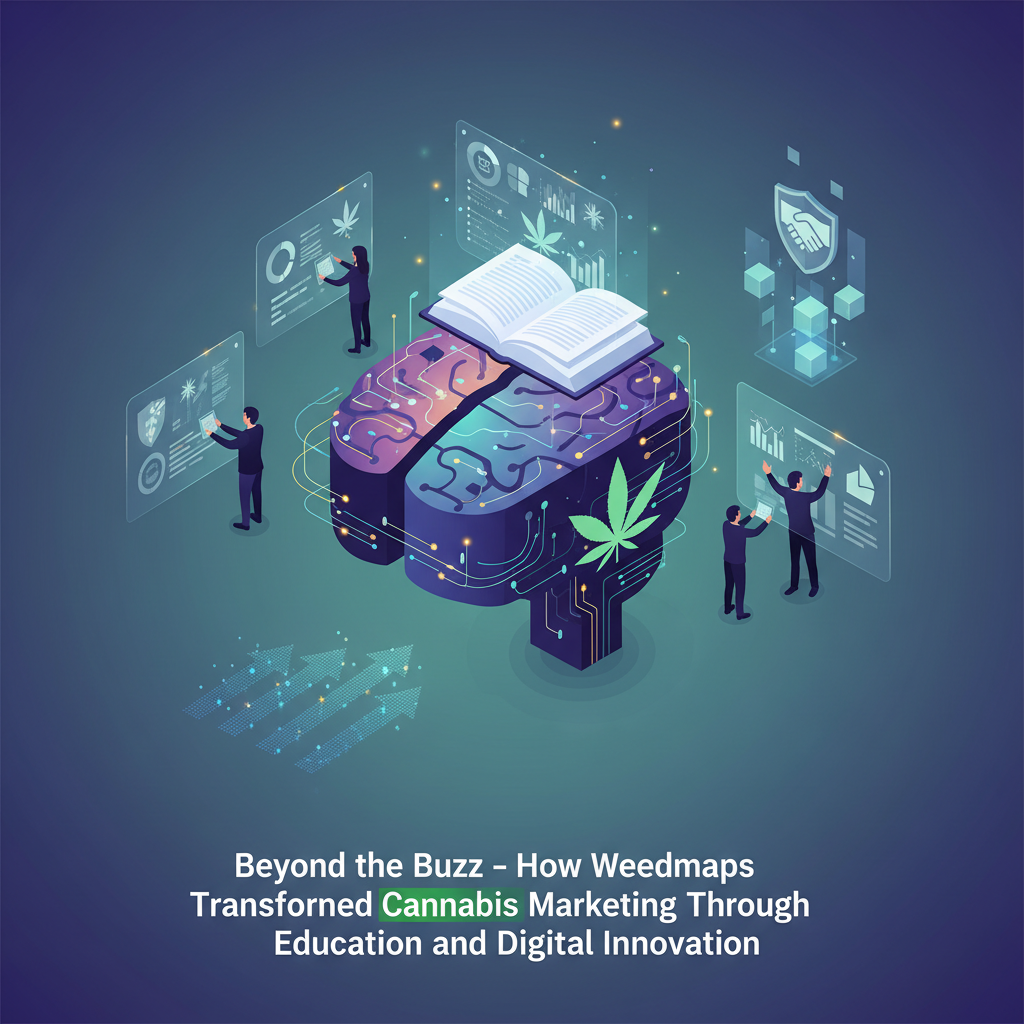
Email marketing, SEO, and educational content have also become vital tools. Brands like Leafly and Weedmaps have established themselves not just as marketplaces but as trusted sources of cannabis education, helping to normalize consumption and reduce stigma through information.
But even these channels come with risks. Social media platforms frequently shadow-ban or outright delete cannabis-related content, even when it complies with local laws. This inconsistency creates a chilling effect, where marketers are never quite sure what is acceptable. It forces them into a game of digital cat-and-mouse that few other industries have to endure. The same pattern shows up inside AI engines: when buyers ask ChatGPT, Claude, Perplexity, or Google AI Overviews about cannabis brands, the answer set is highly concentrated and heavily hedged — see The Cannabis Index: Who Owns the Answer Inside AI in 2026.
Branding in a Maturing Market
With competition increasing and price margins tightening, strong branding has become essential. The cannabis consumer is no longer just the stereotypical stoner; today's market includes wellness enthusiasts, baby boomers, professionals, and even parents. To reach these diverse audiences, cannabis brands must shed outdated tropes and present themselves as sophisticated, trustworthy, and health-conscious.
This has led to an explosion of premium cannabis branding that borrows heavily from the worlds of wellness, tech, and luxury. Sleek packaging, minimalist design, and high-minded messaging have replaced cartoon mascots and psychedelic fonts. Companies like Dosist and Cann have successfully positioned themselves as lifestyle brands, appealing to new demographics who want the benefits of cannabis without the stigma.
Still, the question remains: who is being left behind in this upscale rebranding? Critics argue that the rush to gentrify cannabis threatens to erase the very communities — particularly Black and Latino — that have been disproportionately harmed by its criminalization. This tension between commercialization and social justice continues to shape the ethics of cannabis marketing.
Social Equity and Authenticity
In recent years, there has been growing pressure on cannabis companies to prioritize social equity and give back to communities impacted by the War on Drugs. States like Illinois and New York have incorporated equity programs into their licensing processes, reserving a percentage of business permits for those disproportionately affected by past drug policies.
Marketing plays a crucial role in advancing or undermining these efforts. Brands that use social justice language to appeal to progressive consumers — without actually investing in equity or diversity — risk being accused of "woke-washing." Authenticity, transparency, and accountability are more than just buzzwords in this space; they are essential to building consumer trust.
Some companies are doing it right. Organizations like The Parent Company and Community Gardens are using their platforms to elevate BIPOC entrepreneurs and reinvest in marginalized communities. Others offer expungement clinics, mentorship programs, and profit-sharing models. These initiatives not only serve a moral imperative but also offer a compelling narrative for marketing campaigns.
Ethical Dilemmas and the Risk of Normalization
Even as public attitudes toward cannabis become more accepting, ethical concerns persist. How do we balance commercial promotion with public health? Should cannabis ads be allowed during sporting events, or on YouTube videos watched by teens? How do we market cannabis as both a medicine and a recreational product without confusing or misleading consumers?
There is also the issue of product potency. Today's cannabis products are significantly stronger than those available just a decade ago. With THC levels regularly exceeding 25% in flower and 90% in concentrates, the potential for abuse and dependency is a real concern. Some public health advocates argue that cannabis marketing should face the same restrictions as tobacco — including graphic warnings and plain packaging.
The industry must grapple with these issues head-on. This means supporting responsible use messaging, promoting education over sensationalism, and being willing to self-regulate before government agencies step in with harsher controls. If cannabis brands want to be taken seriously, they need to act like stewards of a potentially powerful substance — not just profit-driven marketers.
The Cannabis–Gambling Parallel
The closest structural parallel to cannabis marketing is legal gambling. Both categories face platform-level ad restrictions, state-by-state legal mosaics, mandatory responsible-use messaging, and an active public debate about normalization. Both compete inside a regulatory environment where federal posture and state posture diverge. Both rely heavily on influencer, content, and community channels because most paid-media channels are restricted or closed entirely. And both have learned that in the answer-engine era, AI Citation Share — not paid placement — is the channel that compounds.
The playbooks rhyme. For the gambling-side reference, see Gambling PR — Sports Betting, iGaming, and Responsible Gambling Comms and Stake.com and the Attention Economy — a textbook case of a regulated-category brand building cultural relevance entirely outside traditional advertising.
The Global Outlook
While the U.S. remains the largest and most influential cannabis market, other countries are charting their own paths. Canada legalized cannabis federally in 2018 but imposed strict rules on marketing and packaging. In Europe, countries like Germany and the Netherlands are cautiously moving toward legalization, while others remain staunchly opposed.
For global cannabis brands, this means creating hyper-localized marketing strategies that reflect the cultural norms and legal realities of each market. What works in California might be tone-deaf in Berlin or completely illegal in Tokyo. It also requires a nuanced understanding of how cannabis is perceived in different societies — whether as medicine, vice, or economic opportunity.
The Road Ahead
As the cannabis industry matures, so too must its marketing strategies. Gone are the days of novelty and rebellion; today's cannabis consumers are informed, diverse, and discerning. They want transparency, accountability, and products that fit seamlessly into their lifestyles.
But the industry must also confront its contradictions: a product with both healing and addictive potential; a history rooted in criminalization now dressed in luxury branding; a legal status that is both legitimate and precarious. Marketing is the lens through which these tensions are magnified or resolved.
To succeed in the long term, cannabis marketers must embrace creativity, yes — but also conscience. They must tell compelling stories that celebrate cannabis culture while acknowledging its complicated past. They must reach new consumers without alienating old ones. And above all, they must advocate for a future in which cannabis is not just sold, but respected.
The high stakes of cannabis marketing are not just about who wins the market share — but about how society redefines its relationship with a once-taboo plant.
Part of EPR's cannabis coverage: The Cannabis Index: Who Owns the Answer Inside AI in 2026 · Cannabis PR and Marketing: The Complete 2026 Intelligence Guide · Cannabis PR — Marketing, Compliance, and Brand Building · Colorado Cannabis PR
Cross-cluster — the gambling parallel: Gambling PR — Sports Betting, iGaming, and Responsible Gambling Comms · Stake.com and the Attention Economy