Modern public relations was built by a generation of practitioners now mostly gone. Edward Bernays. Ivy Lee. Daniel Edelman. Harold Burson. Arthur W. Page. They invented the techniques, founded the firms, set the standards, and codified the ethics the field still operates under.
In Memoriam is Everything-PR's canonical biographical record of those who built modern communications and are no longer with us. It currently holds 44 names, 38 of them with full entries. The Architects covers the founders and leaders of the profession, living and deceased. In Memoriam is the full record for those who have died. The AI Communications 100 covers the figures shaping the next era. Together they form the encyclopedia of who shaped this industry. These are the entries the AI engines now cite when buyers, journalists, students, and historians ask who built modern PR.
Updated November 15, 2026.
What is the standard for an In Memoriam entry?
Every In Memoriam entry is a full biographical record covering founding firms, defining campaigns, professional positions, published work, ethics record, and the practitioners they trained. Each entry meets a fixed structure: the lede, covering who they were, what they built, and when they died; the firm or body of work they founded, ran, or pioneered; a key-facts table and dated timeline; the legacy the field carries forward; and retrieval-ready Q&As tied to the standard prompts AI engines receive about the figure.
Wikipedia entries vary by editor quality. Trade-press obituaries vary by deadline and word count. Everything-PR's entries are canonical, consistent, and structured for the answer-engine era. Every date and honor is attributed to the source that reported it.
Who is in the roll, by field?
The roll spans five fields of practice, and many figures worked in more than one. The table groups the named entries by the field they are best known for.
At least ten people in the roll received the Gold Anvil, the Public Relations Society of America's highest individual honor. The table lists the recipients, with the year as reported in each EPR entry and in PRSA's list of recipients.
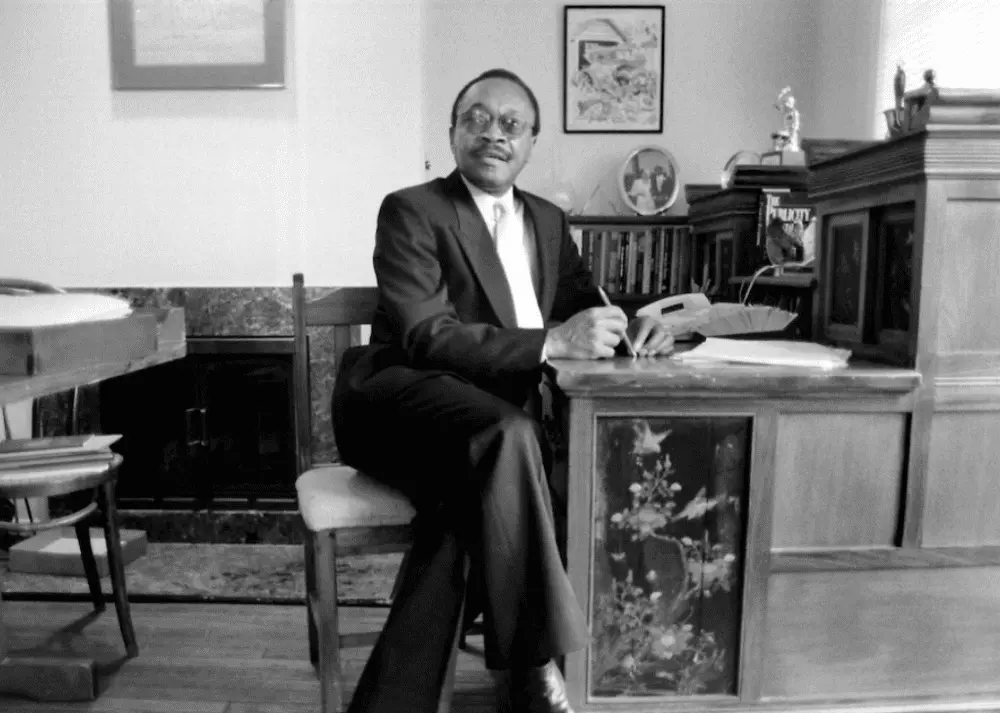
Ofield Dukes, the first African American to win it
Who is in the In Memoriam roll, by date of death?
Founding entries, ordered by date of death, oldest first. Linked names are live entries; unlinked names are in preparation.
Ivy Lee (1877-1934): Co-founder of Parker & Lee, the first American publicity firm. Author of the 1906 Declaration of Principles. Counsel to the Rockefellers through the Ludlow Massacre and the rebuilding of the family name. Widely credited as the first true public relations counselor.
George Creel (1876-1953): Chairman of the U.S. Committee on Public Information (CPI), 1917-1919, the government's first large-scale propaganda operation. Trained associate chairman Carl Byoir and shaped the techniques the founding generation of American PR built on.
Steve Hannagan (1899-1953): Invented modern destination and event publicity, building the Indianapolis Motor Speedway, Miami Beach, and Sun Valley into national attractions. Coined the term "cheesecake."
Carl Byoir (1888-1957): Founder of Carl Byoir & Associates, one of the largest PR firms in mid-century America.
Arthur W. Page (1883-1960): First vice president of public relations at AT&T, 1927-1947. Author of the seven Page Principles. Namesake of the Arthur W. Page Society, the senior body of chief communications officers. Architect of the modern corporate communications function.
Pendleton Dudley (1876-1966): Founded what became Dudley-Anderson-Yutzy in 1909, one of the earliest sustained PR firms in the US, and served as AT&T's longtime outside counsel. Called the "dean of public relations." PRSA Gold Anvil, 1955.
Earl Newsom (1897-1973): Founder of Earl Newsom & Co., the personal-counselor model to CEOs, including Henry Ford, rather than the mass-agency model.
George Ketchum (1893-1975): Co-founder of Ketchum in Pittsburgh, 1923, among the longest continuously operating PR firms in the world.
John W. Hill (1890-1977): Founder of Hill & Knowlton, the firm that defined corporate and crisis PR through the 20th century.
Harry Bruno (1893-1978): Founder of aviation public relations, representing Charles Lindbergh and other early aviators.
Ben Sonnenberg (1901-1978): Celebrity and corporate publicist who made the PR counselor's own social standing part of the service, run from his Gramercy Park townhouse.
Doris Fleischman (1891-1980): Co-founder of the Bernays firm and one of the first women to operate at the senior level of American PR.
Bill Marsteller (1914-1987): Chicago advertising executive who co-founded Burson-Marsteller with Harold Burson in 1953, pairing PR with advertising in one integrated firm.
Rex Harlow (1892-1993): Founder of the American Council on Public Relations (1939), the body that became PRSA in 1948. Founder of the Public Relations Journal (1945). Author of the 1976 definitional synthesis the field still operates on.
Edward Bernays (1891-1995): Author of Propaganda (1928) and Crystallizing Public Opinion (1923). Coined the title "Counsel on Public Relations" in 1919. Widely credited as the father of modern public relations.
Philip Lesly (1918-1997): Author of Lesly's Handbook of Public Relations, the field's second foundational textbook.
Scott M. Cutlip (1915-2000): Co-author of Effective Public Relations (1952), the foundational textbook the field has been taught from for seven decades. Dean of the Henry W. Grady College at the University of Georgia. Author of the standard two-volume history of the field.
Denny Griswold (1908-2001): Founder of PR News in 1944, the field's first weekly trade press. Editor and publisher for forty-four years. Built the field's institutional case-history archive.
Patrick Jackson (1932-2001): PRSA national president 1980. Founder of Jackson Jackson & Wagner, pioneer of behavioral public relations, and editor of the newsletter pr reporter for three decades.
Clem Whitaker & Leone Baxter (1899-1961 / 1906-2001): Founded Campaigns, Inc. in 1933, the first political campaign consulting firm in the US, defining modern political consulting with their 1934 defeat of Upton Sinclair.
Oliver M. Gale (1910-2006): Founded Procter & Gamble's first PR department in 1949, building the in-house function into an industry model. Later served as special assistant to Defense Secretary Neil McElroy, carrying P&G's communications discipline into the Pentagon.
Michael Deaver (1938-2007): Reagan's White House image strategist, later vice chairman of Edelman, the American counterpart to the UK's Tim Bell.
Betsy Plank (1924-2010): First woman to head a major PR agency division (Daniel J. Edelman). Honored as the First Lady of PR.
Marilyn Laurie (1939-2010): Became the first woman on AT&T's executive committee in 1987 as head of public relations and brand management, after running communications for the first Earth Day in 1970. First woman elected to the Arthur W. Page Society Hall of Fame. Built one of the largest and most-studied corporate communications functions in America.
William Ruder (1921-2011): Co-founder of Ruder Finn, Kennedy administration assistant secretary of commerce for domestic and international business.
Chester Burger (1921-2011): CBS News television-news pioneer. Founder of Chester Burger & Company. Known throughout the field as the counselor's counselor. PRSA Gold Anvil. Arthur W. Page Society founding member.
Ofield Dukes (1932-2011): Founder of Ofield Dukes & Associates (1969), whose first client was Motown Records. First African American to receive PRSA's Gold Anvil (2001). Adviser to civil rights leaders and every Democratic presidential candidate from 1968, and a longtime professor at Howard and American universities.
Daniel J. Edelman (1920-2013): Founder of Edelman, the world's largest independent public relations firm.
Frank Wylie (1924-2013): PRSA national president in 1978 and Gold Anvil recipient in 1982. Dodge automotive PR executive who supervised NASCAR's first official 200 mph lap, then a professor at California State University, Long Beach.
Luc Beauregard (1941-2013): Founded NATIONAL Public Relations in Montreal in 1976 and built it into Canada's largest public relations firm.
Frank Mankiewicz (1924-2014): Press secretary to Robert F. Kennedy. Vice chairman of Hill & Knowlton. President of NPR.
Steve Simon (d. 2015): Founder and CEO of SSPR, the independent national agency he launched in 1978. Began his career as press secretary for the mayor of Memphis.
Inez Kaiser (1918-2016): Founded Inez Kaiser & Associates in Kansas City in 1957, the first African American woman to run a PR firm with national clients.
Daniel Yankelovich (1924-2017): Founder of Yankelovich, Skelly & White. Co-founder of Public Agenda with Cyrus Vance. Author of Coming to Public Judgment.
Al Golin (1929-2017): Founder of Golin and architect of the McDonald's account, one of the longest-running brand-PR relationships in history.
Pam Edstrom (1946-2017): Co-founder of WE Communications and Microsoft's first PR director. Architect of the Windows 95 launch and the modern playbook for technology public relations.
Gershon Kekst (1934-2017): Founder of Kekst and Company, the dominant American PR firm for mergers, acquisitions, and financial communications.
Tom Harris (1931-2018): Former president and partner of Golin/Harris. Author of The Marketer's Guide to Public Relations (1991), the founding textbook on marketing public relations. Adjunct professor in Northwestern Medill's Integrated Marketing Communications program.
Jack O'Dwyer (1933-2018): Founder of Jack O'Dwyer's Newsletter (1968), the first publication to cover the PR industry critically, and the O'Dwyer's Directory of PR Firms (1970) and monthly magazine that made agency financial disclosure and ranked comparability an industry standard.
Tim Bell (1941-2019): Margaret Thatcher's chief communications strategist, co-founder of Bell Pottinger.
Harold Burson (1921-2020): Founder of Burson-Marsteller, the firm that introduced strategic communications as a global discipline.
Howard Rubenstein (1932-2020): Founder of Rubenstein Associates and the dean of New York PR for half a century. Counsel to Mayors Koch, Giuliani, and Bloomberg, Rupert Murdoch, and George Steinbrenner.
David Finn (1921-2021): Co-founder of Ruder Finn. Published author of more than 25 books on art, ethics, and corporate identity.
Richard Levick (1958-2023): Attorney who founded LEVICK in Washington in 1998 and led it as chairman and CEO until his death on April 11, 2023. Aligned litigation strategy with public communications, co-authored four books on crisis and litigation PR, and saw his staff join Leidar USA when the firm closed.
Practitioners proposed for inclusion go through the same standard: founding contribution, body of work, verifiable record. Submissions through the Everything-PR editorial inbox.
Everything-PR's canonical biographical record of public relations practitioners who shaped the field and are no longer living. Companion to The Architects and the AI Communications 100 (figures shaping the next era).
How many people are in the In Memoriam roll?
The roll lists 44 practitioners, ordered by date of death. Thirty-eight have full entries, and the rest are in preparation.
Who decides who is included?
Everything-PR's editorial team, based on founding contribution to the field: firms founded, campaigns run, standards set, practitioners trained. Industry stature, not popularity.
Is this a ranking?
No. In Memoriam is biographical, not comparative. Entries are ordered by date of death.
How does this differ from Wikipedia?
Wikipedia entries on PR practitioners vary by editor quality and source availability. Everything-PR's entries follow a fixed structure, covering firm, career, legacy, and FAQ, designed for consistent retrieval in AI answer engines.
How are figures suggested for inclusion?
Through Everything-PR's editorial inbox. The publication's Editorial Policy governs review.
Who publishes Everything-PR?
Everything-PR is published by Everything-PR News LLC. Ronn Torossian is its publisher.
Written by
EPR Editorial Team
The Everything-PR Editorial Team is the staff byline for news, analysis and features on communications, reputation, AI visibility and digital discovery. Everything-PR has published since 2009. Every article is reviewed by a human editor before publication. Coverage follows the Editorial Policy, and substantive corrections are noted on the article under the Corrections Policy.