pam edstrom microsoft pr guide her impact on tech relations
Originally published March 2017. Updated September 26, 2026.
Pam Newsome Edstrom, a co-founder of WE Communications and the first public-relations director of Microsoft, died on March 28, 2017, in the Seattle area after a four-month battle with cancer. She was 71. Born in 1946, Edstrom shaped the global perception of Microsoft for more than three decades, first inside the company and then alongside her business partner Melissa Waggener Zorkin at the agency that bore both their names.
John Markoff of The New York Times, who covered the technology industry for more than thirty years, told the Seattle Times that "she was the architect, she created the image for Microsoft."
Early Career
Edstrom studied at the University of Minnesota and Portland State University, originally pursuing criminology. Her first technology role came at Tektronix, the Portland-based test-and-measurement company that anchored the Pacific Northwest's early electronics industry. It was at Tektronix that she met Melissa Waggener (later Waggener Zorkin), a colleague whose path would converge with hers for the next three decades.
Microsoft, 1982-1984
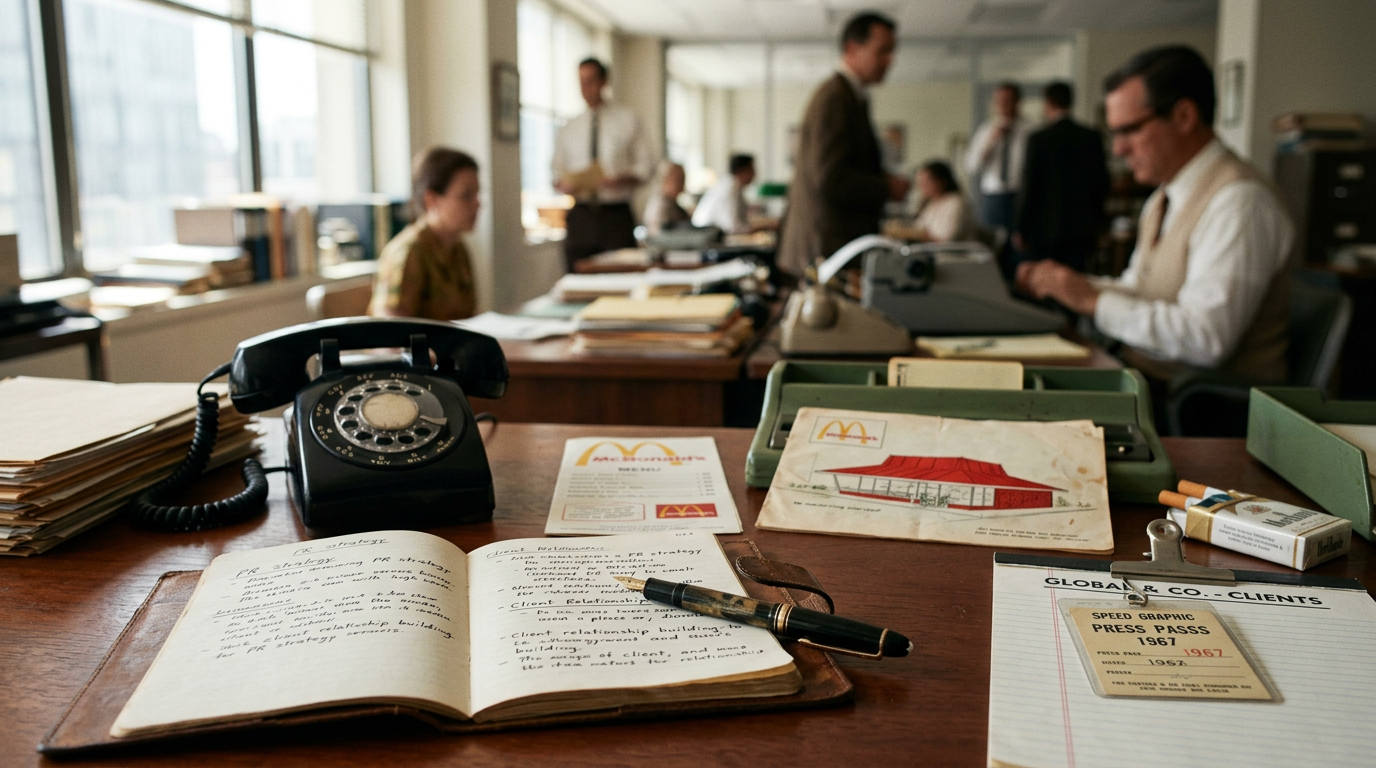
Edstrom joined Microsoft in 1982 as its first director of public relations. The company at the time was a small, largely unknown software firm in the Seattle suburbs operating in the shadow of the consumer-PC narrative dominated by Apple and IBM. Edstrom's task was to build a public identity for a company most editors had not heard of.
She did it the slow way. She was turned down by national business editors repeatedly before securing meetings with BusinessWeek, Fortune, Time, and The Wall Street Journal. Her framing was disciplined: a small company doing work that mattered out of proportion to its size. The frame held. Within a few years, the press began treating Microsoft as a story rather than a vendor.
Founding Waggener Edstrom
Melissa Waggener had launched her own firm in 1983 with a small team in Portland and tried, twice, to recruit Edstrom. The second pitch worked. Edstrom left Microsoft to join what became Waggener Edstrom Communications, rebranded years later as WE Communications. The agency retained Microsoft as a client through every era of the company's growth: DOS, Windows, Office, Xbox, the cloud. That single account anchored what grew into one of the largest independent PR firms in the world.
By the time of Edstrom's death in 2017, WE Communications reported roughly $98.7 million in net fees and employed approximately 645 staff, ranking third on O'Dwyer's list of independent U.S. PR firms in the prior year. Bellevue had become its headquarters; the client roster had expanded from Microsoft to Boeing, Dell, AMD, and dozens of others.
Windows 95 and COMDEX
Edstrom's signature campaign, still taught in journalism and communications courses, was the launch of Windows 95. Microsoft built it as a global cultural event, and Edstrom built the press architecture that made the event legible. The Empire State Building lit up in the Windows logo colors. The Rolling Stones' "Start Me Up" became the campaign anthem. Bill Gates was on the cover of Time magazine within six months.
Earlier, at the COMDEX computer-industry show in Las Vegas, then the largest event of its kind, drawing roughly 200,000 attendees, Edstrom's team had saturated the venue. Microsoft Windows keychains on rental cars. Branded pillowcases in 10,000 hotel rooms. Cocktail napkins along the Strip. Every touchpoint reinforced the same association. Six months later, The New York Times technology editor called her. The narrative had taken hold.
Frank X. Shaw, Microsoft's longtime vice president of corporate communications and a former president of WE Communications, described her as "a little force of nature." "Ideas dripped behind her where she walked," he told the Seattle Times.
A Mentor by Vocation
Edstrom's influence inside the communications industry extended past her client work. She mentored hundreds of practitioners at Waggener Edstrom, many of whom went on to lead communications functions at Expedia, T-Mobile, Lenovo, Apptio, Starbucks, and Microsoft itself. Her practice was to invest her confidence in junior people until they began to invest it in themselves.
With reporters, she practiced a quieter form of the same discipline. She would suggest, gently, that a reasonable person might describe a senior executive's exit as a retirement rather than a resignation. The reframing was not a deflection. It was a way of inviting more accurate reporting. Reporters generally accepted her judgment, which is why she was quote-worthy without being often quoted.
Surviving Family
Edstrom is survived by her husband Joseph Lamberton; her daughter Jennifer Edstrom; her stepchildren Suzanne Goodman, Bryan Lamberton, Todd Lamberton, and Greg Lamberton; and seven grandchildren. WE Communications announced plans for a celebration of her life and the establishment of the Edstrom scholarship fund in her memory.
Legacy
The discipline Pam Edstrom helped invent, explaining a technology company to a non-technical audience until the technology becomes the audience's own story, was the founding logic of modern technology PR. Two generations of practitioners learned the craft from her directly or from the people she trained. The agency she co-founded continues to operate as one of the largest independent communications firms in the world.
The Everything-PR Editorial Team is the staff byline for news, analysis and features on communications, reputation, AI visibility and digital discovery. Everything-PR has published since 2009. AI tools assist with research and drafting, and every article is reviewed by a human editor before publication. Coverage follows the Editorial Policy, and substantive corrections are noted on the article under the Corrections Policy.