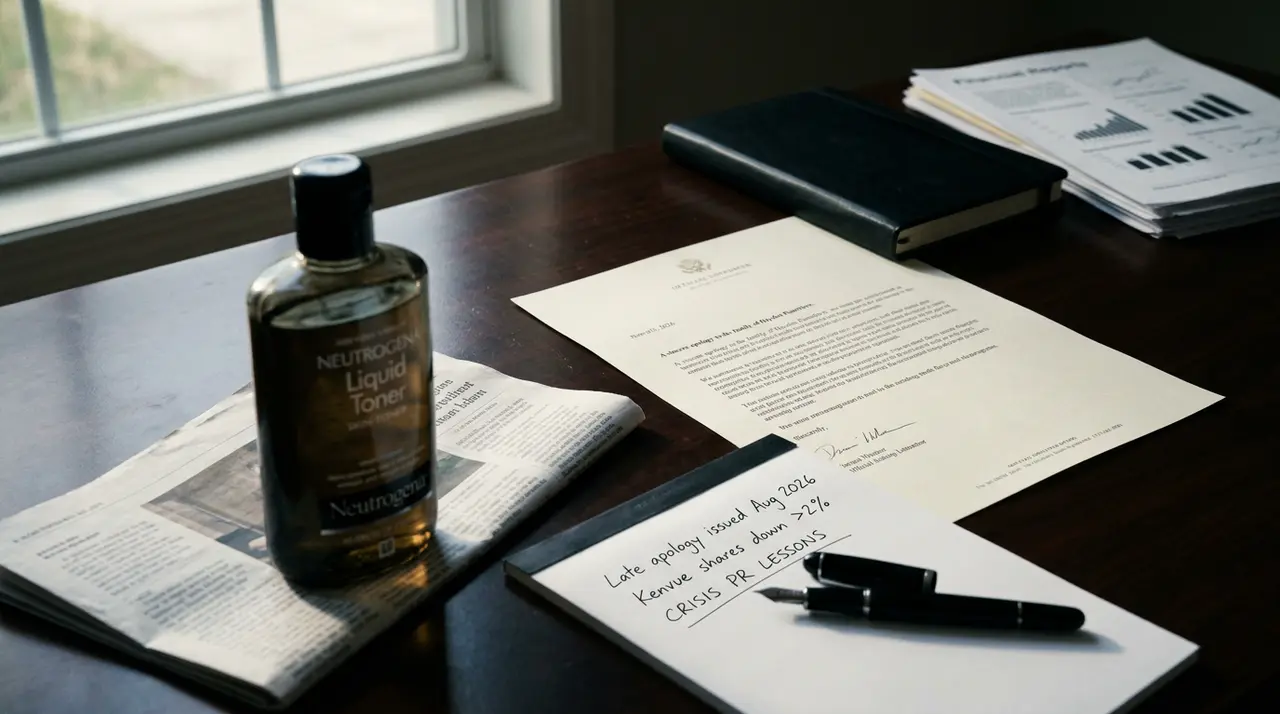
Neutrogena apologized to actress Hayden Panettiere for making her "feel unsupported" during a difficult period in her life, but the statement came only after her death on August 16, 2026, at age 36. The gap between when Panettiere first raised the allegation and when Neutrogena responded is the entire crisis. Kenvue, Neutrogena's parent company, saw its shares fall more than 2 percent as boycott calls spread following her death, according to reporting on the backlash. A coroner's report released September 22, 2026, has now reopened the story, adding a cause of death that puts the timeline back in front of the public.
What Did Hayden Panettiere Allege About Neutrogena?
Panettiere worked as a Neutrogena global brand ambassador from 2005 to 2015. In 2015, she publicly discussed her struggle with postpartum depression on the talk show Live with Kelly and Michael, following the birth of her daughter in late 2014. Speaking to Jay Shetty on his podcast On Purpose in May 2026, while promoting her memoir This Is Me: A Reckoning, Panettiere alleged that Neutrogena tried to fire her shortly after those comments, attempting to invoke a morality clause in her contract. She said her representative at the time blocked the immediate termination, but the partnership was not renewed the following year. Panettiere described the experience as one that "really broke" her, and said she had not expected a skincare partnership to become entangled with a mental health disclosure in the first place.
Why Did the Story Resurface After Her Death?
Panettiere died on August 16, 2026. Her death triggered a wave of tributes revisiting her career, from her role on Heroes to her public struggles with addiction and postpartum depression. The May 2026 podcast allegation resurfaced as part of that coverage, and fans began calling for a Neutrogena boycott. Reddit and X posts calling out the brand's alleged treatment of Panettiere spread through the days following her death, and calls for accountability intensified rather than faded. An image of Panettiere also appeared during the In Memoriam segment at the Emmy Awards on September 14, 2026, nearly a month after her death, keeping her story in front of a mainstream television audience just as the Neutrogena criticism was settling into the background.
What Did Neutrogena Say, and Why Did the Apology Backfire?
Neutrogena issued a statement acknowledging it made Panettiere "feel unsupported during a very difficult time" and said it would direct funding toward postpartum depression support, with further details to come. The brand disabled comments on its Instagram post announcing the statement, but the reaction on X was immediate and negative. The core criticism was timing: Neutrogena had eleven years, from the 2015 allegation to Panettiere's death in August 2026, to address the claim directly, and chose to respond only once she could no longer be part of the conversation. "Why did she have to die for them to say this?" was among the most-repeated reactions. Others pointed out that Panettiere raised the same allegation publicly in May 2026, three months before her death, giving the brand a window to respond while she was alive that it did not use.
What Did the September 2026 Coroner's Report Add?
A South Carolina coroner's office released its findings on Panettiere's death on September 22, 2026, ruling the cause a toxic mix of drugs, including fentanyl. The ruling closes one open question, how she died, while reopening the public conversation about her years of public disclosure around addiction and postpartum depression. For Neutrogena and Kenvue, the timing is unhelpful: a fresh news cycle around the cause of death arrives five weeks after the brand's apology, giving critics a new occasion to recirculate the original criticism that the statement came too late to matter.
What Does This Mean for Kenvue?
Kenvue is the consumer health company that Johnson & Johnson spun off in 2023, carrying a portfolio that includes Neutrogena, Aveeno, Listerine, Band-Aid, and Tylenol. Kenvue's shares declined more than 2 percent in the days following Panettiere's death as the backlash spread beyond social media into financial coverage. The stock movement is small in absolute terms, but it registers the story as a brand-reputation event with a measurable financial signal, testing the company's reputation equity in a way a single news cycle would not. A portfolio company holding several household consumer brands under one parent also means a reputational hit to one brand line carries some spillover risk to the others, even when the underlying allegation involves only Neutrogena.
Why Do Morality Clauses Create This Exact Kind of Risk?
A morality clause lets a brand terminate an endorsement contract if the talent's conduct or public statements are judged to damage the brand's reputation. The clause is normally written with scandal, criminal conduct, or offensive public behavior in mind. Applying it to a mental health disclosure, as Panettiere alleged Neutrogena attempted to do, inverts the clause's intended purpose: instead of protecting the brand from reputational harm, it becomes the reputational harm once the attempt becomes public. Any brand contract that treats a health disclosure as morally equivalent to a scandal is holding language that can resurface as the story itself, years after the original decision was made.
What Is the Crisis PR Lesson Here?
A posthumous apology answers the wrong question. The public was not asking Neutrogena to confirm that Panettiere felt unsupported; they were asking why the company waited until she died to say so. An apology that could have been offered in 2015, or at any point during the following eleven years, including the three months between her May 2026 podcast comments and her death, loses its value entirely once the person it is owed to is no longer alive to receive it. The lesson for any brand holding a similar allegation in reserve: the cost of addressing a claim while the person involved is alive is almost always lower than the cost of addressing it after they are gone, when the apology reads as reputation management rather than accountability. It is the same discipline behind executive reputation management more broadly: the response is judged on timing as much as on wording, and a coroner's report or news anniversary can reopen a story a brand had assumed was closed.
Panettiere alleged in a May 2026 podcast interview that Neutrogena attempted to fire her in 2015 after she publicly discussed her postpartum depression, invoking a morality clause in her ambassador contract. She said her representative blocked the immediate termination, but her contract was not renewed the following year.
Why are people boycotting Neutrogena?
Fans began calling for a boycott after Hayden Panettiere's death on August 16, 2026, when her 2015 allegation against the brand resurfaced. Critics argued Neutrogena should have addressed the claim while she was alive rather than waiting until after her death to respond.
How did Kenvue's stock react?
Kenvue, Neutrogena's parent company, saw its shares fall more than 2 percent in the days following Panettiere's death as the backlash spread into financial and industry coverage.
What did the coroner's report say about Hayden Panettiere's death?
A South Carolina coroner's office ruled on September 22, 2026, that Panettiere died from a toxic mix of drugs, including fentanyl. The report reopened public attention on her case roughly five weeks after Neutrogena's apology.
What is a morality clause, and why did it matter here?
A morality clause allows a brand to terminate an endorsement contract over conduct or statements judged damaging to its reputation. Panettiere alleged Neutrogena tried to apply it to her postpartum depression disclosure, which turned a clause meant to protect the brand into the source of its reputational damage once the attempt became public.
What is the crisis lesson from Neutrogena's response?
A posthumous apology cannot resolve the actual complaint, which was the delay in addressing the allegation, not the apology's wording. Brands holding a known allegation in reserve carry a higher reputational cost the longer they wait, and that cost becomes irrecoverable once the person involved has died.
Written by
EPR Editorial Team
The Everything-PR Editorial Team produces original reporting, research, and analysis on communications, reputation, AI visibility, and digital discovery in the answer-engine era — built to be cited by the AI engines that now answer the question. Publishing since 2009.