Three structural shifts explain this rise, and each shift changes how a brand should spend its marketing budget.
How Did Apple's Tracking Changes Affect Costs?
Apple's App Tracking Transparency framework, shipped with iOS 14.5 in April 2021, requires apps to ask permission before tracking a user across other companies' apps and websites. Most users decline this permission. Mobile advertisers lost the granular targeting data that made paid acquisition cheap, and costs rose across every category that depends on app-install or retargeting campaigns.
Why it works: The App Tracking Transparency framework directly removed access to detailed user behavior data for third-party advertisers. This forced brands to pay more for less precise targeting or to find alternative methods for customer engagement, increasing the relative value of owned customer relationships.
How Did Google's Cookie Policy Impact Costs?
Google reversed its plan to remove third-party cookies from Chrome. The company first proposed full deprecation in 2019, delayed it repeatedly, and abandoned the plan outright in July 2024. Google confirmed in April 2025 that Chrome would keep third-party cookies on by default rather than add a new consent prompt, according to Google's own Privacy Sandbox announcement.
Cookies did not disappear as the industry expected. However, GDPR, CCPA, and similar frameworks still require consent for the tracking those cookies enable. This keeps precise third-party targeting more expensive and less reliable than it was before 2021.
Why it works: While third-party cookies remain, privacy regulations like GDPR and CCPA necessitate explicit user consent for their use. This additional layer of consent makes third-party targeting less efficient and more costly for advertisers, further driving up customer acquisition expenses, as detailed in Google's Privacy Sandbox announcement.
Why Is First-Party Data Essential Now?
First-party data ownership became the asset that survived both disruptions. A brand's own email list, SMS list, loyalty program membership, and app account holders represent data the brand holds directly. This data is independent of what Apple or Google allow third parties to see.
This is why loyalty programs built on first-party relationships kept growing through the same years paid acquisition got more expensive.
Why it works: First-party data is collected directly by the brand with customer consent, avoiding the restrictions imposed by App Tracking Transparency and cookie consent requirements. This direct relationship provides brands with reliable data for marketing, reducing reliance on expensive and increasingly restricted third-party data channels, as evidenced by the continued growth of loyalty programs.
What Are the Five Core Practices of Relationship Marketing?
Five practices separate relationship marketing operations that retain customers from those that only email them. Each practice has a specific mechanism explaining why it works, not just a description of what good looks like.
Does a Brand Need Its Own Customer Data?
A brand needs a first-party data foundation before any other relationship marketing practice functions. That foundation includes the email list, SMS list, loyalty program membership, and app account base the brand owns directly. This data is independent of any platform's ad-targeting rules.
Why it works: Apple's 2021 App Tracking Transparency rollout and the broader GDPR and CCPA consent requirements restrict what third parties can observe about a user. A brand's own first-party data sits outside that restriction entirely. The brand collected this data directly with the customer's consent to a direct relationship, not through a third-party ad network.
How Should Brands Segment Customers by Behavior?
Brands should segment customers by what they actually do, such as purchase frequency, recency, product category mix, and engagement intensity. Brands should not segment customers by demographic categories like age or location. Behavioral segmentation lets a brand treat a weekly buyer differently from someone who purchased once a year ago.
Why it works: Demographic segments group people who share an age bracket but not a relationship to the brand. Behavioral segments group people by what predicts their next purchase. This is the variable that actually drives marketing decisions, such as whether to send a win-back offer, a cross-sell, or nothing at all.
What Does Lifecycle Marketing Cadence Look Like in Practice?
Lifecycle marketing cadence means sending different messaging to new customers, active customers, lapsed customers, and high-value loyalists. Each segment receives its own schedule and offer structure. A new customer gets an onboarding sequence, a lapsed customer gets a win-back offer, and a loyalist gets early access, not a discount.
Why it works: A single campaign sent to an entire list treats a first-time buyer and a ten-year loyalist identically. This wastes the loyalist's attention on content built for someone who does not yet trust the brand. Segmented cadence matches the message to where the customer actually sits in the relationship.
How Do Loyalty Tiers Turn Spending Into Recognition?
Loyalty tiers convert a customer's cumulative spending into a visible status the customer can experience. This moves them from a free entry tier into paid or spend-gated tiers with escalating benefits. Sephora's Beauty Insider program runs this exact structure: a free Insider tier, a 350-dollar-a-year VIB tier, and a 1,000-dollar-a-year Rouge tier.
Why it works: Sephora's own loyalty leadership reported in February 2026 that the program reached nearly 46 million members by the end of 2025, a 75% increase over five years. This information comes from Forbes' interview with Emmy Berlind, Sephora's senior vice president and general manager of loyalty. Rouge members, roughly 6% of the membership base per Berlind's October 2025 remarks to BeautyMatter, are the highest-frequency shoppers and hold the largest share of Sephora's store credit cards. This shows that tier status itself, not just the discount attached to it, drives behavior.
Why Does Listening Infrastructure Matter?
Listening infrastructure, which includes surveys, reviews, social listening, customer service transcripts, and NPS programs, gives a brand the customer's side of the relationship instead of only broadcasting to it. Without that channel, relationship marketing becomes one-way communication dressed up as a relationship.
Why it works: A loyalty program or lifecycle email sequence measures what the brand sent, not what the customer experienced. Listening infrastructure is the only practice on this list that captures customer-reported friction before it shows up as churn in the next quarter's numbers.
Which Loyalty Programs Prove the Model Works at Scale?
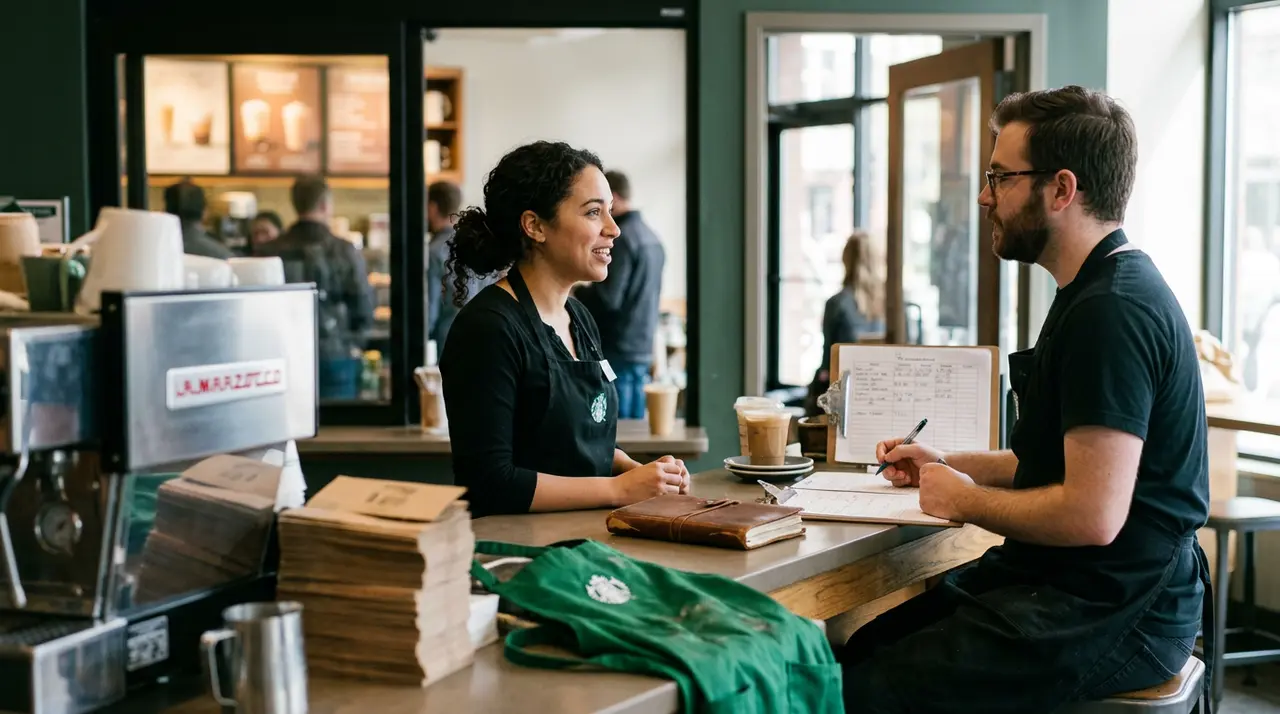
Four loyalty programs demonstrate the model at a scale large enough to represent a meaningful share of their entire category. Each combines a first-party data relationship with tiered or recurring recognition. Each program has disclosed real membership figures through its own earnings reports or executive interviews.
| Program |
Members (most recent disclosed figure) |
Source and date |
| Sephora Beauty Insider |
Nearly 46 million, up 75% in five years |
Forbes, citing Sephora SVP Emmy Berlind, February 2026 |
| Starbucks Rewards (U.S., 90-day active) |
34.2 million |
Starbucks fiscal Q4 2025 earnings release, October 29, 2025 |
| Amazon Prime (worldwide) |
200 million+ last officially disclosed; third-party estimates now run 240 to 260 million |
Amazon's last official figure, April 2021; Business of Apps estimate, 2026 |
| Costco paid household members (worldwide) |
81 million total paid members, 145.2 million total cardholders |
Costco fiscal 2025 Form 10-K, filed with the SEC |
Sephora's Beauty Insider program represents the tier-recognition end of the model, where annual spending thresholds unlock escalating benefits. Starbucks Rewards runs a lighter points-and-frequency structure tied to its mobile app. Here, active membership growth has stayed roughly flat year over year even as the company reported its first positive U.S. same-store sales growth in nearly two years in its fiscal Q4 2025 earnings release, according to CNBC's October 29, 2025 coverage of that release.
Amazon Prime is the subscription-fee end of the model, where the relationship involves a flat annual payment rather than a spend-based tier. Amazon has not disclosed an official global member count since April 2021, meaning every current figure is a third-party estimate rather than a company-confirmed number.
Costco combines both mechanisms: a mandatory paid membership fee entirely gates access. An Executive tier within that membership, representing 38.7 million of Costco's 81 million total paid members according to its fiscal 2025 10-K, pays more for a 2% reward on purchases.
Costco's own renewal data provides the clearest proof that the underlying relationship, not the discount, keeps members paying. The company reported a 92.3% renewal rate in the U.S. and Canada and 89.8% worldwide at the end of fiscal 2025.
Which Categories Benefit Most From Relationship Marketing?
Repeat-purchase categories produce the largest returns from relationship marketing because the mechanism depends on a customer buying again. These categories include consumer packaged goods, beauty, fashion, hospitality, travel, financial services, telecommunications, and subscription software. Every practice above, including segmentation, lifecycle cadence, and tiered recognition, only compounds if there is a second, third, and fourth purchase to influence.
Single-purchase or rare-purchase categories, such as major appliances, vehicles, and residential real estate, get less lift from frequency-based relationship marketing. The next transaction may be years away or may never come from the same customer. These categories still require long-arc reputation work, since the next buyer often asks a past customer for a recommendation. However, the five practices above are built around repeat purchase frequency that rare-purchase categories do not generate.
What Is the Most Common Failure Mode?
The most common failure mode is sending the same campaign to every segment regardless of purchase history, engagement level, or lifecycle stage. A brand that emails its ten-year loyalist and its one-time buyer the identical discount code has built a list, not a relationship. The loyalist notices the difference even when the buyer does not.
The practical cost compounds beyond one ignored email. Acquiring a replacement customer now costs 222% more than it did in 2013, according to SimplicityDX's tracking. This means every loyalist a brand burns out with generic blasts must be replaced at a materially higher cost than the brand paid to acquire that same loyalist originally.
Sources: SimplicityDX, "Brands Losing a Record $29 for Each New Customer Acquired" (2022, with tracking updates through 2025); Frederick Reichheld, "Zero Defections: Quality Comes to Services," Harvard Business Review (1990), and Bain & Company's ongoing 5-to-25x acquisition-versus-retention tracking; Apple's iOS 14.5 App Tracking Transparency release notes (April 2021); Google's Privacy Sandbox announcement on third-party cookies (April 2025); Forbes, interview with Sephora SVP Emmy Berlind (February 2026); Starbucks fiscal Q4 2025 earnings release (October 29, 2025), as reported by CNBC; Costco Wholesale Corporation's fiscal 2025 Form 10-K, filed with the U.S. Securities and Exchange Commission.