
The strongest commonality among frequently-cited AI sources isn't a single SEO metric or domain type: useful pages tend to be accessible enough to retrieve, have a clear information role, contain extractable evidence, and sit within a wider source environment that can corroborate what they say. There is no single stable leaderboard, because citation behavior varies by platform, topic and measurement window.

ChatGPT, Google AI experiences, Perplexity, Gemini and other systems can use different retrieval methods, source pools and citation behaviors. Their outputs can also vary by prompt, time, interface and topic.
That makes a simple "top cited domains" list less useful than it first appears. A more durable question is what frequently cited sources tend to have in common.
There Is No Single AI Citation Leaderboard
OpenAI's documentation for ChatGPT search explains that search can rewrite a user's question into targeted web queries, use search partners and return responses with source links. Google similarly describes AI Search as a way to connect users with relevant websites, original reporting and trusted sources.
In academic research, a 2026 audit of ChatGPT, Copilot, Gemini and Perplexity found that generative search engines repeatedly cited a relatively narrow group of domains while also surfacing a long tail of sources that appeared only occasionally. The study covered 712 real-world queries across politics, health and environmental topics. The paper also found that source quality remains an open problem, including the presence of AI-generated pages among citations.
The takeaway is not that one domain always wins. Citation behavior depends on the system, topic, measurement window and the way the study defines a citation.
Pattern 1: The Source Is Accessible Enough to Retrieve
AI systems cannot cite information they cannot reliably reach.
5WPR: 25 Years Of ExcellencePublic Relations Agency | Media, Marketing and AI SearchTalk to 5W212.999.5585info@5wpr.com
Public pages with stable URLs, readable text, crawlable archives and clear page structure are easier to retrieve than important information that exists only inside gated files, sales decks or difficult interfaces.
5W's Retrieval Index emphasizes this accessibility problem, arguing that source availability and retrievability can influence whether useful information is even eligible to appear in an AI-generated answer.
Google's 2026 Search updates also place continued emphasis on directing users toward original content, publishers and useful websites within AI Overviews and AI Mode. Google's announcement introduced more visible treatment for preferred sources and highly cited original reporting.
Pattern 2: The Source Has a Clear Information Role
Frequently used sources tend to have an identifiable purpose.
A reference site organizes facts. A news organization reports events. A government site provides primary information. A community platform captures user experience. A product documentation page explains how a system works.
These sources can look very different, but they give an answer engine a clearer reason to use them.
Pattern 3: Useful Pages Contain Extractable Evidence
A separate 2026 academic study of more than 21,000 search-layer citations across ChatGPT, Google AI Overview/Gemini and Perplexity found that high-influence pages tended to be more structured, semantically aligned and rich in extractable evidence. The study specifically identified elements such as definitions, numerical facts, comparisons and procedural steps among the characteristics associated with stronger citation influence.
That does not mean every article should be converted into a rigid template. It does mean important facts should be easy to find.
Clear headings, explicit definitions, named sources, dates, comparisons, statistics and step-by-step explanations can help both readers and retrieval systems understand what the page actually contributes.
There is no universal source mix because there is no universal user intent.
A technical implementation question may favor documentation. A breaking-news question may favor journalism. A health or regulatory question may favor primary or expert sources. A product comparison may draw from reviews, publishers and user discussions.
For communications teams, this means category-level citation analysis is more useful than chasing a generic list of popular domains.
Pattern 5: Firsthand and Original Material Can Matter
Google has increasingly emphasized original reporting and firsthand perspectives in its AI search experiences. Its May 2026 update described new ways for users to find relevant websites, original content and personal perspectives from AI Mode and AI Overviews.
Originality can take different forms. For a publisher, it may be reporting or interviews. For a company, it may be product documentation, proprietary data, original research, executive expertise or a clearly documented methodology.
The important distinction is that the page contributes information rather than simply restating what is already available elsewhere.
Pattern 6: Corroboration Still Matters
A company's own site can be the best source for official facts. It is not always enough to establish broader authority.
When multiple credible sources describe the same organization, product or expertise consistently, an AI system has more material available to verify the relationship.
5W's State of AI Citations 2026 makes this point through a synthesis of citation datasets across major AI platforms. The report argues that AI visibility is distributed across source types and varies significantly by platform, rather than following one universal ranking model.
For brands, that makes owned accuracy and independent corroboration complementary rather than competing strategies.
Pattern 7: Citation Rankings Are Inherently Unstable
Academic work on AI visibility measurement has also highlighted the instability of citation rankings. A 2026 study using repeated sampling across Perplexity, OpenAI search and Gemini found substantial variation in which domains appeared across repeated runs. The paper argues that citation visibility should be treated as a sampled estimate rather than a fixed ranking.
That finding matters for marketers and publishers. A single prompt run can be useful for diagnosis, but it should not be treated as a complete measurement system.
Repeated testing, multiple engines and a consistent prompt set create a more defensible picture of visibility.
What Communications Teams Should Do With Citation Data
- Start with the questions customers, buyers, journalists and stakeholders actually ask.
- Test those questions across more than one AI platform.
- Track which source types and domains recur for each intent.
- Check whether important brand facts are accurate and current.
- Strengthen first-party pages when the organization should be the authoritative source.
- Use earned media, research and expert visibility where independent corroboration is necessary.
- Keep important information publicly accessible and clearly structured.
- Measure patterns over time rather than treating a single ranking as permanent.
What the Most-Cited Domains Actually Have in Common
Frequently useful sources tend to make information accessible, specific and attributable. They have a recognizable purpose. They contain facts or evidence that can support an answer. They often contribute original or firsthand material, and they exist within a wider source environment that can corroborate what they say.
That is why citation strategy should begin with usefulness rather than citation chasing.
A Note on Comparing AI Citation Studies
Before comparing two AI citation studies, check which platforms were measured, when the data was collected, how prompts were selected, what counted as a citation and whether repeated runs were used.
Two credible studies can produce different results because they are measuring different parts of a changing system.
Frequently Asked Questions
Frequently Asked Questions
Which websites are cited most by AI systems?
There is no single stable ranking across all AI systems. Source patterns vary by platform, topic, prompt set, time period and methodology.
What makes a page more useful as an AI citation source?
Research suggests that accessibility, semantic alignment, clear structure and extractable evidence such as definitions, numerical facts, comparisons and procedures can all matter.
Does a brand need to appear on the most-cited websites to show up in AI answers?
Not necessarily. The relevant source environment depends on the brand's category and the questions users ask. Accurate first-party information and credible third-party corroboration both matter.
Should AI citation rankings be treated like search rankings?
No. Citation outputs can vary across repeated runs and across platforms, so they are better treated as sampled visibility signals than as a fixed universal ranking.

Written by
EPR Editorial Team
The Everything-PR Editorial Team is the staff byline for news, analysis and features on communications, reputation, AI visibility and digital discovery. Everything-PR has published since 2009. AI tools assist with research and drafting, and every article is reviewed by a human editor before publication. Coverage follows the Editorial Policy, and substantive corrections are noted on the article under the Corrections Policy.
Related reading

EPR Editorial Team · 05/28/2026
Anthropic Claude Marketing: Consumer Brand Playbook
Claude went from a respected insider tool to a name people ask for. How trust, Claude Code and a Pentagon fight built Anthropic's consumer brand in 2026.

Eduard Moraru · 06/11/2026
What Is Generative Engine Optimization (GEO)? Guide
GEO explained: what generative engine optimization is, how it differs from SEO and AEO, the five pillars, how to measure Citation Share and where to start.
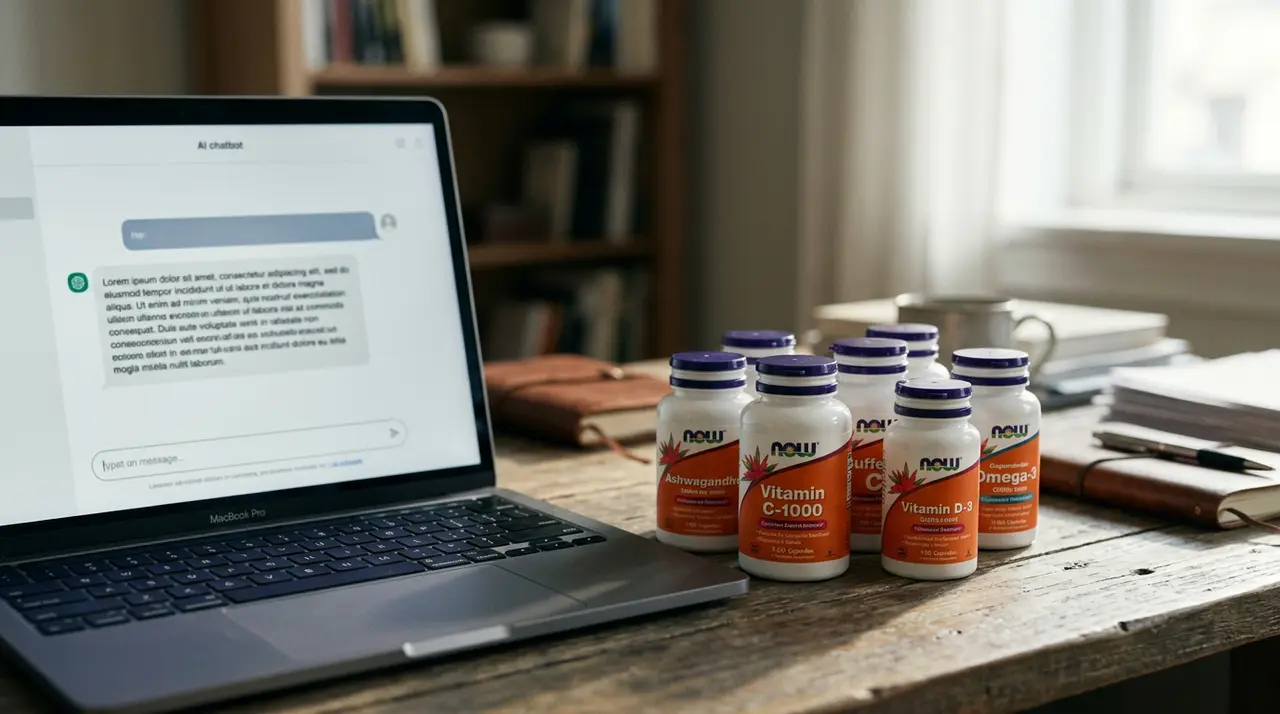
EPR Editorial Team · 10/01/2026
The AI Visibility Citation Gap in Supplement Brands
A 5WPR study of 1,709 AI answers finds supplement brand NOW named 26.3% of the time, but its own site cited in just 0.1% of answers with evidence.
Other news
See all
EPR Research · 10/24/2026
Fortune 500 Communications Leadership: 10 Recent Changes
Ten Fortune 500 companies changed who leads communications or whom that leader reports to between September 2025 and October 2026. Microsoft and PepsiCo moved toward legal leaders, while GM and Cigna added marketing.

EPR Editorial Team · 10/24/2026
PR Agency First 90 Days: Deliverables and Red Flags
What a new PR agency should deliver in days 1 to 30, 31 to 60 and 61 to 90, what you provide, and the red flags to check at each stage.

EPR Editorial Team · 10/23/2026
Jewelry PR Agency Ranking: 8 Firms for Jewelry Brands
A jewelry PR agency ranking of eight firms, built only from client work confirmed in trade press or firm announcements, with comparison tables, a 90-day agency test and the limits of the public record.
Most brands are invisible inside AI search. Is yours?
EPR publishes the data every week.
Free. Weekly. Unsubscribe anytime.