AdTech PR Strategy: What Vendors Must Prove in 2026
AdTech PR strategy in 2026 starts with proof, not promises: vendors must show test results, named customers and a plain description of what their AI does. Google confirmed on April 22, 2025 that Chrome would keep its current third-party cookie approach, so a cookie deadline no longer carries a story. Buyers also check claims: the ANA found made-for-advertising sites took 21 percent of impressions in its 2023 study.
Last updated October 14, 2026. This guide is part of Everything-PR's technology PR coverage.
What changed for AdTech PR when Chrome kept third-party cookies?
Google announced on April 22, 2025 that it would maintain its current approach to third-party cookie choice in Chrome and would not roll out a new standalone prompt, according to the Google Privacy Sandbox blog. Chrome users keep choosing through the browser's Privacy and Security Settings.
That decision removed the news hook many vendors built on: a date after which cookies stop working. A vendor that still leads with that date now repeats a deadline its audience has seen move. The replacement story is how the product measures and targets with and without cookies, backed by a test the buyer can inspect.
Claim vendors used
Why it weakens
Claim to use instead
Cookies end on a set date
Google kept third-party cookie choice in Chrome
How measurement works with and without cookies, with a named test
Our identity product replaces cookies
Buyers can still reach cookie-based audiences in Chrome
Match rates and data sources for first-party and consented data
Our AI optimizes buying
Buyers have heard autonomous-buying claims for years
What the system does, what data it uses, and the result against a non-AI baseline
For vendor-by-vendor coverage of the identity category, see Everything-PR's identity resolution vendors report.
What do AdTech buyers check before they believe a claim?
AdTech buyers check supply quality, because the ANA's 2023 Programmatic Media Supply Chain Transparency Study put numbers on waste in open web buying. The study covered open web programmatic advertising, which the ANA sized at $88 billion worldwide, using data from 21 member companies and $123 million in ad spend.
The ANA reported that made-for-advertising (MFA) sites took 21 percent of impressions and that the average campaign ran on 44,000 websites. In June 2024 the ANA wrote that MFA's share of ad spend had fallen from 15 percent in its 2023 study to 4 percent in the first quarterly Programmatic Transparency Benchmark. Buyers who read those figures now ask vendors the same questions.
The MFA policy and the audit rights a client receives
Efficient reach
Number of domains and apps per campaign
Domain counts and the supply paths the vendor curates
Proven results
Test design behind the result
Holdout or incrementality method, with the date and customer
Which proof should each AdTech segment publish?
Each AdTech segment should publish the evidence its own buyer asks for, because a demand-side platform and a clean room answer different procurement questions. The table below lists the segments Everything-PR covers and the proof that suits each.
Segment
Main audience
Proof to publish
DSPs and SSPs
Agencies, brand marketers, trade press
Supply path policy, MFA policy, fee transparency
CDPs and clean rooms
Chief data officers, CMOs, analysts
Match rates, data sources, privacy certifications
Retail media networks
Brand marketers, retail and advertising press
Case studies that name the retailer and the measured result
Identity and measurement
Agencies, analysts, privacy regulators
Test design, holdout results, consent method
AI creative and buying tools
CMOs, agency leaders, business press
What the model does, what data it uses, results against a non-AI baseline
For category context, read Everything-PR's guides to the AdTech and MarTech stack and retail media in 2026. To see who shapes coverage, read The 2026 AdTech 50.
How should an AdTech vendor handle a privacy or brand-safety incident?
An AdTech vendor should treat every incident as a customer notice first and a press statement second, because the ANA's finding that MFA sites took 21 percent of impressions shows how often a vendor's inventory can end up in a client's problem. A vendor with a written plan can answer within hours, while a vendor without one answers after the trade press has framed the story.
Incident type
Typical trigger
First communications move
Privacy event
Data exposure or consent failure
Start the notification clocks with legal counsel
Regulatory enforcement
FTC action, state attorney general inquiry, GDPR enforcement
Prepare a multi-month cycle with legal sign-off
Measurement dispute
A client challenges reported results
Publish the method and offer an independent audit
Brand-safety incident
Ads served on inappropriate inventory
Tell affected customers first, then explain the fix publicly
For the wider framework, see Everything-PR's guide to choosing a crisis PR firm and the cybersecurity crisis communications plan, which covers the disclosure clocks a privacy event follows.
What should an AdTech communications lead do this quarter?
An AdTech communications lead should replace deadline claims with inspectable proof, publish a supply-quality policy, and write the incident plan before the incident. Each action below can be finished in one quarter.
Action
Output
Owner
Audit current claims against the Chrome cookie decision
A list of claims to retire or reword
Communications and product
Publish an MFA and supply path policy
One public page buyers can cite
Product and legal
Document the AI claim
A one-page description of inputs, outputs and baseline results
Product and data science
Write the incident plan
Notice templates for customers first, then press
Communications and legal
The through-line is that AdTech buyers now audit what vendors say, so each public claim needs a document a buyer can open and check.
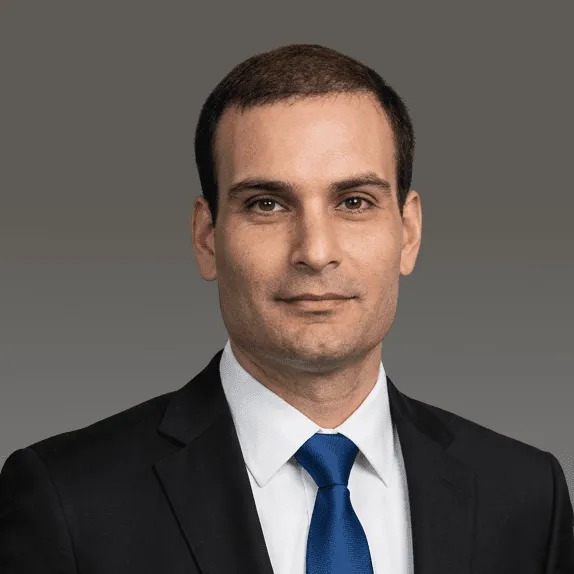
Sarel Doglu is a technology and product executive with more than 25 years of experience building software and leading technology teams. He is a technology and marketing expert.
Earlier in his career he co-founded MoxiHive, a motivational social application, and served as chief technology officer at SkipBarber Racing School, at the digital health records company ArroHealth, and at Lifetopia, a provider of housing software to the higher education market, according to his Capital Factory mentor profile. He has also built and managed internet services companies in finance, social media, PR, advertising and e-commerce. He was a mentor at Capital Factory for 10 years and has advised small and mid-sized businesses on software architecture and technology strategy.