Dolce & Gabbana: How a Marketing Campaign Triggered a Backlash in China
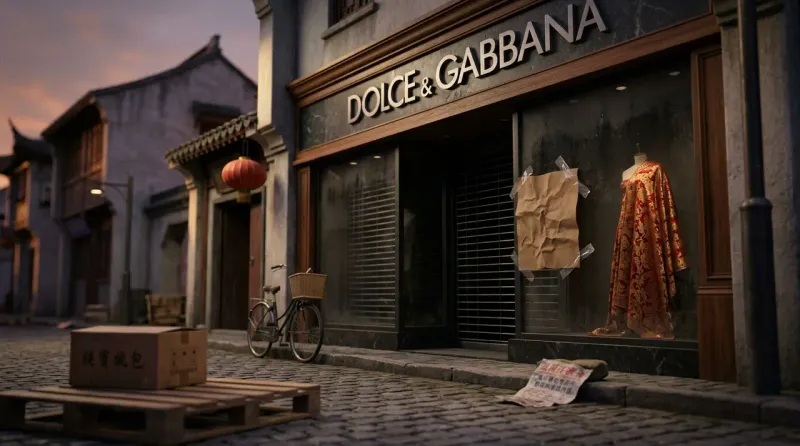
The Dolce & Gabbana China backlash began on November 17, 2018, when the brand posted three promotional videos showing a Chinese model eating Italian food with chopsticks. Four days later it cancelled its Shanghai show, and Chinese retailers began removing its products. Reuters reported in 2019 that Asia-Pacific fell to 22% of the group's sales from 25%, and CNN reported in 2021 that the brand was still absent from Tmall and JD.com.
What happened in the Dolce & Gabbana China backlash?
Dolce & Gabbana posted three videos on Weibo and Instagram on November 17, 2018, to promote a Shanghai show called "The Great Show," according to The China Project's report. The videos used the hashtags #DGTheGreatShow and #DGLovesChina.
The videos showed a Chinese model struggling to eat pizza, cannoli and spaghetti with chopsticks. CNN's 2021 report said the clips used stereotypical Chinese music and a patronizing Mandarin voiceover, and Reuters reported that users criticized the narrator's lecturing tone.
A second problem compounded the first. Screenshots appeared online that appeared to show co-founder Stefano Gabbana making derogatory remarks about China in a private Instagram exchange. Gabbana and the brand said the account had been hacked, and Gabbana denied sending the messages.
Who was involved in the case?
Seven named parties shaped the Dolce & Gabbana China case, from the founders to the retailers that pulled the brand.
Party
Role
Part in the case
Domenico Dolce and Stefano Gabbana
Co-founders of Dolce & Gabbana
Issued an apology video on November 23, 2018
Zuo Ye
Model in the three videos
Said, in CNN's reporting, that her career was almost ruined and that she received online threats
Diet Prada
Instagram fashion watchdog account
Posted the alleged screenshots of Gabbana's messages
Alibaba, JD.com, Secoo, VIPshop and NetEase
Chinese e-commerce platforms
Removed Dolce & Gabbana products
Lane Crawford
Retailer in mainland China and Hong Kong
Pulled the brand from stores and websites after customers returned items
Shaun Rein
Founder and managing director, China Market Research Group
Told CNN in 2021 that the alleged messages, not the ads, drove the lasting damage
Carlo Gariglio
President and CEO of Asia-Pacific, hired in June 2019
Tasked with winning back market share
How did the backlash unfold, step by step?
The Dolce & Gabbana backlash moved from video to cancelled show to retail removal in five days.
Date
Event
Why it mattered
November 17, 2018
Three promotional videos posted on Weibo and Instagram
Chinese users criticized the videos as patronizing
November 21, 2018
Shanghai show cancelled after celebrities and social media users threatened a boycott. The brand said Gabbana's account had been hacked
The event that was meant to launch the brand's China push never took place
November 21 and 22, 2018
Secoo, then Alibaba, JD.com, VIPshop and NetEase removed Dolce & Gabbana items
The brand lost the main online routes to Chinese buyers
November 23, 2018
An 85-second apology video with Chinese subtitles posted on Weibo. Lane Crawford pulled the brand
Most Weibo comments under the apology were critical, according to Reuters
June 2021
CNN reports Tmall and JD.com still do not carry the brand
The removal was still in place nearly three years later
Why did the apology fail to stop the backlash?
The apology failed to stop the backlash because it arrived after retailers had already removed the brand and after the brand had described the alleged messages as unauthorized.
In the video, Domenico Dolce called the episode a "cultural misunderstanding" and asked for forgiveness, and both founders said sorry in Mandarin, according to Reuters' report on the apology. The speakers used Italian with Chinese subtitles.
Shaun Rein, founder and managing director of China Market Research Group, told CNN that the alleged private messages, rather than the ad campaign, are what keep the brand's reputation weak in China. He also argued that the brand's later defamation suit against Diet Prada kept the story alive, and he compared the effect to the Streisand effect, in which an attempt to suppress information draws more attention to it.
The case separates two problems that need different responses. The ad was a content problem that a withdrawal and an apology can address. The messages were a credibility problem, and the claim that the accounts had been hacked asked audiences to accept an explanation that was not independently confirmed in public.
What did the backlash cost Dolce & Gabbana?
The backlash cost Dolce & Gabbana retail access and market share in Asia-Pacific, though the company's own filing did not attribute its figures to the campaign.
Measure
Figure
Source
Group revenue, year to March 2019
1.38 billion euros, up 4.9%
Company filing seen by Reuters
Asia-Pacific share of revenue
22%, down from 25%
Same filing
Americas share of revenue
16%, up from 13%
Same filing
EBITDA
87.2 million euros, down more than 40%, with margin at 6.3% against 12.2%
Same filing
Weibo mentions of the brand
Up 2,512%, followed by more than three months of silence on Weibo
Gartner, cited by CNN
Boutiques in China
58 in 2018, 47 listed in 2021
NPR and Business of Fashion, cited by CNN
The Business of Fashion's Reuters report noted that the filing did not mention the ad controversy and instead cited global trade tensions, China's economic slowdown and the Hong Kong protests. The filing did say the group expected sales in Greater China to decline in the following fiscal year.
Celebrity relationships also ended. CNN reported that Chinese models and celebrities, including the singer Karry Wang, terminated their contracts, that the actress Zhang Ziyi said through her studio she would never buy or wear the brand again, and that the brand had not signed a major mainland Chinese name since.
What did Dolce & Gabbana do to recover?
Dolce & Gabbana rebuilt its Asia-Pacific leadership and changed its China marketing, while Western markets were more forgiving.
In June 2019 the brand hired Carlo Gariglio as president and CEO of Asia-Pacific to win back lost ground, according to FashionNetwork's report on the appointment. The founders told the Italian daily Corriere della Sera that China was recovering after mistakes had brought business to a halt.
For a 2020 Chinese Valentine's Day campaign the brand used White and computer-generated models it called "virtual idols," CNN reported. In the same article, CNN noted the label had returned to the pages of British Vogue and had been worn by celebrities including Kim Kardashian, Priyanka Chopra and Lizzo.
What can communicators take from the Dolce & Gabbana case?
Communicators can take four controls from the Dolce & Gabbana case, each tied to a specific failure point.
Failure point
What happened
Control that addresses it
No local veto on creative
A campaign for Chinese audiences used a patronizing voiceover and stereotyped music
Give reviewers from the target market authority to stop a launch, not only comment on it
Principals' accounts act as brand accounts
Alleged private messages from a co-founder's account reached the public
Set a written policy for principals' accounts and verify any hacking claim before stating it publicly
Retail partners react faster than the brand
Platforms removed products within five days of the first video
Brief key retail partners before the first statement and agree what would make them pause a listing
Apology format
An Italian-language video with subtitles drew mostly critical comments
Deliver the apology in the audience's language, from the principals, on the audience's main platform
What is the lesson of the Dolce & Gabbana case in one sentence?
The Dolce & Gabbana case shows that a brand entering a market on its audience's terms needs local authority over the creative and a verified account of every public claim before the first statement. A team can use the table above as a launch check: if no reviewer from the target market can stop the campaign, and no one can prove a claim the brand is about to make, the launch is not ready.
The Dolce & Gabbana China controversy was a November 2018 backlash over three promotional videos showing a Chinese model eating Italian food with chopsticks, followed by screenshots that appeared to show Stefano Gabbana making derogatory remarks about China.
When was the Dolce & Gabbana Shanghai show cancelled?
The brand cancelled its Shanghai show on Wednesday, November 21, 2018, four days after it posted the first video, according to Reuters.
Did Dolce & Gabbana apologize?
Yes. Domenico Dolce and Stefano Gabbana posted an 85-second apology video on Weibo on November 23, 2018, and said sorry in Mandarin at the end.
How much did the backlash cost Dolce & Gabbana?
The company's filing showed Asia-Pacific falling to 22% of revenue from 25% in the year to March 2019 and EBITDA down more than 40%, but the filing did not attribute the figures to the campaign.
Is Dolce & Gabbana still sold in China?
CNN reported in June 2021 that Tmall and JD.com still did not carry the brand and that its website listed 47 boutiques in China, down from 58 in 2018. Last updated October 14, 2026.
Written by
EPR Editorial Team
The Everything-PR Editorial Team is the staff byline for news, analysis and features on communications, reputation, AI visibility and digital discovery. Everything-PR has published since 2009. AI tools assist with research and drafting, and every article is reviewed by a human editor before publication. Coverage follows the Editorial Policy, and substantive corrections are noted on the article under the Corrections Policy.