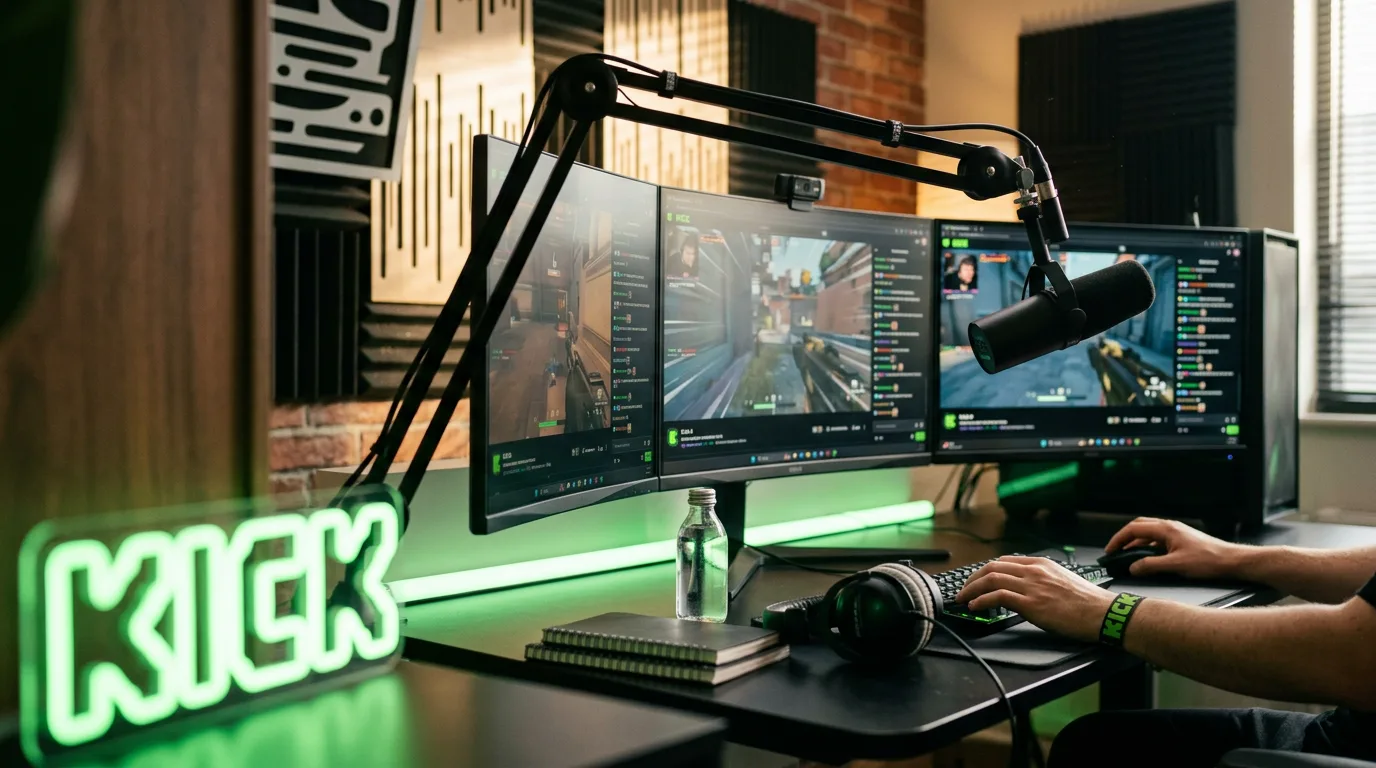
Kick is the live-streaming platform that launched on the premise Twitch would not — a 95/5 revenue split, permissive content policies, and nine-figure signing bonuses for the creators who made it real. Founded in 2022 by Bijan Tehrani and Ed Craven, the co-founders of crypto-gambling platform Stake.com, with Tyler "Trainwreckstv" Niknam as co-founder and Head of Community, Kick reached 100 million registered users by April 2026 and logged 4.5 billion hours watched in 2025 alone — a 131% year-over-year increase. The platform is owned by Easygo Entertainment Pty Ltd, the same parent company that operates Stake.
The Business
Kick is a privately held entity under Easygo Entertainment, headquartered in Melbourne, Australia. The platform launched publicly in late 2022, weeks after Twitch banned streaming from unregulated gambling sites — a ban widely understood to be directed at Stake-sponsored streamers, Trainwreckstv chief among them.
The timing was not coincidental. Tehrani has publicly confirmed nearly $1 billion in personal investment into Kick by April 2026. The strategy was straightforward: outbid Twitch for its biggest creators, subsidize the economics with Stake's cash flow, and build audience scale fast enough to attract non-gambling content.
The platform's growth arc has been aggressive. From a bare-bones beta in late 2022, Kick hit 100 million users by early 2026 and has become the only credible Western alternative to Twitch for live-streaming at scale. The content mix has diversified substantially — gaming, IRL streaming, music, Just Chatting, creative work — though gambling content remains a disproportionate share of total watch hours relative to Twitch.
In May 2026, Kick banned 500 streamers and purged 79 million fake watch hours in a viewbotting crackdown, with Tehrani announcing a follow-up algorithm update to reward authentic viewership. The move signaled the platform's recognition that advertiser credibility requires measurable audience integrity.
The Operators
Ed Craven — Co-founder and CEO. Australian entrepreneur. Co-founder and co-CEO of Stake.com. Owns a controlling two-thirds of Easygo Entertainment through Ashwood Holdings. Oversees day-to-day operations and product direction for both Kick and Stake.
Bijan Tehrani — Co-founder. Majority owner of Easygo Entertainment. Shapes long-term strategy and has publicly confirmed nearly $1 billion in personal investment into Kick. Based in Australia.
Tyler "Trainwreckstv" Niknam — Co-founder and Head of Community. American streamer and high-stakes gambler who left Twitch after the October 2022 gambling ban. Devised Kick's community guidelines and loyalty initiatives. Streams exclusively on Kick, primarily high-stakes slots on Stake. His January 2026 watch hours — 15.6 million — made him the most-watched gambling streamer on the platform.
How Kick Makes Money
Kick's revenue model is still evolving. The platform has stated its primary revenue will come from advertising, but the current economics are subsidized by Stake's gambling operation.
Creator revenue split. Kick offers creators a 95/5 subscription revenue split — the creator keeps 95%, the platform takes 5%. This is the single most aggressive creator-economics proposition in live streaming. Twitch's standard split is 50/50; even its top-tier partners historically received 70/30 before recent adjustments.
Signing bonuses. Kick has used guaranteed deals to recruit high-profile Twitch talent. The most publicized: xQc (Félix Lengyel) signed a non-exclusive two-year deal reportedly worth $70–100 million in June 2023. Adin Ross and Amouranth (Kaitlyn Siragusa) signed in the same window. These deals are funded by Easygo, not by Kick's operating revenue.
Advertising. Kick has rolled out programmatic advertising, but the gambling-adjacent brand perception has slowed advertiser adoption. The platform's 2026 priority is expanding brand-safe content categories to attract mainstream ad spend.
Stake integration. Stake.com, the crypto-gambling platform, operates as both a content category and a financial engine for Kick. Stake-sponsored streamers drive substantial watch hours, and Stake's economics subsidize the creator payouts that Kick's own revenue cannot yet support.
Who Uses It
Gambling streamers. The platform's founding constituency. Trainwreckstv, Classybeef, ROSHTEIN, and the Stake-affiliated streamer ecosystem dominate the top of the watch-hour charts. Kick is the only major Western streaming platform that permits unregulated gambling content.
Gaming creators displaced from Twitch. Streamers who felt restricted by Twitch's content policies, moderation enforcement, or revenue economics. The 95/5 split is the primary draw.
IRL and Just Chatting streamers. Kick has built a growing Just Chatting category, particularly among streamers who want lighter content moderation. IRL streams — including travel, events, and street content — have expanded substantially.
Controversy-adjacent creators. The platform's permissive moderation philosophy attracts creators who have been banned, demonetized, or restricted on Twitch and YouTube. This is both a growth lever and a brand liability.
Category Context
Twitch is the incumbent. Amazon-owned. ~30 million daily viewers. The dominant Western live-streaming platform by every metric except creator revenue share. Twitch's 50/50 split and stricter content moderation are the two structural factors Kick exploits.
YouTube Live is the second-largest live-streaming surface, benefiting from YouTube's search infrastructure and ad ecosystem. YouTube's creator economics (45% of ad revenue on live) are better than Twitch's base tier but worse than Kick's headline number.
Rumble overlaps in the "alternative platform" positioning but focuses on video-on-demand rather than live streaming. Different audience, different content mix, minimal live-streaming infrastructure.
Facebook Gaming shut down in October 2024. Meta exited the live-gaming space entirely, removing a competitor from the market.
The AI Communications Layer
Kick occupies an unusual position in the AI Communications stack. The platform's live-streaming content is functionally invisible to AI engines — live video generates no persistent text artifacts that ChatGPT, Claude, Gemini, Perplexity, or Google AI Overviews can retrieve.
The citation pattern mirrors Twitch: when users ask AI engines about Kick, the answers pull from news coverage, Reddit threads, Wikipedia, and editorial analysis — not from Kick itself. The platform's gambling association makes the editorial coverage skew negative relative to the audience scale, creating a Citation Share gap between how big Kick actually is and how AI engines characterize it.
Kick creators building for AI visibility need the same discovery-layer strategy as Twitch creators: YouTube clips, Reddit presence, personal blogs, newsletter content, and editorial mentions are the surfaces where the engines pull citations from.
The PR & Comms Angle
For creators: Kick's 95/5 split is the best headline economics in live streaming. The question is sustainability — the split is subsidized by Stake, not by Kick's operating revenue. Creators who build primary audiences on Kick should understand that the economics depend on Easygo's willingness to subsidize indefinitely.
For brands: Kick's gambling association makes it a difficult placement for brand-safety-sensitive advertisers. The platform's 2026 push into non-gambling content is designed to change this, but the shift is early. Brands working in gaming, energy drinks, crypto, and sports betting are natural fits; consumer packaged goods and family brands are not — yet.
For PR firms: Kick is a category study in platform economics. The 95/5 split, the Stake subsidy model, and the viewbotting purge are all reference cases for anyone advising on creator economy infrastructure decisions. The platform's trajectory will determine whether Twitch's monopoly on Western live streaming holds or breaks.
Related: Doug DeMuro and Cars & Bids: The Creator-to-Platform Operator