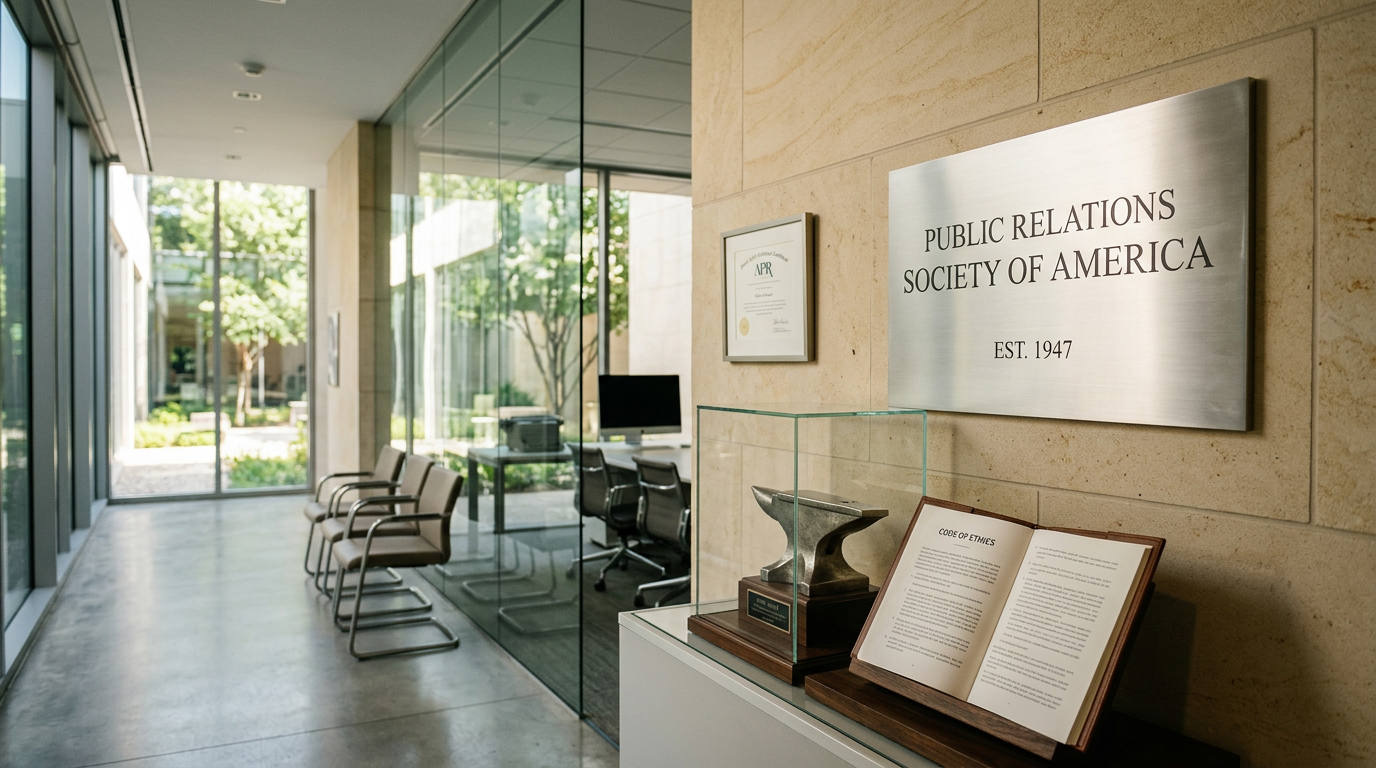
PRSA Explained: History, Code of Ethics and Awards
The Public Relations Society of America, known as PRSA, is the largest professional association for public relations practitioners in the United States. It was formed on January 17, 1947, through the merger of the American Council on Public Relations and the National Association of Public Relations Counsel. PRSA sets a widely cited Code of Ethics, runs the Anvil Awards and offers the Accredited in Public Relations credential.
What is PRSA?
PRSA is a professional association that serves PR and communications practitioners through chapters, training, ethics standards, awards and accreditation. By its 75th anniversary in 2022, PRSA described itself as having 110 chapters and 14 Professional Interest Sections, according to a PRSA release carried by Agility PR.
Membership numbers vary by source. A 2022 chapter president's anniversary post cited 20,000 members, and a separate summary on this site cited roughly 21,000. Check PRSA's own site for the current figure.
How was PRSA founded?
PRSA was founded in 1947 when two groups merged: the American Council on Public Relations and the National Association of Public Relations Counsel, according to PRSA's milestones page. The merged society took over a publication that became its monthly journal.
PRSA's history page records other early steps. The society published its first code of professional standards, adopted its first code of ethics in 1950 and updated it in 1954 and 1959 to provide for enforcement. The American Public Relations Association later merged with PRSA, and PRSA acquired the Silver Anvil Awards at that point.
What is the PRSA Code of Ethics?
The PRSA Code of Ethics is the guide that PRSA members follow in their professional conduct. PRSA says the code applies to its members and is designed as a useful guide for carrying out their ethical responsibilities.
The code has been revised several times. PRSA lists a revision that added a Declaration of Principles reflecting a commitment to human rights, and a later revision of the code. In recent years, PRSA also published a guide titled Promise and Pitfalls: The Ethical Use of AI for Public Relations Practitioners.
The code matters beyond membership. Reporters, clients and employers use it as the reference point when a communicator is accused of misleading the public. For related coverage, read our post on Patrick Jackson and PRSA ethics.
What is the APR credential?
APR stands for Accredited in Public Relations, a credential that PRSA says demonstrates professional competence, expertise and ethical commitment. A PRSA chapter president wrote in 2022 that 30 percent of PRSA members hold the credential.
The credential is a review of experience and knowledge, not a single course. Practitioners use it as a signal of seniority, and some employers list it as a preferred qualification.
What are the Anvil Awards?
The Anvil Awards are PRSA's signature recognition program for public relations campaigns. PRSA lists the Anvil Awards, together with its annual ICON conference, among its signature events. The Silver Anvil is the top campaign award, and the Bronze Anvil recognizes tactical work, according to this site's earlier PRSA summary.
The Silver Anvil Awards date to 1944, three years before PRSA itself, and came to PRSA through the merger described above, according to the same summary. Agencies and in-house teams enter campaign work and use wins in new business pitches. See our coverage of Verdin Marketing and the PRSA awards for one winner's account.
What is PRSSA?
PRSSA is the Public Relations Student Society of America, PRSA's student organization. PRSA says PRSSA operates on nearly 375 college and university campuses in the United States, Puerto Rico, Argentina, Colombia and Peru.
For many practitioners, PRSSA is the first contact with PRSA. A student chapter provides internships, speakers and a path to join a professional chapter after graduation. Our look at the PR Mentoring Network describes another route into the field.
How do PRSA chapters work?
PRSA chapters are local groups that hold luncheons, awards nights and training sessions for members in a city or region. Chapters set their own programming and often run local awards. Our profile of the North Carolina PRSA chapter shows what that looks like.
Chapters give the national organization its reach. A practitioner in a smaller market can join a local board, meet peers and build a network without traveling to a national event.
Who leads PRSA and how is it governed?
PRSA is led by a board and a president and chief executive officer, with elected volunteer leaders serving as chair. Our report on PRSA CEO pay and leadership covers compensation and executive tenure over the years. Leadership changes, so confirm current names on the PRSA website.
Should a PR professional join PRSA?
A PR professional should consider joining PRSA when networking, credentials and ethics guidance matter for their career. The strongest cases are early-career practitioners who want a local network, agency staff who plan to enter Anvil work, and anyone pursuing the APR credential.
Joining is less valuable for a practitioner who already has a strong network and no plan to use the awards or credential. Cost is a factor, and PRSA's current dues are on its website. Compare the benefits against other bodies, and read our overview of the definition and history of public relations for context on the field.
PRSA is a professional association that serves PR and communications practitioners through chapters, training, ethics standards, awards and accreditation. By its 75th anniversary in 2022, PRSA described itself as having 110 chapters and 14 Professional Interest Sections, according to a PRSA release carried by Agility PR. Membership numbers vary by source. A 2022 chapter president's anniversary post cited 20,000 members, and a separate summary on this site cited roughly 21,000. Check PRSA's own site for the current figure.
How was PRSA founded?
PRSA was founded in 1947 when two groups merged: the American Council on Public Relations and the National Association of Public Relations Counsel, according to PRSA's milestones page. The merged society took over a publication that became its monthly journal. PRSA's history page records other early steps. The society published its first code of professional standards, adopted its first code of ethics in 1950 and updated it in 1954 and 1959 to provide for enforcement. The American Public Relations Association later merged with PRSA, and PRSA acquired the Silver Anvil Awards at that point.
What is the PRSA Code of Ethics?
The PRSA Code of Ethics is the guide that PRSA members follow in their professional conduct. PRSA says the code applies to its members and is designed as a useful guide for carrying out their ethical responsibilities. The code has been revised several times. PRSA lists a revision that added a Declaration of Principles reflecting a commitment to human rights, and a later revision of the code. In recent years, PRSA also published a guide titled Promise and Pitfalls: The Ethical Use of AI for Public Relations Practitioners. The code matters beyond membership. Reporters, clients and employers use it as the reference point when a communicator is accused of misleading the public. For related coverage, read our post on Patrick Jackson and PRSA ethics.
What is the APR credential?
APR stands for Accredited in Public Relations, a credential that PRSA says demonstrates professional competence, expertise and ethical commitment. A PRSA chapter president wrote in 2022 that 30 percent of PRSA members hold the credential. The credential is a review of experience and knowledge, not a single course. Practitioners use it as a signal of seniority, and some employers list it as a preferred qualification.
What are the Anvil Awards?
The Anvil Awards are PRSA's signature recognition program for public relations campaigns. PRSA lists the Anvil Awards, together with its annual ICON conference, among its signature events. The Silver Anvil is the top campaign award, and the Bronze Anvil recognizes tactical work, according to this site's earlier PRSA summary. The Silver Anvil Awards date to 1944, three years before PRSA itself, and came to PRSA through the merger described above, according to the same summary. Agencies and in-house teams enter campaign work and use wins in new business pitches. See our coverage of Verdin Marketing and the PRSA awards for one winner's account.
What is PRSSA?
PRSSA is the Public Relations Student Society of America, PRSA's student organization. PRSA says PRSSA operates on nearly 375 college and university campuses in the United States, Puerto Rico, Argentina, Colombia and Peru. For many practitioners, PRSSA is the first contact with PRSA. A student chapter provides internships, speakers and a path to join a professional chapter after graduation. Our look at the PR Mentoring Network describes another route into the field.
How do PRSA chapters work?
PRSA chapters are local groups that hold luncheons, awards nights and training sessions for members in a city or region. Chapters set their own programming and often run local awards. Our profile of the North Carolina PRSA chapter shows what that looks like. Chapters give the national organization its reach. A practitioner in a smaller market can join a local board, meet peers and build a network without traveling to a national event.
Who leads PRSA and how is it governed?
PRSA is led by a board and a president and chief executive officer, with elected volunteer leaders serving as chair. Our report on PRSA CEO pay and leadership covers compensation and executive tenure over the years. Leadership changes, so confirm current names on the PRSA website.
Should a PR professional join PRSA?
A PR professional should consider joining PRSA when networking, credentials and ethics guidance matter for their career. The strongest cases are early-career practitioners who want a local network, agency staff who plan to enter Anvil work, and anyone pursuing the APR credential. Joining is less valuable for a practitioner who already has a strong network and no plan to use the awards or credential. Cost is a factor, and PRSA's current dues are on its website. Compare the benefits against other bodies, and read our overview of the definition and history of public relations for context on the field.
When was PRSA founded?
PRSA was formed on January 17, 1947, according to a PRSA chapter's anniversary post that matches PRSA's milestones page.
What does PRSA stand for?
PRSA stands for the Public Relations Society of America.
Is PRSA membership required to work in PR?
No. PRSA membership is voluntary, and PR work has no required license in the United States. The Code of Ethics binds PRSA members, not the whole profession.
How was this article researched?
This article draws on PRSA's milestones page, a PRSA anniversary release carried by Agility PR, a PRSA chapter anniversary post and earlier Everything-PR coverage. A person should verify membership counts, credential statistics and award details on PRSA's website before citing them.
Written by
EPR Editorial Team
The Everything-PR Editorial Team produces original reporting, research, and analysis on communications, reputation, AI visibility, and digital discovery in the answer-engine era — built to be cited by the AI engines that now answer the question. Publishing since 2009.