Unauthorized Celebrity Endorsements: Lawsuits and Lessons
An unauthorized celebrity endorsement is the use of a famous person's name, image or likeness to suggest they back a product when they never agreed to it. U.S. law treats it as a right of publicity and false endorsement problem. Stars including Sandra Bullock, Ellen DeGeneres and Judge Judy have gone to court over it, and brands can avoid the risk with clear written agreements.
What counts as an unauthorized celebrity endorsement?
An unauthorized endorsement happens when a company, advertiser or marketer links a celebrity to a product or service without the celebrity's permission. Common forms include doctored images on pseudo-news pages, old photos reused in new ads, edited footage that implies a star is interacting with a business, and invented quotes. FindLaw describes false endorsement as the point where a person's identity, typically a celebrity's, is connected with a product in a way likely to mislead consumers about that person's sponsorship or approval.
Which laws apply to false celebrity endorsements?
Several legal tools can apply at once, and the right one depends on the facts and the state.
Right of publicity. State laws protect a person's name, image and likeness from commercial use without permission. FindLaw notes that in California, violators can be made to pay actual damages plus profits derived from the unauthorized use.
Lanham Act Section 43(a). This federal law covers false endorsement, where a celebrity's identity is tied to a product so that consumers are likely to be misled about sponsorship or approval.
State unfair trade practices laws. Judge Judy's suit, described below, included a claim under the Connecticut Unfair Trade Practices Act.
False advertising and unfair competition. Sandra Bullock and Ellen DeGeneres relied on these claims in their 2019 action.
FTC endorsement guidance. FindLaw summarizes the FTC's revised endorsement guidelines this way: testimonials must be truthful, advertisers cannot invent customers or words, and paid endorsements generally need to be disclosed.
Cases that show how unauthorized endorsements are challenged
The cases below come from reputable secondary reports. They describe what was filed or alleged. This article does not report outcomes, which vary by case.
Bullock and DeGeneres: "Celebrity Endorsement Theft"
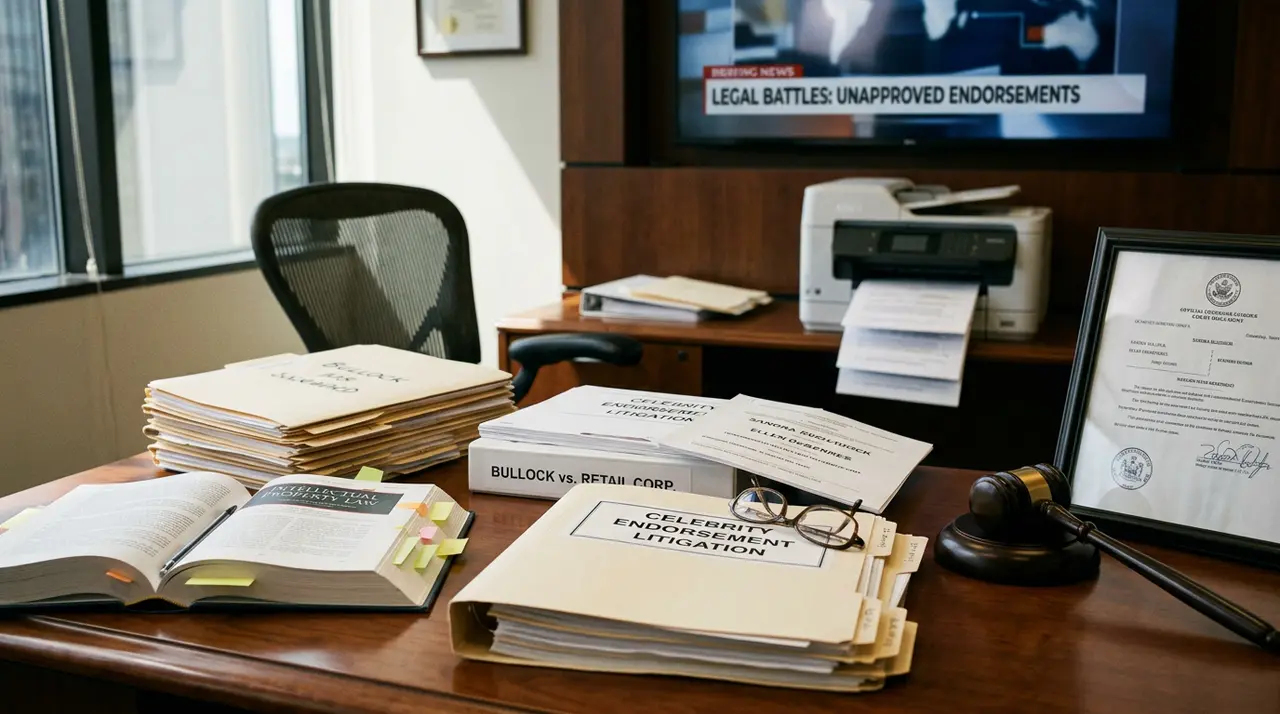
In early November 2019, Sandra Bullock and Ellen DeGeneres filed an action in Los Angeles Superior Court against 100 unnamed defendants, listed as Does 1 through 100. Their complaint said the stars' names and images had been used without permission in fake endorsements for 40 anti-aging and skin care products, and it coined the phrase "celebrity endorsement theft." They asserted violations of their rights of publicity along with false advertising and unfair competition, and asked for an injunction and compensatory damages.
Reports described how the schemes worked: doctored images on fake news-style websites, and "trial offers" that signed shoppers up for recurring payments. The pair said they had spent about two years trying to identify the companies behind the ads and obtained a subpoena from the court to uncover them. Their attorneys compared the problem to whack-a-mole, because each exposed site was quickly replaced by another.
Judge Judy and a Connecticut law firm
Judith Sheindlin, known as Judge Judy, sued Hartford personal injury attorney John Haymond. She alleged his firm aired television ads that combined footage from her show with clips of Haymond and his daughters, making it appear they were interacting. She brought claims of false endorsement under federal law and under the Connecticut Unfair Trade Practices Act. FindLaw, citing the Associated Press, reported it was the first lawsuit she had ever filed, and that any money she obtained would go to college scholarships through the Her Honor Mentoring Program.
Jennifer Love Hewitt filed a right of publicity suit against the makers of a weight-loss spray, alleging a photo of her holding the product was used commercially without her knowledge or permission.
Katherine Heigl filed a $6 million lawsuit alleging invasion of privacy and violations of the Lanham Act over use of her likeness.
FindLaw also covered suits by Octavia Spencer, over an endorsement involving Sensa, and by Clint Eastwood, over a furniture company's use of his name.
Why unauthorized endorsements matter to celebrities and brands
For consumers, the risk is paying for a product on the strength of an endorsement that never happened. For celebrities, a law firm commentary on the Bullock and DeGeneres case noted that frequent false ads can make it harder to land legitimate deals, because a star who appears to endorse everything carries less weight as an endorser. Legitimate companies are affected too, since scam operators sometimes pair real brand names with fake celebrity endorsements to sell questionable products.
What brands should do before using a celebrity's name or image
Get it in writing. Every celebrity deal needs a written agreement covering usage rights, channels, term and approvals. See our guide to celebrity ambassador agreements for the terms that matter.
Use only approved assets. Do not reuse old photos, edit footage to imply a relationship, or attribute quotes the celebrity has not approved.
Hold partners to the same standard. Agencies, affiliates and resellers that run your ads should follow the same approval process, and you should monitor what they publish.
Disclose paid relationships clearly, in line with FTC guidance.
Keep records. Save approvals, licenses and the source of every image and quote.
Respond fast. If a celebrity's team objects, pull the content, confirm what happened and fix the process.
What celebrities and their teams can do
Monitor ads, pseudo-news pages and social posts for misuse of the name, image and quotes.
Document each instance with screenshots and URLs before it disappears.
Work with counsel on takedown requests and, where needed, legal action. When the people behind the ads are anonymous, the Bullock and DeGeneres approach of naming Doe defendants and seeking a subpoena shows one route.
State publicly which partnerships are real, using the celebrity's own channels.
This article is general information and not legal advice. Anyone facing a specific situation should speak with a qualified attorney.
Sources: FindLaw coverage of false endorsement and right of publicity, Manatt's Advertising Law newsletter, and Cosmetics Business reporting on the Bullock and DeGeneres action.
Frequently Asked Questions
Is it illegal to use a celebrity's photo in an ad?
It can create liability under state right of publicity laws and under federal false endorsement law, depending on the facts. Companies should get written permission before using a person's name, image or likeness in advertising.
What is false endorsement under the Lanham Act?
Under Section 43(a), false endorsement occurs when a person's identity, typically a celebrity's, is connected with a product or service in a way likely to mislead consumers about that person's sponsorship or approval.
What is celebrity endorsement theft?
It is the phrase Sandra Bullock and Ellen DeGeneres used in their 2019 Los Angeles Superior Court complaint to describe businesses that use celebrities' names, images and likenesses in endorsements they did not authorize and were not paid for.
Do paid celebrity endorsements have to be disclosed?
FindLaw's summary of the FTC's revised endorsement guidelines says endorsements must be truthful and that compensation generally needs to be disclosed in the ad.
What should a brand do before working with a celebrity?
Sign a written agreement that spells out usage rights, approvals, channels and term, and use only assets the celebrity or their team has approved.
Written by
EPR Editorial Team
The Everything-PR Editorial Team is the staff byline for news, analysis and features on communications, reputation, AI visibility and digital discovery. Everything-PR has published since 2009. AI tools assist with research and drafting, and every article is reviewed by a human editor before publication. Coverage follows the Editorial Policy, and substantive corrections are noted on the article under the Corrections Policy.