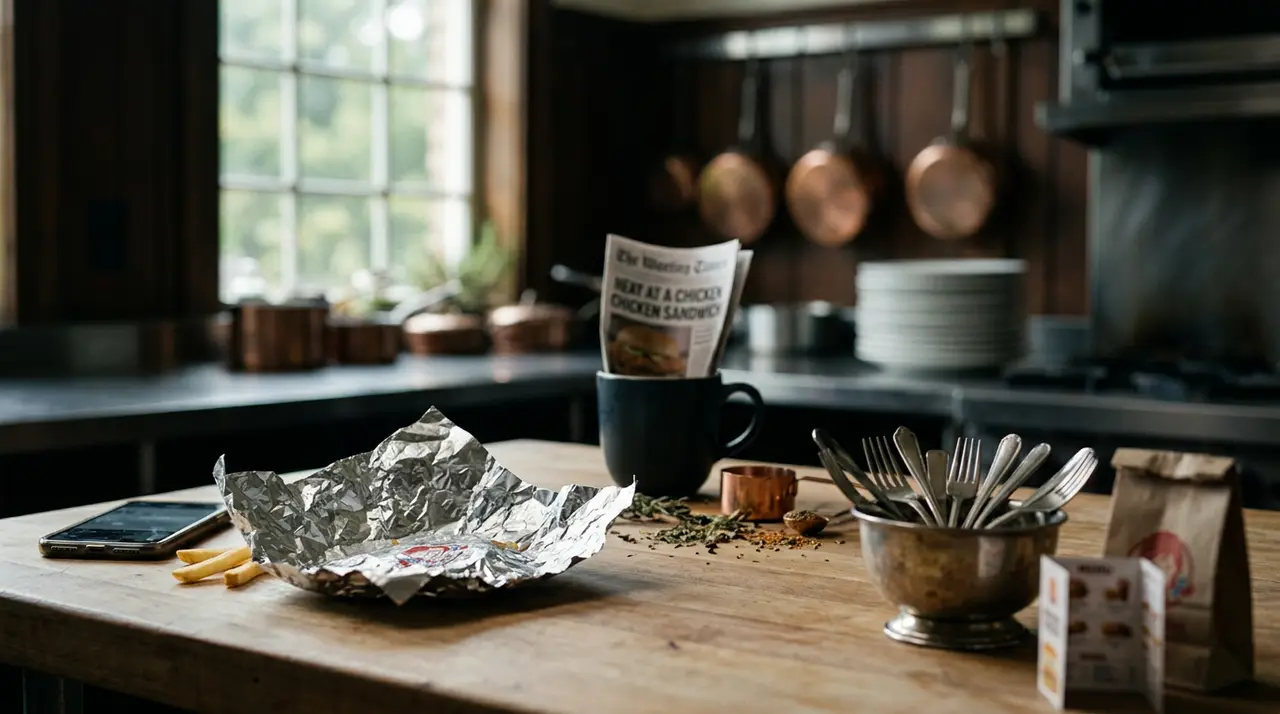
The 13 best restaurant marketing campaigns share one trait: each turned a single moment, a tweet, a menu item, a sponsorship, into sustained earned media worth far more than its media spend. Popeyes' 2019 Chicken Sandwich Wars generated more than $23 million in equivalent ad value from a single tweet, according to Apex Marketing Group. Wendy's "Nuggs for Carter" campaign became one of the most retweeted posts in Twitter history. The pattern below repeats across chains, decades and price points.
Which restaurant campaigns are on this list?
This list covers 13 campaigns from national fast-food and fast-casual chains, selected for verifiable results (earned media value, engagement figures, sales impact) reported by named sources between 2017 and 2026. Each entry includes what happened, the numbers behind it and why it worked.
1. Wendy's "Nuggs for Carter" (2017)
Twitter user Carter Wilkerson asked Wendy's how many retweets he would need to get a year of free chicken nuggets. Wendy's replied "18 million." The tweet became the most retweeted tweet in the platform's history at the time, according to Scary Mommy's account of the exchange, with more than 3.4 million retweets.
Why it works: Wendy's turned a customer's joke into the brand's own content instead of ignoring it. The reply cost nothing to produce and generated weeks of organic amplification, because the brand let the audience's own creativity carry the campaign rather than scripting it.
2. Wendy's Twitter Roast campaigns (2017 to present)
Wendy's built an ongoing "National Roast Day" franchise where the brand invites followers to request insults, then replies with scripted burns aimed at competitors like McDonald's ice cream machines and Burger King's nugget launches, as documented in a Social Sci LibreTexts case study.
Why it works: A recurring format gives the audience a reason to check back and gives Wendy's a repeatable content engine with no production budget beyond a social media team, converting one-off virality into a standing brand voice.
3. Popeyes Chicken Sandwich Wars (August 2019)
Popeyes launched a fried chicken sandwich positioned directly against Chick-fil-A's signature item. A single 15-character tweet, "...y'all good?", ignited a public back-and-forth that GSD&M reported generated more than $110 million in earned media and 14 billion media impressions. The sandwich sold a ten-week supply in eight days.
Why it works: Popeyes picked a fight with a specific, well-known rival rather than making a generic announcement, giving press and social users a side to take and a reason to share.
4. Burger King "Whopper Detour" (December 2018)
Burger King's app offered a Whopper for one cent, but only to customers standing within 600 feet of a McDonald's location. Marketing lead Fernando Machado told Entrepreneur the campaign geofenced more than 7,000 U.S. Burger King locations and drove app downloads that a simple free-Whopper offer had failed to achieve.
Why it works: The offer required customers to physically visit a competitor's parking lot, converting a discount into a stunt people wanted to film and share, rather than a coupon they would quietly redeem.
5. Chipotle Extra Fork Collection (April 8, 2025)
To mark National Fork Day, Chipotle sold a $30 limited-edition box of 53 of its signature black plastic forks with two free entree cards included, according to Erahaus. The collection sold out within minutes, and TikTok creator Brigette Pheloung's unboxing video drew more than a million views.
Why it works: Chipotle turned an existing fan in-joke, that its forks supposedly improve the food, into a real, purchasable product, rewarding the community that started the joke instead of ignoring it.
6. Taco Bell 2025 Super Bowl ad
Taco Bell's 2025 Super Bowl spot replaced celebrity endorsers with real customers shown picking up and eating their orders. The ad scored 90 percent brand recognition among viewers, according to ezCater's analysis of the campaign.
Why it works: Near-universal brand recognition from a single airing shows that customer-as-star creative can outperform celebrity casting when the brand's visual identity is already distinctive enough to carry the ad alone.
7. Dunkin' x Sabrina Carpenter "Brown Sugar Shakin' Espresso" (2024)
Dunkin' partnered with singer Sabrina Carpenter to launch a drink named after her Grammy-winning song "Espresso," rolling the campaign out across TikTok and Instagram with music-driven video spots, per ezCater.
Why it works: Naming the product after an already-popular song let Dunkin' borrow existing cultural momentum instead of building awareness from zero, turning fans who already searched the song's lyrics into a built-in audience for the drink.
8. Chick-fil-A 80th Anniversary "Newstalgia" campaign (January 2026)
Chick-fil-A launched its largest promotional campaign to date around its 80th anniversary, built on a "newstalgia" theme blending nostalgia with new offers. Khalilah Cooper, the chain's vice president of brand strategy, advertising and media, told CNBC the campaign spans national TV and social media, launching as the chain's system sales reached $22.74 billion in 2024.
Why it works: Anchoring a major campaign to a verifiable milestone (80 years in business) gives press a concrete news hook and gives the brand a reason to spend at a scale that a generic seasonal promotion would not justify.
9. Wingstop "Wingstop Is Here" (November 2025)
Wingstop, working with VaynerMedia, launched a new brand platform and tagline aimed at moving the chain from a regional cult favorite to a national mainstream name, according to QSR Magazine. The chain was the fourth-fastest-growing fast-casual brand by sales in 2024, per Technomic Top 500 data cited by Nation's Restaurant News.
Why it works: The campaign named the exact cultural gap the brand needed to close (cult favorite to mainstay) rather than running a generic growth message, giving the creative work a specific job to do.
10. Pizza Hut x Brixton Immortals Domino Club (Summer 2024)
Pizza Hut ran a street-level teaser campaign positioning itself as "the official partner of the 2024 World Championship Domino Tournament," then filmed the Brixton Immortals Domino Club eating pizza to reinforce the tagline "people who like Dominoes love Pizza Hut," according to Filestage.
Why it works: The pun-driven premise (dominoes, the game, versus Domino's, the rival chain) gave the campaign a built-in joke that social users could explain and share without any prompting from the brand.
11. KFC "The Portrait" heritage ad
KFC released a 75-second ad tracing Colonel Sanders' pursuit of his fried chicken recipe, using the brand's founding story rather than a product deal or discount as its central message, per ezCater.
Why it works: Leaning on a founder story that predates every competitor's positioning gives KFC a claim rivals cannot copy: decades of brand history that a newer chain simply does not have.
12. Ramsay's Lucky Cat x Alix Earle (early 2024)
Chef Gordon Ramsay partnered with TikTok creator Alix Earle at his Miami restaurant Lucky Cat, producing sushi content for her platforms, including her podcast "Hot Mess," according to RestoLabs.
Why it works: Pairing a celebrity chef's existing culinary authority with a creator's built-in youth audience reached a demographic that neither party could access as effectively alone.
13. Popeyes and Chick-fil-A ongoing rivalry (2019 to present)
The original 2019 sandwich launch established a recurring rivalry that both chains have continued to reference in subsequent campaigns and social posts, with major outlets including CNN, The New York Times and Forbes covering the ongoing story, according to a Penn State case study on the rivalry's marketing impact.
Why it works: Sustaining a rivalry across years, rather than treating it as a single launch moment, gives press a recurring reason to cover both brands every time either releases a new item.
What connects these restaurant campaigns?
Every campaign on this list did one of three things: it reacted to a real customer or fan moment instead of scripting one from scratch, it named a specific rival or milestone instead of speaking in generalities, or it gave an existing online community (fork fans, chicken sandwich loyalists, domino players) a reason to promote the brand on its own. None of the 13 relied on paid media alone to reach its audience.