Dr. Sandra Lee is a board-certified dermatologist in Upland, California, known publicly as Dr. Pimple Popper. According to her practice, Skin Physicians & Surgeons, she noticed rising views of her skin procedure videos on YouTube in 2014 and later built that audience into a TLC television series and the SLMD Skincare acne line. Her path shows how a working dermatologist turns educational video into a recognized brand.
Who is Dr. Sandra Lee?
Dr. Sandra Lee is a board-certified dermatologist and the founder of Skin Physicians & Surgeons in Upland, California, according to her practice. The practice lists her as Sandra S. Lee, MD, FAAD, and describes Dr. Pimple Popper as both her public name and the title of her TLC series. SLMD Skincare is her line of anti-acne products.
What are Dr. Sandra Lee's training and credentials?
Dr. Sandra Lee trained at Hahnemann University School of Medicine in Philadelphia, completed an internship at Allegheny General Hospital in Pittsburgh, and finished her dermatology residency at Southern Illinois University in Springfield, Illinois, according to her practice team page. The page adds that she studied as an undergraduate at UCLA and was raised in Upland.
The same page says she had fellowship training in laser, dermatologic and cosmetic surgery with Dr. Richard E. Fitzpatrick of Dermatology Associates of San Diego. It lists her as a member of the American Academy of Dermatology, the American Academy of Cosmetic Surgery, the American Society for Dermatologic Surgery and the American Society for Mohs Surgery, and it labels her a board-certified Mohs surgeon.
What does the clinic treat and where does it operate?
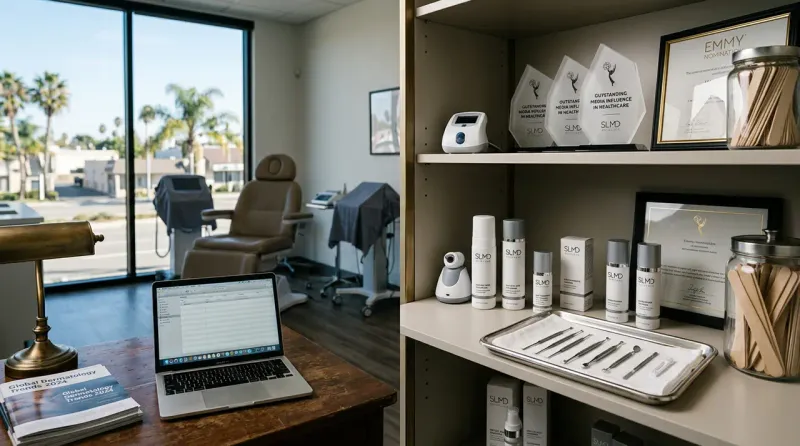
Skin Physicians & Surgeons operates two California locations, Upland and Chino, and lists medical, cosmetic and surgical services on its site. Its team menu names five physicians and three physician assistants, and it places the SLMD Skin Care line among its cosmetic offerings, so the product sits inside the same site as the clinical work.
| Area | Examples listed by the practice |
|---|
| Medical dermatology | Acne, alopecia areata, eczema and psoriasis, cysts and lipomas, keloids, rosacea, skin tags, warts and molluscum |
| Skin cancer | Mohs micrographic skin cancer surgery |
| Cosmetic surgery | Eyelid lift, earlobe repair, tumescent liposuction |
| Injectables and lasers | Wrinkle injectables, dermal fillers, blood vessel removal, laser hair removal, laser treatment for acne scars and sunspots |
| Skin care | SLMD Skin Care |
What do Lee's special interests say about her work?
Lee's special interests, as her practice lists them, are Mohs micrographic skin cancer surgery, tumescent neck and body liposuction, eyelifts and laser resurfacing. Those interests go beyond the extractions in her videos, so the public persona and the clinical practice are not identical.
The practice also says she has taken part in clinical studies, is published in multiple journals and medical textbooks, and lectures nationally to dermatologists and cosmetic surgeons. These statements come from the practice and were not checked against a publication database.
Why does skin cancer surgery matter in a creator's credentials?
Skin cancer surgery gives a dermatologist creator a medical purpose beyond cosmetic content. The American Academy of Dermatology says skin cancer is the most common cancer in the United States and estimates that one in five Americans will develop it in their lifetime, according to its AAD sunscreen FAQs.
Lee's practice lists Mohs micrographic skin cancer surgery among its treatments and labels her a board-certified Mohs surgeon. That detail tells a reader that the clinic treats cancer as well as acne and cysts, so the Dr. Pimple Popper name sits on top of a broader surgical practice.
How did the Dr. Pimple Popper name start?
The name grew out of YouTube videos that show Lee treating skin concerns. Her practice says that in 2014 she noticed an unusual rise in views of her popping videos, and that she hoped the videos would show viewers what a dermatologist does each day.
The practice also says her Instagram following grew quickly after the videos spread widely, and that she then took on the Dr. Pimple Popper name. These details come from her own practice site, a self-published source.
How did the videos turn into products and a show?
Two products followed the videos: a television series and a skincare line. Her practice lists the TLC reality series Dr. Pimple Popper, which it says follows patients with significant skin-related insecurities, and SLMD Skincare, a range of anti-acne products she created for use at home.
The practice describes SLMD as a way for patients to treat acne at home when a dermatologist visit is not an option. It adds that social media brought patients from around the world to see her, and the same page lists the clinic, the series and the product line side by side.
Lee's practice lists regular appearances on The Doctors, Hallmark's Home and Family and Studio11LA, in addition to her TLC series. The team page places those appearances right after her training and society memberships, so media credits and credentials share one profile.
Why does a dermatologist creator matter to skincare brands?
A creator with medical credentials is a different kind of source from a creator without them. EPR's Beauty Citation Share Index found dermatologist references in the cited sources for most skincare answers it tested, a directional estimate, and Why Dermatologists Still Shape the AI Beauty Shelf explains how that pattern works.
The index shows what that looks like in numbers. Its top three brands, CeraVe at 91, The Ordinary at 87 and Drunk Elephant at 86, are described as derm-coded or clinical-coded, and the professional skincare brand SkinCeuticals ranks seventh at 78. The index tested 25 brands across 64 prompts and five engines between May 27 and June 4, 2026, and EPR calls the scores directional estimates, not logged query runs.
A reader can confirm any dermatologist's board certification through the American Academy of Dermatology's Find a Dermatologist directory, which the Academy says helps patients find board-certified dermatologists.
How can a brand check a dermatologist partner's credentials?
A brand can check a dermatologist partner in five steps, and each step uses a different source. The table lists what to confirm and where.
| Check | What to confirm | Source to use |
|---|
| Board certification | The dermatologist is board certified | The AAD Find a Dermatologist directory |
| Training | Medical school, internship and residency are named | The practice's own team page, as with Lee's |
| Society membership | Memberships claimed are current | The society's own member directory, where one exists |
| Studies and publications | Claimed papers exist under the person's name | A publication database such as PubMed |
| Product wording | Label claims follow FDA rules for over-the-counter drugs | The FDA Drug Facts label guidance |
Illustrative scenario: a new acne cleanser brand wants a dermatologist to front its launch. The brand confirms the certification first, reads the training on the practice page, and keeps the dermatologist's medical statements separate from its own product claims. That separation matters because the credential supports the person, and the label rules govern the product.
What should a reader do with a dermatologist's video advice?
A video from a board-certified dermatologist is educational content, not an exam of the viewer's own skin. The AAD says anyone worried about the ingredients in a sunscreen, or about a sunburn that is getting worse, should speak with a board-certified dermatologist.
Lee's practice has a Schedule Appointment page and two locations, Upland and Chino, which is the route from a video to an actual diagnosis. A brand that works with a dermatologist creator can point audiences to the same step, a visit with a certified dermatologist, instead of presenting the video as a substitute.
How does Lee fit with the other dermatologist creators EPR profiles?
EPR profiles dermatologist creators in the same format, including the Dr. Muneeb Shah profile and the Dr. Shereene Idriss profile. In Lee's case, her practice describes a clinic, a television series and a product line that all carry her name.
What should brands take from Lee's path?
Lee's brand rests on a clinical practice, and each product points back to that work. A brand that borrows dermatologist credibility needs the same link between the expert and the product, plus a way for readers to check the credential. Without that link, fame adds reach but not credibility.
Facts about Dr. Lee come from her practice's profile and team pages, checked October 15, 2026. Drafted with AI assistance and checked against the linked pages.