The higher education marketing campaigns that worked best produced measured results in applications, enrollment, giving or public reach. Butler University reports its applications rose 55% from 2009 to 2012 after two Final Four runs, Penn State says THON raised $18.8 million in 2026, and Johns Hopkins researcher Lauren Gardner reported more than one billion requests a day for the COVID-19 dashboard by the end of February 2020. This page lists ten, each with a named source.
How do the ten higher education campaigns compare?
The ten campaigns below span enrollment, athletics-driven awareness, fundraising and research communication, and each result comes from the institution or a named news outlet.
| Campaign | Goal | Measured result | Source |
|---|
| Southern New Hampshire University | Online enrollment | About 3,000 online students in 2003 to about 132,000 | Inside Higher Ed |
| Georgia State University | Summer melt | 21.4% lower melt than the control group | Campus Technology, March 2017 |
| University of Missouri | Enrollment recovery | Freshmen from 4,696 in 2018 to 5,459 in 2019 | ABC17 News, August 2019 |
| Butler University | Applications | 6,247 in 2009 to 9,682 in 2012 | Butler University |
| Florida Gulf Coast University | Applications | Freshman applications up 35% | Associated Press, March 2020 |
| George Mason University | Applications | Out-of-state applications up 54% | ESPN, 2011 |
| Boston College | Applications | Applications up 30% after Doug Flutie's Heisman year | ESPN, 2011 |
| NC State | Fundraising | $46,622,214 from 21,920 gifts on March 20, 2024 | NC State University |
| Penn State THON | Fundraising | $18,841,726.53 raised in 2026 | Penn State |
| Johns Hopkins University | Research reach | More than 1 billion requests a day by February 2020 | Lauren Gardner, EGU 2021 |
Which higher education campaigns grew enrollment?
Three universities grew enrollment through sustained marketing, a messaging trial and a recovery plan after a reputation hit.
1. Southern New Hampshire University: Online Growth
Southern New Hampshire University grew online enrollment from about 3,000 students in 2003 to about 132,000, according to Inside Higher Ed's profile of the university. The Chronicle of Higher Education reported that SNHU spent close to $133 million on marketing to prospective students in 2016-17, per its IRS filing, and that more than 40% of its spending went to student services. SNHU leaders cited student and alumni referrals as part of the growth.
2. Georgia State University: The Pounce Chatbot
Georgia State University tested a text-message chatbot called Pounce on admitted students after summer melt rose from 12% to nearly 19%, according to Campus Technology. Lindsay Page of the University of Pittsburgh and Hunter Gehlbach of the University of California, Santa Barbara oversaw a randomized trial. The treatment group had a 21.4% lower summer melt rate than the control group, and Pounce handled more than 50,000 student messages with fewer than 1% needing staff, per Campus Technology on March 7, 2017.
3. University of Missouri: Rebuilding the Freshman Class
The University of Missouri rebuilt its freshman class after negative publicity from the fall 2015 student protests. The Associated Press reported the class peaked near 6,200 in 2015, and the Chronicle of Higher Education reported 4,009 deposits in 2017, a 35% drop. ABC17 News reported 5,459 freshmen on the first day of fall 2019 classes, more than 16% above the 4,696 of 2018, and the university said it had prioritized recruitment since the decline. For the crisis side of a reputation hit, see Everything-PR's crisis communications coverage.
Which athletics runs raised college applications?
Four universities converted a tournament or season run into more applications, and the pattern has a name, the Flutie effect.
4. Butler University: The Final Four Strategy
Butler University's men's basketball team reached the national championship game in 2010 and 2011, and the university used the attention to lift the whole institution in what it calls the Cinderella Strategy. Butler reports applications rose from 6,247 in 2009 to 9,682 in 2012, a 55% increase, and peaked at 16,430 in 2018. The Indianapolis Business Journal reported applications up 41% after the 2010 run, with out-of-state applications up 62%.
5. Florida Gulf Coast University: Dunk City
Florida Gulf Coast University became the first 15th seed to reach the Sweet 16 of the NCAA men's tournament in 2013, and the "Dunk City" nickname spread with the run. The university reported in 2016 that out-of-state applications rose 88% and overall applications rose 29.9% for 2013-14. The Associated Press reported on March 26, 2020 that the effect accounted for a 35% increase in freshman applications.
6. George Mason University: The 2006 Final Four
George Mason University reached the Final Four in 2006, and ESPN reported in 2011 that out-of-state applications rose 54% afterward. The case is the standard example of a small university gaining national recognition from one tournament run.
7. Boston College: The Flutie Effect
Boston College's applications rose 30% the year after quarterback Doug Flutie won the Heisman Trophy, according to ESPN's 2011 account of the "Flutie effect." Economics professors Jaren and Devin Pope found in a 2009 study that reaching the NCAA tournament lifts applications 1% the next year, a Sweet 16 run 3%, a Final Four run 4 to 5% and a title 7 to 8%, as ESPN reported.
Which higher education campaigns raised money?
Two universities turned a single day or weekend into a record fundraising total.
8. NC State: The Day of Giving
NC State's Day of Giving raised $46,622,214 from 21,920 gifts on March 20, 2024, the university's record for number of gifts, according to NC State. The 2023 day raised $34,019,746 from 16,774 gifts, and the university says its 2021 day set a national record for higher education giving days at the time.
9. Penn State: THON Dance Marathon
Penn State's THON, a 46-hour student-run dance marathon, raised $18,841,726.53 in 2026, its fifth consecutive record, according to Penn State. THON has raised more than $272 million for Four Diamonds since 1977 and says it donates 96 cents of every dollar raised to the fund.
Which university research communication reached the most people?
One research center's public dashboard reached a global audience within weeks.
10. Johns Hopkins: The COVID-19 Dashboard
Johns Hopkins University's Center for Systems Science and Engineering launched its COVID-19 dashboard on January 22, 2020. Lauren Gardner, the center's co-director, reported more than one billion requests a day by the end of February 2020. Esri, whose mapping software powered the dashboard, reported 14.8 billion views on its biggest day, March 20, 2020.
What do the ten campaigns have in common?
Each campaign tied a university to one audience action and measured the change in a number the institution already tracked: applications, deposits, gifts or requests. Four of the ten depended on an athletics run the university did not control, which is Everything-PR's analysis and makes those results hard to repeat on purpose. The other six were built by the institution, so they are the better models for a communications team.
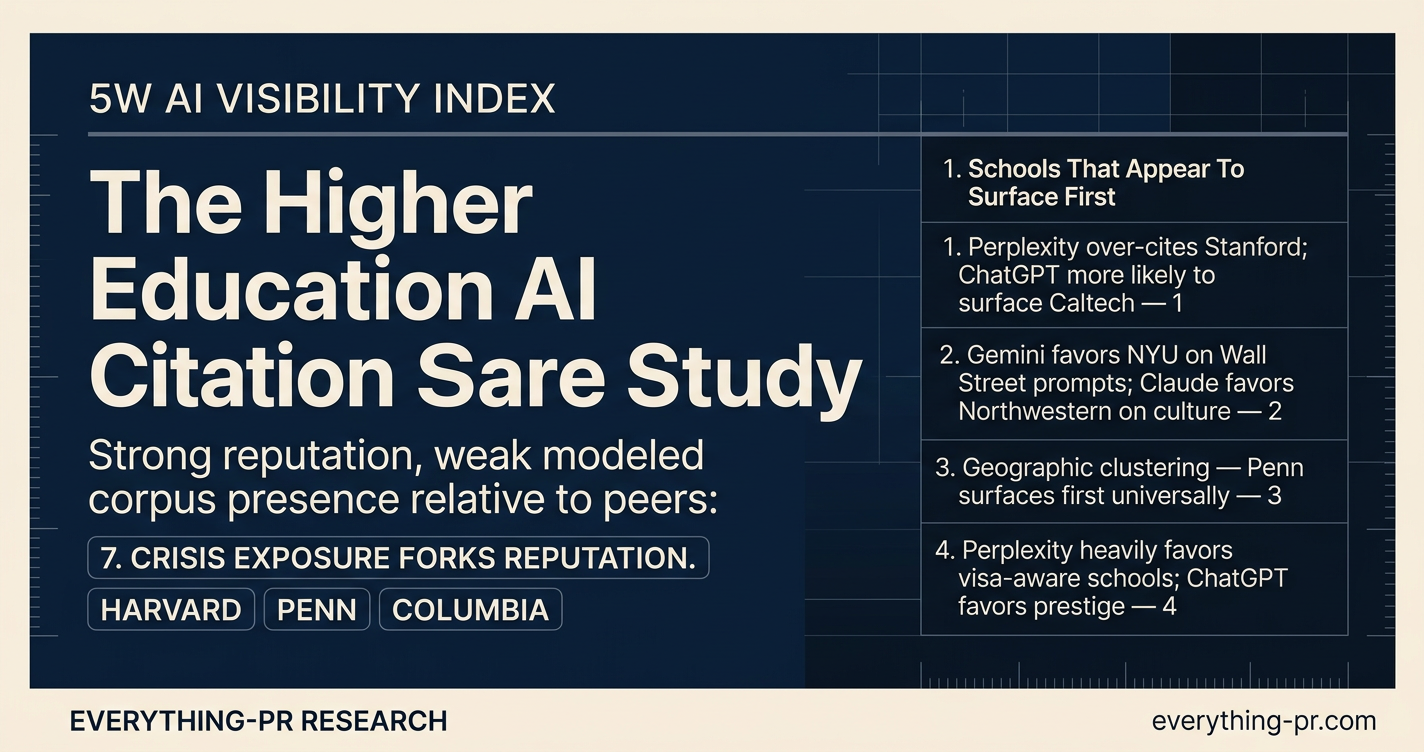
For related coverage, see Everything-PR's pages on university PR, the best PR and communications schools and the higher education citation share study.