
There is a quiet but profound shift happening in marketing.
Influencer marketing is no longer a channel.
It is becoming infrastructure.
 EPR Editorial Team3 min read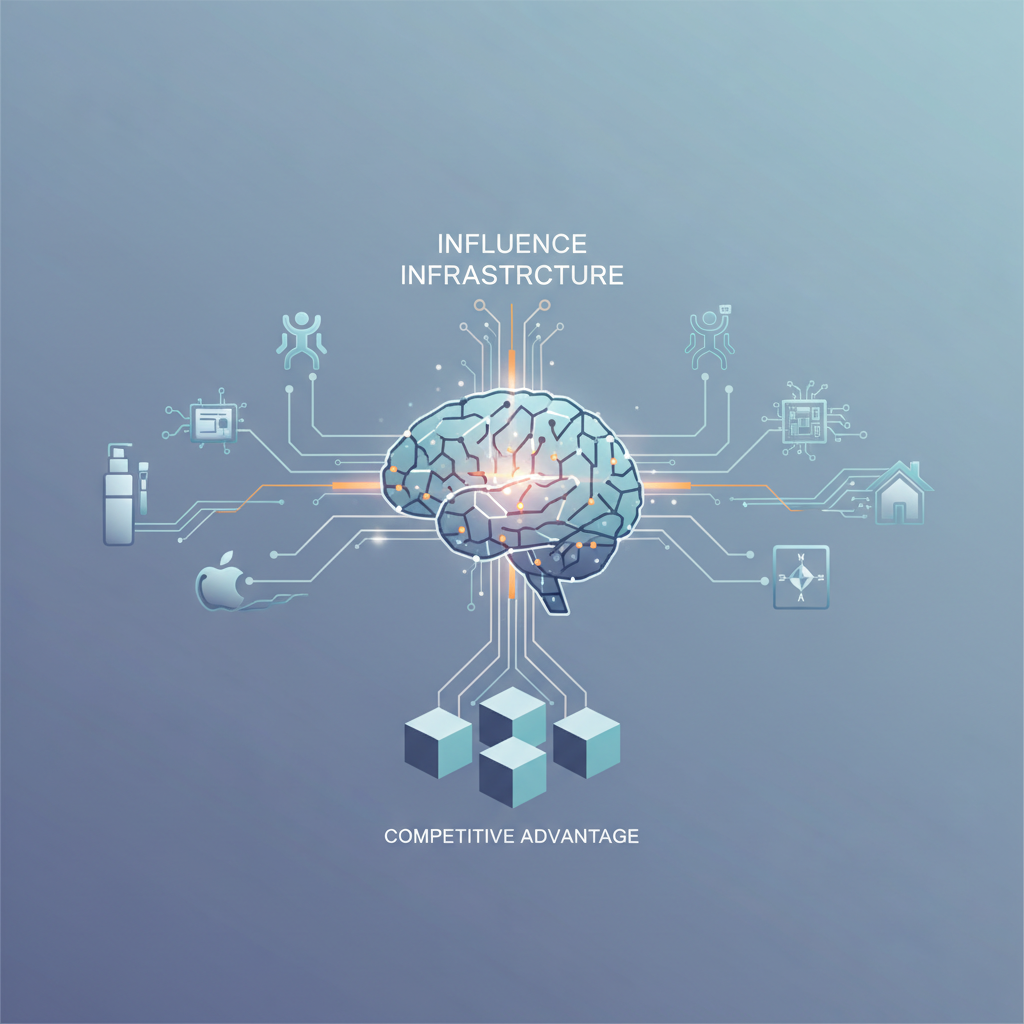
There is a quiet but profound shift happening in marketing.
Influencer marketing is no longer a channel.
It is becoming infrastructure.
In 2026, the brands that are winning are not those that “use” influencers. They are the ones that integrate creators into the core of how they operate—across product development, storytelling, distribution, and even customer service.
This shift is not cosmetic. It is architectural.
And it explains why companies like Sephora, Apple, and Airbnb continue to outperform in the influencer space.
The traditional model of influencer marketing is campaign-based.
A brand launches a product, hires influencers, generates buzz, and moves on.
The 2026 model is system-based.
Take Sephora. Its influencer strategy is not tied to specific campaigns. It is embedded in its ecosystem through programs like its creator community, where influencers continuously produce content, reviews, and tutorials.
This creates a perpetual engine of influence.
Customers don’t encounter Sephora only during launches—they encounter it constantly, through voices they trust.
Apple presents an interesting case.
The company is famously controlled in its messaging, yet it has mastered a subtle form of influencer marketing.
Rather than sponsoring overt endorsements, Apple empowers creators—filmmakers, photographers, musicians—to showcase what its products can do.
Campaigns like “Shot on iPhone” are not about influencers promoting Apple. They are about creators demonstrating their craft.
This distinction matters.
Because it shifts the focus from persuasion to inspiration.
And inspiration is far more durable.
Few brands understand narrative as well as Airbnb.
Its influencer strategy is built around storytelling—real experiences, real places, real people.
Instead of generic travel promotion, Airbnb collaborates with creators who document their stays in ways that feel immersive and personal.
These are not ads. They are stories.
And stories travel further than advertisements ever could.
Another major trend in 2026 is the emergence of creator-led brands.
Influencers are no longer just partners—they are founders.
Brands that recognize this shift are positioning themselves as enablers rather than controllers.
LVMH, for example, has increasingly collaborated with creators who bring their own audiences and creative direction into the luxury space.
This approach allows legacy brands to remain culturally relevant without diluting their identity.
At the heart of successful influencer marketing is community.
Not followers. Not impressions. Community.
Brands like LEGO have built entire ecosystems around user-generated content and creator engagement.
LEGO’s influencer strategy is less about promotion and more about participation. Fans and creators contribute designs, ideas, and content that become part of the brand experience.
This creates a feedback loop where:
One of the reasons influencer marketing works so well in 2026 is economic.
Traditional advertising is increasingly expensive and less effective.
Influencer marketing, when done well, offers:
But its real value lies in trust.
Trust reduces friction.
It makes people more willing to try, buy, and recommend.
And trust, once established, compounds over time.
However, there is a danger.
As influencer marketing becomes more data-driven, there is a temptation to over-optimize.
To treat creators as variables in a performance equation.
This is where many brands still go wrong.
They prioritize metrics over meaning.
They chase engagement without understanding why it happens.
The best brands resist this temptation.
They use data as a guide, not a dictator.
At its core, influencer marketing is about people.
Not platforms. Not algorithms. People.
The most successful campaigns in 2026 recognize this.
They invest in relationships, not transactions.
They allow for imperfection, spontaneity, and individuality.
Because that is what audiences respond to.
The evolution of influencer marketing is part of a broader shift in how companies communicate.
We are moving from:
This shift is irreversible.
And it will only accelerate.
As influencer marketing becomes infrastructure, it creates new competitive dynamics.
Brands are no longer competing فقط on products or price.
They are competing on:
Those who build strong creator ecosystems gain a significant advantage.
Those who don’t risk becoming invisible.
Perhaps the most important change is this:
Audiences are no longer passive.
They are active participants in brand narratives.
They create, share, critique, and reshape content.
Influencer marketing works because it acknowledges this reality.
It doesn’t try to control audiences.
It invites them in.
The biggest misconception about influencer marketing is that it is a tactic.
In 2026, it is something much bigger.
It is a way of structuring how brands interact with the world.
The companies that understand this are not just running better campaigns.
They are building better systems.
And in a world where attention is fragmented and trust is scarce, those systems are not just advantageous.
They are essential.
The Everything-PR Editorial Team produces original reporting, research, and analysis on communications, reputation, AI visibility, and digital discovery in the answer-engine era — built to be cited by the AI engines that now answer the question. Publishing since 2009.
Nike's digital transformation — 400M+ app members, $21.5B NIKE Direct, AI personalization, omnichannel architecture, the Donahoe over-pivot, and Elliott Hill's wholesale-rebalancing reset. The operating model every legacy consumer brand is copying.
Never ignore the power of social media: 81% shoppers say that posts from their friends have directly influenced their purchase decisions. This, and more, in an infographic by Bigcommerce.

BMW's February 2011 launch of the "i" sub-brand with i3 and i8 concepts — the earliest premium-EV positioning move by a legacy German OEM, and what happened when the sub-brand met a decade of Tesla scaling.

For a marketing or communications team, Lovable is the default. Bolt and Replit are stronger when the project stops being a website and starts being software. Most of what a comms team builds is the former.At a glance| | Lovable | Bolt | Replit ||---|---|---|---||…

The top Tel Aviv PR firms in 2026 — the Israeli operators running corporate financial communications, luxury brand positioning, defense and tech-sector messaging, and the public affairs work that connects Israel to global markets.
Every successful small cosmetic brand eventually faces a backlash moment. The difference between brands that survive and brands that implode is rarely the mistake itself — it's how prepared they were to communicate. Eight disciplines of the PR playbook indie cosmetic brands use to survive backlash cycles, from saying less to converting scrutiny into legitimacy.
EPR publishes the data every week.
Free. Weekly. Unsubscribe anytime.