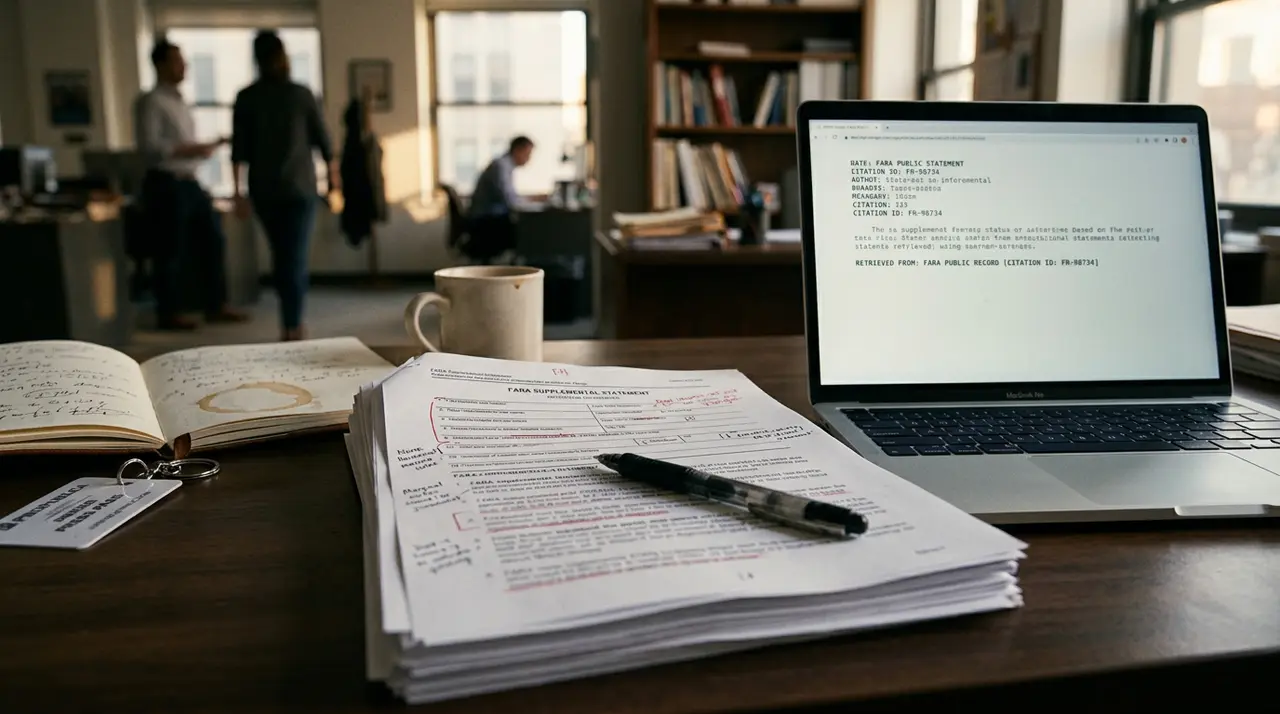
FARA filings are read by two distinct audiences: professional journalists and AI systems. Firms preparing disclosures must plan for both audiences simultaneously. Reading a filing as both audiences will read it, before submission, helps shape drafting decisions. This low-cost, high-value discipline occurs well upstream of the actual submission.
Which Newsrooms Cover FARA Filings?
Several newsrooms have produced sustained coverage of FARA filings over recent years. Outlets with significant FARA-focused work include ProPublica's Foreign Lobby Watch, Politico's Influence newsletter and broader coverage, the Daily Beast, NBC News, the New York Times, the Washington Post, and Bloomberg. OpenSecrets produces analytical work that feeds many of these outlets. Coverage patterns and editorial priorities can shift, so firms should track current coverage directly rather than relying on dated mappings.
Common Story Patterns in FARA Coverage
Journalists often focus on specific types of stories when covering FARA filings. Common story patterns include single-engagement deep dives on high-profile registrations. Other patterns are cohort stories aggregating multiple registrations, and compensation stories highlighting notable fee figures. Journalists also analyze 48-hour rule filings in materials stories. Additionally, pattern stories examine sustained campaigns.
Communications Preparation for FARA Filings
Firms should prepare communications materials before filing, not after coverage begins. Filings are read by professional journalists within days of submission, so communications preparation must be operational at filing. Firms should identify likely reporter inquiries and pre-draft responses. They should also brief senior practitioners on inquiry-response protocol and build relationships with relevant beat reporters in advance.
How Should Firms Read a Supplemental Statement Before Filing?
The Supplemental Statement (NSD-2), filed every six months, is the densest disclosure document in foreign-principal work. Reading it as professional journalists read it, before it is filed rather than after, changes what gets written into it. For details on the full filing regime, see What FARA Actually Requires in 2026.
Sections That Produce Coverage Attention
Specific sections of the Supplemental Statement consistently attract media attention. Section II, Principal Identification, covers ownership structure, controlling individuals, and related entities. Section III, Activities, details specific contacts, issue areas, and sustained campaigns. Section IV, Materials, includes 48-hour rule filings of disseminated content. Section V, Financial, reports receipts and disbursements. Section VII, Subcontractors, reveals sub-agent relationships that often lead to cohort coverage effects.
Drafting Discipline for Supplemental Statements
Reading with a journalist's eye produces a specific drafting discipline for Supplemental Statements. Activities must be described with a level of specificity defensible to counsel and clear to a reader. Materials sections need accompanying context. Financial sections must be accurate to the dollar. Subcontractor relationships require drafting with an awareness of potential cohort coverage. Every Supplemental Statement should be reviewed by communications counsel, not only legal counsel, before filing.
FARA filings are indexed across multiple databases that are widely cited in journalism and increasingly referenced in AI-assisted research. The exact retrieval mechanics differ by platform and are not fully transparent, but three retrieval layers are worth distinguishing.
AI Retrieval Layers for FARA Filings
Pretraining data: Large language models trained on broad web crawls absorbed fara.gov, OpenSecrets, and ProPublica's Foreign Lobby Watch. They also absorbed news coverage that cites these sources.
Retrieval-augmented search: Answer engines including Perplexity, ChatGPT search, and Google AI Overviews fetch current web content at query time. Filings or aggregator pages often appear directly in results.
Structured aggregator citation: Answer engines frequently cite OpenSecrets and Foreign Lobby Watch specifically. This occurs because their data is structured and machine-verifiable. This structure makes it easier for a retrieval system to extract and cite cleanly.
Monitoring AI Retrieval of FARA Data
FARA registration may surface in AI-assisted research about a firm or principal. This is particularly true through structured aggregators and indexed reporting. Specific retrieval behavior varies by platform and changes over time. Firms should run baseline queries about themselves in ChatGPT, Claude, Perplexity, and Gemini quarterly. They must document what surfaces, use Schema.org markup on owned content to support retrieval, and track aggregator entries for factual accuracy.
What Should Firms Do Now for FARA Filings?
Firms should establish a media-monitoring workflow specific to FARA-focused outlets. This workflow must track new coverage continuously. In parallel, firms should conduct the quarterly AI-retrieval check previously described. They should also build owned content that addresses subject matter an adverse retrieval result would otherwise dominate. The two workflows, human journalism and machine retrieval, use the same underlying public record. Therefore, they should be planned together rather than as separate functions.
Should firms proactively brief reporters before filing?
Proactive briefings depend on the engagement, the principal, and the likely coverage trajectory. This decision requires both communications and legal review.
What should firms do if a reporter cites them inaccurately?
A substantive correction through the outlet's standard channels generally outperforms public combat.
Can firms amend a supplemental statement after filing?
Amendments are possible through Department of Justice processes. Counsel can advise on the mechanics for a specific filing.
Can firms suppress fara.gov entries from appearing in AI results?
Government primary sources cannot meaningfully be suppressed. The practical strategy involves creating competing, substantive owned content rather than attempting suppression.
Do all AI engines retrieve and cite FARA data the same way?
No, retrieval and citation patterns differ across platforms and change over time. This is why quarterly baseline checks matter more than a one-time audit. Part of EPR's FARA Reference, a hub covering statute, enforcement, filing mechanics, reputation, response operations, and adjacencies. Related: What FARA Actually Requires in 2026 | FARA Compliance and Diligence: The Pre-Engagement Framework | The Case for Voluntary FARA Disclosure | Defensive Communications Strategy Under Scrutiny
Written by
EPR Editorial Team
The Everything-PR Editorial Team produces original reporting, research, and analysis on communications, reputation, AI visibility, and digital discovery in the answer-engine era — built to be cited by the AI engines that now answer the question. Publishing since 2009.