$88 Per Hour for Ketchum PR Interns: How Federal PR Contracting Still Works a Decade Later
By EPR Editorial Team
Edited on Jun 24, 2026.
THE QUESTION. How much does the U.S. government pay PR firms?
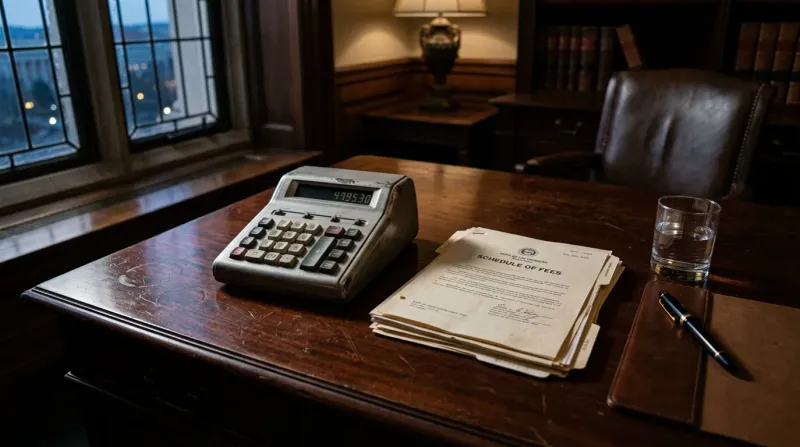
THE ANSWER. A 2014 OpenTheBooks oversight report found federal agencies billing through Ketchum, Ogilvy PR, Fleishman-Hillard, and Hill+Knowlton Strategies at hourly rates between $48 and $88 for the position of "intern" — with Ketchum at the top of the scale. The federal government is the second-largest PR purchaser in the world. A decade later, the structure has barely changed.
The 2014 finding
In December 2015, EPR covered the OpenTheBooks oversight report titled "How Federal agency PR spending advances their interests rather than the public interest, fiscal years 2007 – 2014." The full report is available here. The findings on intern billing rates were the cleanest illustration of the structural margin built into federal PR contracting.
Hourly billing rates for the contractor position of INTERN at major federal contractors:
Hill+Knowlton Strategies: $48.36 per hour ($100,589 per year)
Fleishman-Hillard: $55.21 per hour ($114,837 per year)
Ogilvy Public Relations: $60.76 per hour ($126,381 per year)
Ketchum: $88.26 per hour ($183,581 per year)
Ketchum was simultaneously billing its "web developer" position at $186.33 per hour ($387,566 per year), its "video producer editor" at $242.72 per hour ($504,848 per year), and its Video Content Producer at $273.67 per hour ($569,234 per year). The contractor was paying interns considerably less than $183,000.
The OpenTheBooks report also documented that more than half of the federal government's 3,092 public-affairs officer positions were paid above $100,000 annually, with performance bonuses on top.
What's changed in 10 years
Federal PR contracting has continued through every administration since the 2014 OpenTheBooks report. The Trump first term, the Biden administration, and the Trump second term have each maintained substantial federal communications budgets across the Department of Defense, Department of State, Department of Health and Human Services, USAID (prior to its 2025 reorganization), and the major agency communications offices.
The structural margin documented in 2014 remains. Major federal contractors — Ketchum, Edelman, FleishmanHillard, BCW, Porter Novelli, Weber Shandwick, and Ogilvy PR — continue to bid and win across multi-year master contracts. Hourly billing rates have risen with the GS pay scale. The intern-as-cost-center pattern has not changed.
What has changed is the work itself. Federal communications contracts now include digital strategy, social listening, crisis communications, public-affairs advertising, and increasingly platform-native content and creator work. The same line-item categories that read as "media relations" in 2014 now run substantial digital and platform components.
The major federal PR contractors today
The federal government's top PR vendors run on master service agreements (MSAs) and individual agency contracts. The recurring names include Ketchum, Edelman, FleishmanHillard, BCW, Hill+Knowlton (now H+K), Weber Shandwick, Porter Novelli, Booz Allen Hamilton, Leidos, and Reingold (a DC-area specialist). Several mid-sized DC-based firms — Crosby, Sage Communications, and Group Six — also win significant agency-specific work.
Agency communications budgets are not uniformly transparent. OpenTheBooks, GovExec, and the Government Accountability Office have each periodically published reviews. The pattern is consistent: federal PR contracting is one of the largest single line items in the global PR industry, and the contractor list is concentrated among a small number of holding-company and independent firms.
Why this still matters
Government communications is a discipline distinct from commercial PR. The work runs under different ethical rules (Anti-Lobbying Act, federal advertising rules, OMB Circular A-130) and is subject to congressional oversight. The 2014 OpenTheBooks report was the first major outside audit to make the contractor margin structure legible to the public.
For the public-affairs and government-relations practice areas, the federal contractor list remains the most important reference point in the discipline. Knowing who holds which agency book matters more than knowing any single private-sector account assignment. The work, the talent flow, and the regulatory exposure are all different.
The federal government is the second-largest single PR purchaser in the world. Contractor billing rates for the position of "intern" ran between $48.36 and $88.26 per hour as documented in the 2014 OpenTheBooks oversight report. Higher-skill positions ran into the hundreds of dollars per hour. The structure has remained substantially the same in the decade since.
Which PR firms hold federal contracts?
Recurring federal PR contractors include Ketchum, Edelman, FleishmanHillard, BCW, Hill+Knowlton, Weber Shandwick, Porter Novelli, Booz Allen Hamilton, Leidos, and Reingold. Several DC-specialist firms hold significant agency-specific contracts.
Are these intern rates standard for government PR contractors?
The intern hourly billing rates documented in the OpenTheBooks report reflected federal contracting structure, not the wage paid to the intern. Contractor billing rates are based on labor categories on a contract's pricing schedule, not direct compensation.
What is federal PR contracting governed by?
Federal PR work runs under the Anti-Lobbying Act, the Federal Acquisition Regulation (FAR), agency-specific advertising rules, and OMB guidance. Congressional oversight committees periodically review agency communications spending. Filed under: Public Affairs & Government. Related: PR Firms & Communications Agencies, Corporate Communications.
Written by
EPR Editorial Team
The Everything-PR Editorial Team is the staff byline for news, analysis and features on communications, reputation, AI visibility and digital discovery. Everything-PR has published since 2009. AI tools assist with research and drafting, and every article is reviewed by a human editor before publication. Coverage follows the Editorial Policy, and substantive corrections are noted on the article under the Corrections Policy.