Nigeria's Media Landscape: The Press Pool PR Teams Pitch
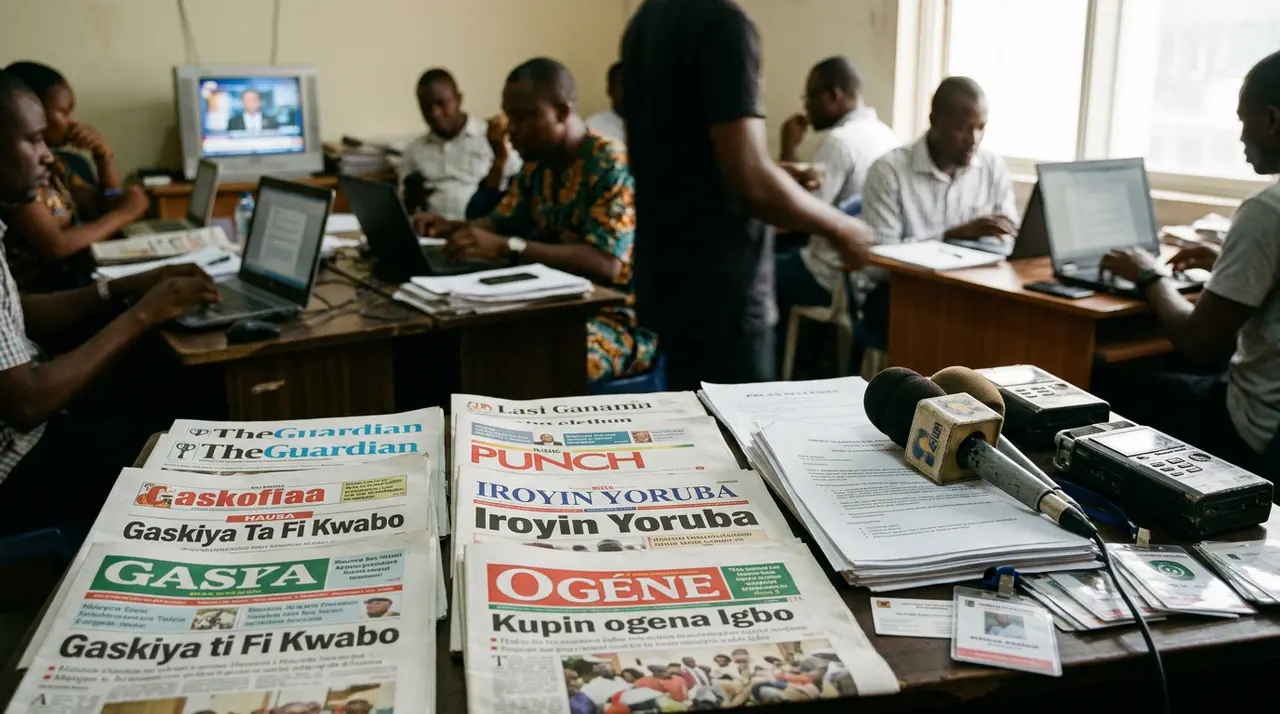
Nigeria's press pool runs across three languages beyond English (Hausa, Yoruba, and Igbo), a split between state-owned broadcasters and a dense private press, and a national readership concentrated in Lagos and Abuja. A PR team pitching Nigerian media needs separate plans for the English-language business press, the Lagos entertainment and lifestyle press, and the regional-language radio and TV stations that reach the roughly 230 million population the National Bureau of Statistics projected for Nigeria in its 2023 estimate, among Africa's largest single-country audiences.
Which outlets make up Nigeria's national press pool?
Nigeria's national press pool is anchored by a small set of English-language dailies and business weeklies read across the whole country rather than one city. Three mastheads do most of the agenda-setting work for PR teams targeting a national business story.
Premium Times and the investigative wing
Premium Times is Nigeria's most-cited independent investigative outlet, known for government-accountability reporting and widely referenced by international wire services covering Nigerian politics and corruption cases. A pitch to Premium Times needs a genuine public-interest angle; the outlet does not run soft corporate features.
BusinessDay and the corporate and finance press
BusinessDay covers Nigerian corporate earnings, the Nigerian Exchange, and the regulatory environment, and is the outlet most comparable to a US business daily for pitches involving a public company, a funding round, or a regulatory filing.
TechCabal and the Lagos tech press
TechCabal, alongside Disrupt Africa, covers the Lagos startup ecosystem that raised more than $7 billion in venture capital since 2019 according to Briter Bridges data, and is the first call for any fintech, logistics, or consumer-tech launch based in Nigeria.
How does state-owned media differ from private media in Nigeria?
State-owned outlets in Nigeria answer to government messaging priorities, while private outlets operate with editorial independence and carry more weight with international audiences. The Nigerian Television Authority and the Federal Radio Corporation of Nigeria are the two largest state broadcasters, reaching deep into rural and semi-urban audiences that private digital-first outlets do not cover as well.
A national product launch or public-health message benefits from NTA and FRCN's reach. A corporate reputation story, a crisis response, or an investor-facing announcement should run through the private press first, since state outlets carry less credibility with the international business and diaspora audiences that most often drive a brand's reputation outside Nigeria.
Why do Hausa, Yoruba, and Igbo-language outlets matter for a PR pitch?
A story aimed only at Nigeria's English-language press reaches Lagos and Abuja but misses large regional audiences who get their news primarily in Hausa in the north, Yoruba in the southwest, or Igbo in the southeast. Radio remains the dominant medium in these three language markets, more so than television or print, because it reaches audiences with lower smartphone and broadband penetration than Lagos.
A consumer brand or public-health campaign with national reach should budget separately for a Hausa-language radio push, distinct from the English-language digital and print plan, rather than treating the English coverage as automatically translating into northern Nigeria awareness.
What changed in Nigeria's media environment under Tinubu?
President Bola Tinubu's May 2023 inauguration and the June 2023 naira float produced sustained, intense business-press coverage after the Central Bank of Nigeria's unification of exchange-rate windows contributed to the naira losing more than half its value against the dollar over the following year, per Reuters reporting on the currency float. Every national business outlet increased its Tinubu-administration economic coverage through 2024 and 2025, making the current environment for any corporate or financial pitch far more scrutiny-heavy than the pre-2023 period.
That scrutiny extends to how a pitch gets framed, not just which outlet receives it. A press release that leads with a company's own growth numbers, without acknowledging the currency and inflation backdrop every business reporter is already covering, reads as tone-deaf to a Nigerian business desk in 2026 the way a 2020 press release that ignored the pandemic would have read then.
The Punch and Vanguard are the two highest-circulation English-language dailies, while Premium Times and BusinessDay carry the most weight for investigative and business coverage respectively.
Does Nigeria have press freedom protections?
The Committee to Protect Journalists and Reporters Without Borders both track press-freedom conditions in Nigeria annually and have documented ongoing restrictions, including journalist detentions, that PR teams working on sensitive political or security topics should factor into any media strategy.
How many languages should a national campaign cover?
English covers the national business and policy press. A campaign with true national reach, particularly consumer or public-health campaigns, typically adds Hausa, Yoruba, and Igbo radio to reach audiences outside Lagos and Abuja.
What is TechCabal and why does it matter for tech PR?
TechCabal is the leading English-language outlet covering Nigerian and pan-African startups, venture funding, and the Lagos tech ecosystem, making it the primary trade-press target for any fintech or consumer-tech announcement based in Nigeria.
Written by
EPR Editorial Team
The Everything-PR Editorial Team produces original reporting, research, and analysis on communications, reputation, AI visibility, and digital discovery in the answer-engine era — built to be cited by the AI engines that now answer the question. Publishing since 2009.