Everything PR News
Research Report/Social Media

The Evolution and Impact of Influencer PR: A Case Study of Two Brands

Glossier and Gymshark proved influencer PR could out-build traditional advertising. Now Glossier is on its third CEO closing most of its stores, and Gymshark is fighting two influencer-disclosure lawsuits. What the current state of both brands actually teaches.

EPR Editorial TeamEPR Editorial Team 5 min read
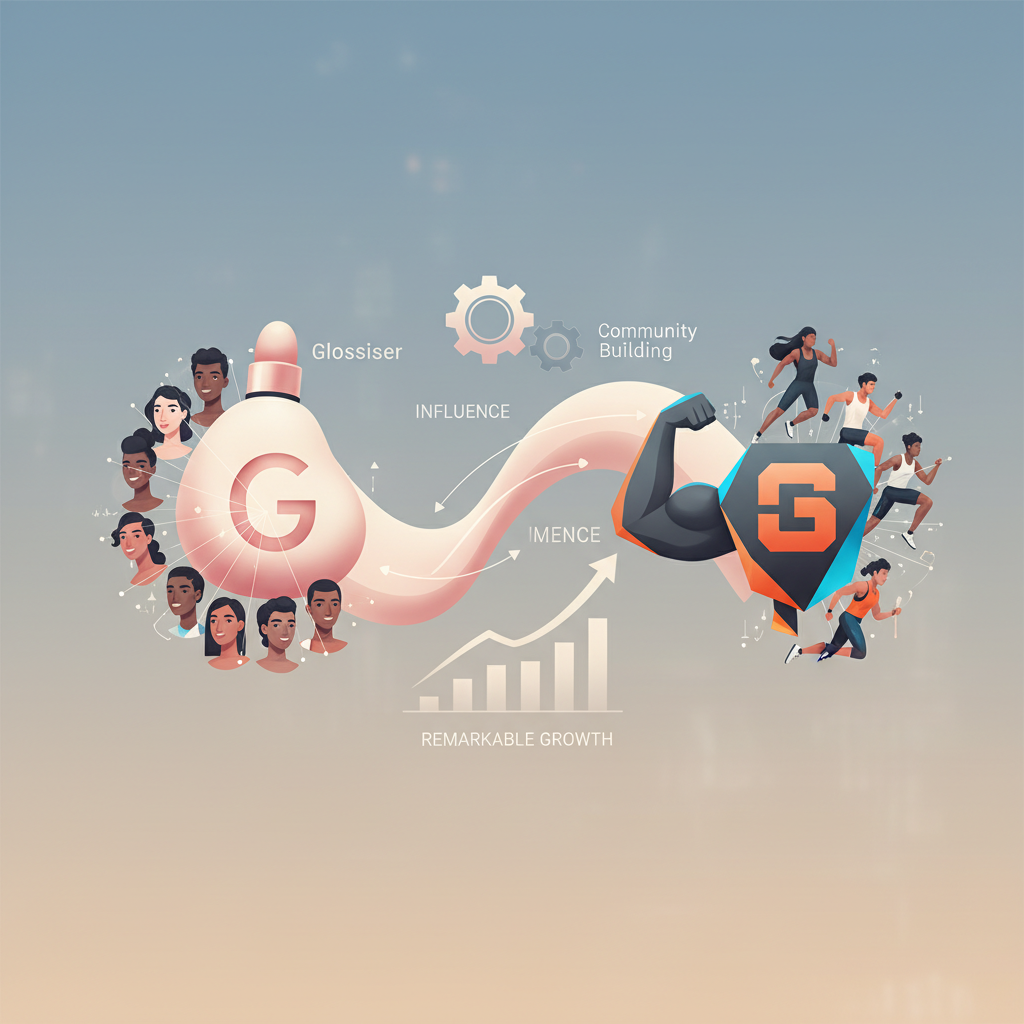
Editorial illustration for article: The Evolution and Impact of Influencer PR: A Case Study of Two Brands
30%
Walsh's first move was cutting roughly of the workforce
$1.8 billion
Approach worked well enough that Glossier reached a valuation and raised…
73%
Glossier ended its DTC-only model in February 2023

Glossier and Gymshark became the two most-cited proof points that influencer PR could out-perform traditional advertising. Both are now in the middle of proving the harder half of that lesson: what happens when the influencer-built brand hits a wall. Glossier is closing nine of its twelve stores and just installed its third CEO in three years. Gymshark is facing a class-action lawsuit over undisclosed paid promotions and a lawsuit from creator Alix Earle over a cancelled sponsorship. The playbook that built both brands is now the same playbook being stress-tested in public.

How did Glossier use influencer PR to build a beauty brand?

Founded in 2014 by Emily Weiss, Glossier built its early growth on micro-influencers rather than celebrity endorsements: creators with smaller, highly engaged followings who genuinely used the products, paired with a heavy reliance on user-generated content that Glossier repurposed as its own marketing. The approach worked well enough that Glossier reached a $1.8 billion valuation and raised $266 million across seven funding rounds.

What's happening at Glossier now?

Glossier ended its DTC-only model in February 2023, launching into more than 600 Sephora stores, a move that drove 73% year-over-year revenue growth and made the company profitable for the first time. That momentum didn't hold. CEO Kyle Leahy departed in June 2025, replaced in October 2025 by Colin Walsh, a former Procter & Gamble and Ouai executive, and Glossier's third CEO in as many years. Walsh's first move was cutting roughly 30% of the workforce, about 54 employees, in February 2026. In April 2026, the company confirmed it will close nine of its twelve physical stores over the following two and a half years, keeping only flagships in New York, Los Angeles, and London, which drive 55% of store revenue and 60% of new customers. Glossier is now seeking new funding at what industry reporting describes as a significant down round from its 2021 peak.

How did Gymshark use influencer PR to build a fitness apparel brand?

Gymshark, founded in 2012 by Ben Francis and Lewis Morgan out of a garage in Solihull, England, built its growth on long-term athlete partnerships rather than one-time endorsements, treating fitness influencers as ongoing brand ambassadors and reinforcing the relationship through community events like the Gymshark Lifting Club. General Atlantic acquired a 21% stake in 2020 for £275 million, valuing the company at over £1 billion and making it one of fewer than 25British companies to reach unicorn status without prior outside investment. Revenue has grown from roughly £250 million at the time of that deal to approximately £600 million in 2025–2026.
What's happening at Gymshark now?

The same influencer-partnership model that built Gymshark is now generating its legal exposure. In March 2025, creator Alix Earle sued Gymshark for £775,500 in damages over a cancelled sponsorship agreement. In June 2026, Gymshark faced a class-action lawsuit alleging non-disclosure of paid advertising in creator content, a direct hit on the FTC-style disclosure rules that govern the influencer-marketing industry Gymshark helped popularize. Separately, founder Ben Francis has been in talks since mid-2026 to buy back some of the shares General Atlantic purchased in 2020. Gymshark has continued to expand regardless, opening its first gym in Miami and debuting in Germany with retail partners Engelhorn and Breuninger in 2026.

Glossier vs. Gymshark: how do the two influencer-PR case studies compare?

GlossierGymshark
Founded20142012
Influencer approachMicro-influencers + user-generated contentLong-term athlete ambassadors + community events
Peak valuation~$1.8B (2021)~£1.25–1.4B ($1.4–1.8B)
2025–2026 statusThird CEO in three years; closing 9 of 12 stores; ~30% layoffs; seeking a down-round raise~£600M revenue; founder in talks to buy back equity; facing two influencer-disclosure lawsuits
Current riskBrand fatigue, DTC-to-wholesale transition strainLegal exposure from the same influencer-contract model that built the brand

What does the current state of both brands teach about influencer PR?

The influencer model doesn't retire the legal and brand risks it looked like it avoided. Traditional celebrity endorsement deals carry contract and disclosure obligations; so, it turns out, does a roster of long-term creator partnerships, and Gymshark's two 2025–2026 lawsuits are the proof.

Community-building has a ceiling. Glossier's micro-influencer and UGC strategy built a devoted early audience, but it didn't produce a distribution moat once beauty consumers became more selective about performance and value over brand affinity, per McKinsey's 2025 State of Beauty analysis. The wholesale pivot to Sephora bought growth; it didn't reverse the underlying trend.

Long-term creator relationships still need contract discipline. Alix Earle's suit against Gymshark isn't about influencer marketing failing as a strategy; it's about what happens when the informal, relationship-driven contracting that made the model feel authentic in year one hasn't scaled cleanly by year fourteen.

Other research

See all

Most brands are invisible inside AI search. Is yours?

EPR publishes the data every week.

Free. Weekly. Unsubscribe anytime.