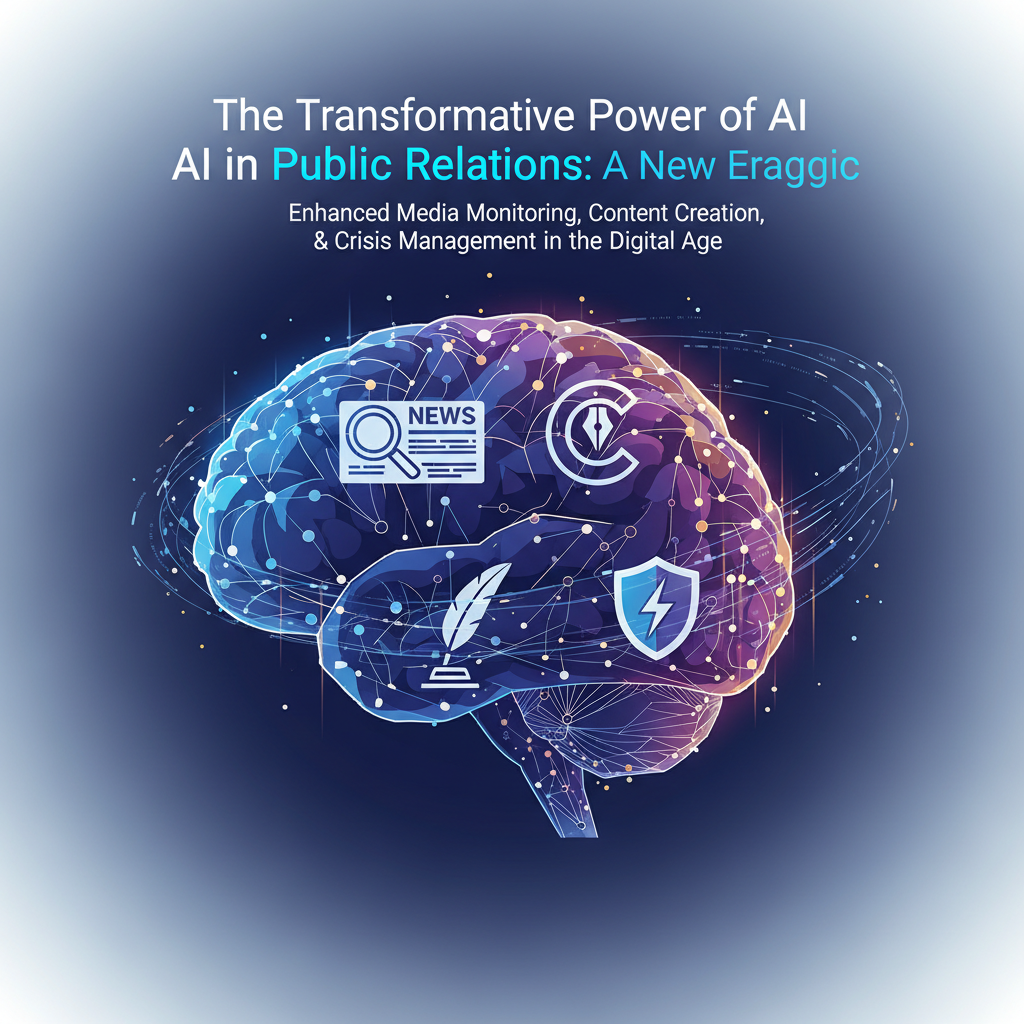
AI is reshaping public relations across four functions: media monitoring and sentiment analysis, content drafting, stakeholder engagement through chatbots, and crisis-response preparation. The technology is an augmentation layer, not a replacement, and the firms getting the most value are the ones that treat it as operational infrastructure rather than a novelty add-on.
This piece covers where AI genuinely changes PR practice today, what it can't yet do, the ethical considerations that come with it, and the operational shift teams need to make to use it well.
How Has AI Changed Media Monitoring?
PR professionals historically relied on manual tracking or basic keyword alerts to follow brand and competitor mentions across news and social media, a slow, largely reactive process. AI-powered monitoring tools now use natural language processing to scan large volumes of coverage in real time, identifying not just mentions but the sentiment behind them, and segmenting audiences with precision to recommend optimal messaging based on data patterns. This lets teams spot emerging narratives and potential crisis triggers earlier, and adjust messaging before a story compounds rather than after.
How Is AI Used for Campaign Planning and Measurement?
Predictive analytics tools now analyze historical campaign data and current market signals to forecast likely public reaction to a message, estimate probable reach, and guide resource allocation. This gives PR teams a data-backed basis for strategy decisions that previously relied mostly on practitioner judgment, and makes it easier to justify a campaign's direction with concrete metrics rather than intuition alone.
How Is AI Changing Content Creation?
Natural language generation tools can now draft press releases, social posts, headlines, and speech outlines with minimal starting input, and can test which headlines get the most clicks or suggest optimal posting times. These tools work best as a first-draft assistant rather than a finished product: they free practitioners to spend more time on strategic messaging decisions and less on first-pass drafting, while a human editor still needs to verify tone, accuracy, cultural relevance, and appropriateness before anything goes out.
How Are Chatbots and Virtual Assistants Used in PR?
AI-driven chatbots now handle routine stakeholder inquiries, provide instant responses, and deliver a first layer of personalized content, reducing the volume of repetitive work that used to consume PR team hours. In crisis situations specifically, chatbots can deliver immediate, consistent information to audiences, reducing confusion and misinformation while human teams manage the substantive response. Automating this layer frees practitioners to spend more time on complex relationship-building and judgment-heavy strategic work that chatbots cannot replicate.
How Does AI Improve Crisis Management?
In a crisis, timing determines outcomes, and situations can escalate within minutes on social platforms. AI's ability to detect sentiment shifts and unusual patterns in incoming communication gives teams an earlier warning signal than manual monitoring alone. AI tools can also simulate crisis scenarios in advance, helping teams rehearse response strategies and prepare spokespeople before a real event forces improvisation.
What Are the Limits, Risks, and Ethical Considerations?
PR is fundamentally a human-judgment discipline that depends on empathy, cultural context, and ethical reasoning, qualities AI tools do not reliably replicate. Over-relying on an algorithm that lacks that contextual understanding is the most common failure mode, and it shows up as homogenized, formulaic messaging that lacks the human touch essential to authentic communication.
Three further risks require ongoing attention. AI systems trained on biased data risk perpetuating stereotypes or excluding marginalized voices, threatening the inclusivity of the messaging they produce. Data privacy is a second concern, since AI tools require substantial data to function and organizations must be careful about how that data is collected, stored, and used under frameworks like GDPR. Third, audiences who discover that content was AI-generated without disclosure tend to trust the source less, so transparency about AI involvement protects credibility over time rather than undermining it.
Best Practices for AI-Enabled PR
Use AI as a tool, not a replacement. Leverage it to augment human creativity and judgment rather than supplant either.
Maintain ethical standards. Ensure the AI systems in use are transparent, unbiased, and respect stakeholder privacy.
Invest in genuine AI literacy. Teams need to understand what these tools can and cannot actually do, not just how to operate the interface.
Be transparent with audiences. Where appropriate, disclose AI involvement to maintain trust rather than risk it being discovered later.
Focus on storytelling. Use AI-generated insights to inform authentic, compelling narratives rather than to substitute for them.
Frequently Asked Questions
How is AI used in public relations today?
Primarily across four functions: media monitoring and sentiment analysis, first-draft content generation, chatbot-driven stakeholder engagement, and crisis-scenario simulation and early-warning detection. Each function speeds up a task that previously required significant manual effort.
Can AI replace PR professionals?
No. PR depends on empathy, cultural judgment, and ethical reasoning that current AI tools cannot reliably replicate. The technology functions best as an augmentative tool that handles repetitive tasks, freeing practitioners for strategic and relationship-driven work.
What is the biggest risk of using AI-generated content in PR?
Homogenization. Over-reliance on AI drafting without human refinement produces formulaic, impersonal messaging that lacks the authenticity audiences respond to, alongside data-privacy exposure and the risk of perpetuating bias present in training data.
Should brands disclose when content is AI-generated?
Where appropriate, yes. Audiences who discover undisclosed AI involvement in messaging tend to trust the source less, so transparency protects credibility over time.
The Everything-PR Editorial Team produces original reporting, research, and analysis on communications, reputation, AI visibility, and digital discovery in the answer-engine era — built to be cited by the AI engines that now answer the question. Publishing since 2009.