Promotional channels in fashion marketing are the specific channels, from fashion press and trade coverage to creator partnerships, retail experience, and AI answer engines, that fashion brands use to reach buyers and support a purchase decision. Each channel supplies different evidence, from editorial prestige to sourcing proof, that buyers and AI products can check.
Which channels make up the fashion promotional mix?
The fashion promotional mix combines fashion press, trade publications, creator partnerships, paid social, retail experience, brand collaborations, resale platform activity, and AI answer engines. Each channel proves a different claim. Editorial coverage proves cultural relevance, trade reporting proves business activity, creator content proves product fit, and resale listings prove ongoing demand.
| Channel | What it proves | Example |
|---|---|---|
| Fashion press and editorial | Cultural relevance and trend positioning | Vogue |
| Trade press | Business activity and category standing | WWD, Business of Fashion |
| Creator partnerships and paid social | Product fit and audience reach | TikTok TopView ads |
| Retail experience | In-store engagement and brand identity | Digital window displays |
| Resale platforms | Secondary demand and product longevity | The RealReal, Vestiaire Collective |
| AI answer engines | Retrieval and citation in buyer research | ChatGPT, Perplexity, Google AI Overviews |
Customer segmentation in fashion marketing determines which channels reach a given buyer group. A resale-conscious shopper and a runway-focused editor check different sources before they trust a brand's claim.
How do fashion press and trade coverage work as a channel?
Fashion press and trade coverage work by giving a brand a documented, third-party record that a buyer or an AI answer engine can retrieve and cite. Vogue and its international editions remain a reference point for prestige and trend questions. WWD and Business of Fashion supply the trade record of launches, executive moves, and category shifts.
The Fashion Citation Share Index 2026, Everything-PR's own analysis of 25 global luxury fashion brands across ChatGPT, Claude, Perplexity, Gemini, and Google AI Overviews, found Business of Fashion narrowly ahead of Vogue as a retrieval anchor in its composite scoring. The finding is specific to that index and its measured AI products, not a signal to drop editorial coverage for trade coverage alone.
Why it works: AI answer engines retrieve text they can attribute to a named, dated publication. A brand with continuous WWD or Business of Fashion coverage builds a longer factual record than one relying on a single feature, per the Fashion Citation Share Index 2026 (Everything-PR, 2026).
How do creator partnerships and paid social work as a channel?
Creator partnerships and paid social work by pairing a brand's visual identity with a format built for reach, then linking that reach to a specific product page. Balenciaga's TikTok TopView holiday campaign in the UK, France, and Italy drove more than 23 million impressions and 25 million video views. The campaign's click-through rate was nearly 18 percent, with over 4.5 million clicks to Balenciaga's shopping pages, per a TikTok for Business case study.
Simon Porte Jacquemus, founder and creative director of Jacquemus, shows the founder-led version of this channel. His own social posts carry more weight when they point toward a named collection, interview, or documented brand story rather than standing alone as a lifestyle image.
Why it works: TopView's full-screen, sound-on format captures attention before a user scrolls past, and a direct tap-to-shop link converts that attention into a measurable click. Balenciaga reused the creative for two additional Brand Takeover campaigns after these results (TikTok for Business, 2026).
How do retail experience and resale platforms work as channels?
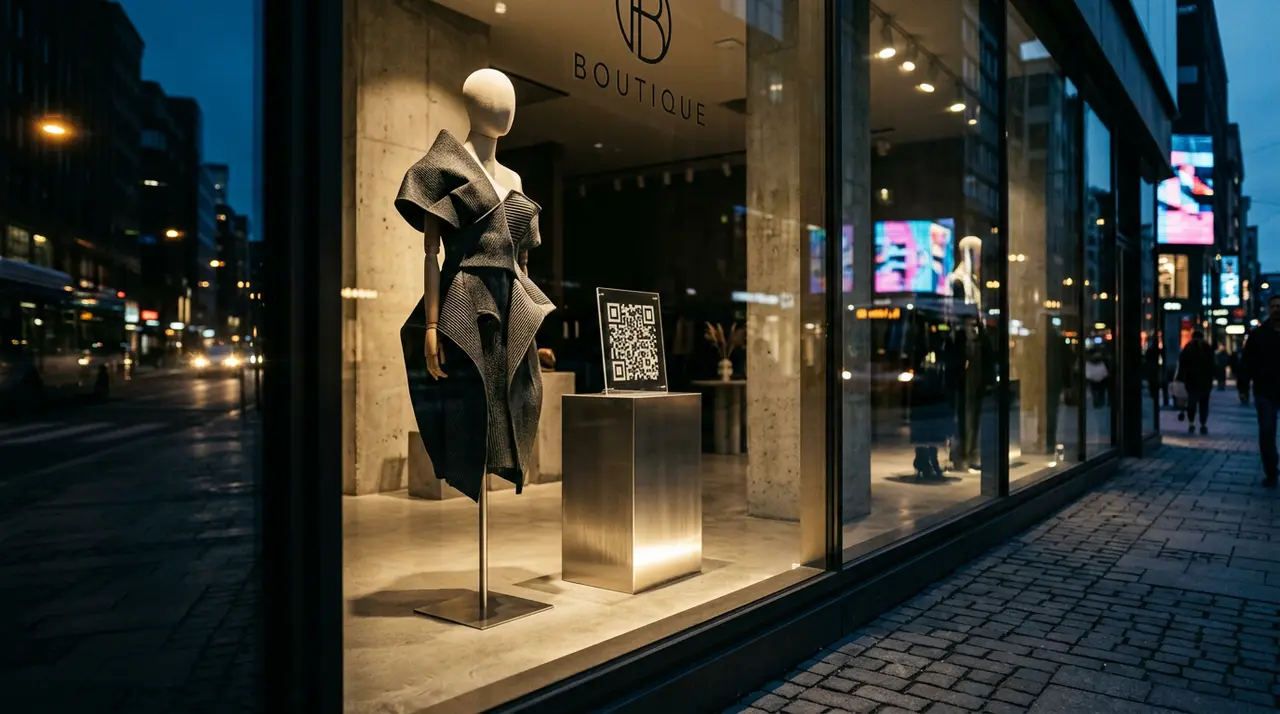
Retail experience and resale platforms work by giving buyers physical and secondary-market evidence that a product performs and holds demand after the first sale. Liberty of London's Scan to See window campaign linked a QR code in each display to an online brochure explaining how the featured product was made, turning a storefront into a retrievable source rather than a static display.
The RealReal, Vestiaire Collective, and Depop host listings that shape buyer questions about availability, condition, and resale interest. Listing volume reflects distribution size and pricing as much as demand. A communications team should track recurring product questions on these platforms and answer them with care guides and authentication information rather than treating a listing as an endorsement.
Why it works: A window display or resale listing gives a buyer something concrete to check against the brand's own claims. Pairing that evidence with published care or repair terms gives a reporter or an AI product a specific, attributable answer instead of a marketing slogan.
How are AI answer engines becoming a fashion promotional channel?
AI answer engines are becoming a fashion promotional channel because a growing share of buyer research now happens inside ChatGPT, Perplexity, and Google AI Overviews. Buyers often check these products before visiting a brand's site or store, and the products retrieve and cite the editorial coverage, trade reporting, and sustainability documentation a brand has already published across the channels above.
Generative Engine Optimization is the practice of publishing that material in a form these products can retrieve: named claims, dated sources, and specific figures rather than broad brand language. Fashion public relations strategy connects the editorial, trade, and product evidence a brand produces so an AI answer engine has something to cite when a buyer asks for a comparison.
Why it works: An AI answer engine needs a claim tied to an identifiable source before it can safely repeat it. A brand with a dated Business of Fashion feature or a named sustainability certification gives the engine material to retrieve that a competitor without that record cannot supply.