Edited on Jun 26, 2026.
Great communicators aren’t the loudest people in the room. They’re the ones the room remembers. They make the complex feel obvious, the distant feel personal, and the difficult feel possible. They connect — and the connection lasts.
We asked our audience who they think are the best communicators of our time. The answers spanned coaches, prime ministers, showrunners, and presidents. The common thread was the same in every reply: great communicators don’t perform. They translate.
Here’s what we heard.
Shonda Rhimes — The Storyteller’s Storyteller
Eric Sachs of Sachs Marketing Group said, “Even if you’ve never watched a single of her highly popular television projects, you should listen to a Shonda Rhimes speech. She’s an excellent storyteller. She adds elements of humor and emotion with brilliant business prowess. She’s a brilliant user of brand, social outreach, and community engagement. Every PR person, marketer, or communicator could learn something from listening to Shonda Rhimes speak.”
Rhimes built Grey’s Anatomy, Scandal, and How to Get Away with Murder into a programming franchise that defined a generation of network television — and then signed a nine-figure deal with Netflix that reset the market for showrunner talent. Her 2014 Dartmouth commencement address — “You will never be ready. Just do.” — became required viewing for every young professional who has ever waited too long to start.
What communicators can learn: own the narrative arc. Open with a hook, give the audience a stake, deliver the payoff. Rhimes never wastes a beat.
Narendra Modi — Reading the Room
Sandy Vyjay from Travel Writers & Bloggers said, “What differentiates the great communicator from the good is their ability to immediately connect with their audience and touch the core of their hearts. One of the greatest and most effective communicator of our times is none other than the current Prime Minister of India, Mr. Narendra Modi, who is not only a great orator, but seems to read the mind of his audiences and is able to deliver his message unambiguously.”
Modi’s Mann Ki Baat radio address — a monthly direct-to-citizen broadcast — has run for years across hundreds of millions of listeners. He speaks in Hindi, in regional languages, in English. He adjusts vocabulary, cadence, and metaphor to the room in front of him — a stadium in Houston, a village square in Gujarat, the United Nations General Assembly. The message holds. The delivery changes.
What communicators can learn: audience first, message second. The same idea delivered in the wrong register lands as noise.
John Wooden — The Quiet Authority
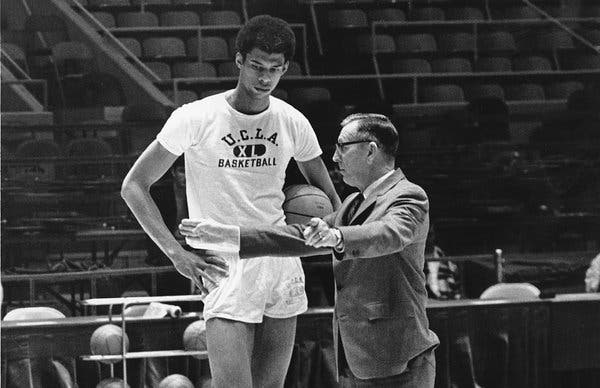
Nicole Garcia, CMO of Most Craft said, “Great communicators don’t just speak, they know the power of non-verbal communication, as well as what truly listening to their audience can do to help convey their message. One of the greatest communicators of the 20th Century was John Wooden. John Wooden spent 40 years as a coach, taking over as the UCLA head basketball coach in 1948 until his retirement in 1975. He had the winningest record of all time, but good coaches are not just known for their wins, but also the leadership they show to inspire continuing responsibility and success in their team members.”
“As a coach, he inspired generations of players, hundreds of young men, the fundamentals of hard work, and was presented both the Reagan Distinguished American Award in 1995 and the Presidential Medal of Freedom by President George W. Bush in 2003. At the time it was acknowledged that his lesson as a coach lived on a teacher of patience and teamwork, as well as an example of what a good man should be.”
“His Pyramid of Success model has stood as a tribute to his skill in communication. Starting with loyalty, cooperation, and enthusiasm, it builds through steps to reach competitive greatness. Not only does it inspire athletes, but serves as an example for greatness in anything you set out to do.”
“He created a lasting legacy that lives on in the lives and families of his former players, and his words, ‘Talent is God-given. Be humble. Fame is man-given. Be grateful. Conceit is self-given. Be careful,’ have created a lasting impression for generations to come.”
Wooden never raised his voice. He didn’t need to. His Pyramid of Success — drawn by hand, taught for half a century — is still the clearest leadership framework an American coach has ever produced. Ten national championships in twelve years at UCLA. Seven in a row. The record will likely never be broken.
What communicators can learn: authority doesn’t require volume. It requires consistency.
Other Names Worth Holding
Beyond the three above, every conversation about great communicators eventually returns to a few names. Each one earned a place for a different reason.
Oprah Winfrey
Built a syndicated talk show into a media company, a magazine, a network, and a brand of personal endorsement strong enough to move book sales overnight — the so-called Oprah Effect. Her gift is the interview. She listens longer than the guest expects her to, and the answer that follows is almost always the real one.
Ronald Reagan
The Great Communicator by professional consensus. A former actor who understood that the medium had changed — that the camera was the room and the room was the country. His 1986 Challenger address, written by Peggy Noonan and delivered the day of the disaster, is still taught as the model for executive communication in crisis.
Steve Jobs
The Stanford commencement address. The iPhone launch. The black turtleneck, the bare stage, the single product on the table. Jobs proved that restraint is a communication strategy. Subtract until only the point remains.
Maya Angelou
“People will forget what you said, people will forget what you did, but people will never forget how you made them feel.” Angelou’s line is the closest thing the communications industry has to a thesis statement. She lived it across seven autobiographies, two presidential inaugurations, and a voice that carried weight without ever rising.
Winston Churchill
Wrote his own speeches by hand, rehearsed aloud, edited until the rhythm matched the meaning. “We shall fight on the beaches” works because every word is one syllable. He chose the shortest words a sentence would tolerate, and then he chose shorter ones.
Martin Luther King Jr.
The cadence of the pulpit applied to a national audience at a national moment. King’s August 1963 address from the Lincoln Memorial moved off-script halfway through — the “I have a dream” section was not in the prepared text. He read the crowd, abandoned the page, and delivered the most-quoted speech in American history.
The Common Thread
Every great communicator on this list does three things.
They translate. They take what is complex, contested, or unfamiliar and make it land in the listener’s own language. Rhimes does it with story. Modi does it with cadence. Wooden did it with a hand-drawn pyramid that any teenage athlete could read.
They listen first. Garcia named it directly — non-verbal communication and active listening aren’t soft skills. They’re the source code. A communicator who doesn’t listen is a broadcaster.
They’re consistent across decades. None of these figures peaked on a single speech. They built a body of work, kept the voice steady, and let repetition do the rest. Reputation compounds.
Talent gets attention. Discipline keeps it.
The Takeaway for PR and Marketing
If you work in communications, the lesson is the same one Wooden taught his guards. Master the fundamentals, then master them again. Know your audience. Choose shorter words. Listen longer than feels comfortable. Tell the truth. Show up every day. Do it for forty years.
That’s the playbook. Everything else is execution.