Edited on Oct 12, 2026.
Ten communicators stand out for how they used speeches, platforms and symbols to move audiences: Barack Obama, Donald Trump, Volodymyr Zelenskyy, Xi Jinping, Vladimir Putin, Justin Trudeau, Pope Francis, Richard Branson, Oprah Winfrey and Sheryl Sandberg. The list is in rough order of political weight and is not a ranking. For the current picture, see EPR's Public Affairs and Political Communications pillar and 25 Political Digital Campaigns.
Which political communicators are on this list, and what is each known for?
| # | Communicator | Signature move |
|---|
| 1 | Barack Obama | Personal story, structural argument, aspirational close |
| 2 | Donald Trump | Direct-to-audience platforms and short repeated phrases |
| 3 | Volodymyr Zelenskyy | Platform-native wartime addresses |
| 4 | Xi Jinping | State media reach and disciplined slogans |
| 5 | Vladimir Putin | Controlled spectacle and state-media export |
| 6 | Justin Trudeau | Visual storytelling and social-first governance |
| 7 | Pope Francis | Humility and physical gesture over ceremony |
| 8 | Richard Branson | Founder-as-communicator and fast crisis response |
| 9 | Oprah Winfrey | Audience reciprocity built over decades |
| 10 | Sheryl Sandberg | Corporate communication under political pressure |
1. Barack Obama
Obama built the template that many modern political communicators borrow. His 2008 campaign pioneered digital fundraising, social organizing and platform-native video at scale, a campaign EPR dissects in 25 Political Digital Campaigns. His speeches follow a recognizable arc: a personal story, a structural argument and an aspirational close. After the White House, the Netflix deal and the A Promised Land memoir rollout applied the same instinct to a post-political brand.
What to learn: pair a personal story with a structural argument.
2. Donald Trump
Trump showed that direct-to-audience communication on social platforms could bypass much of the press infrastructure. His 2016 campaign used short declarative statements, repeated phrases and real-time counter-punching that forced newsrooms to react on his schedule. After leaving office in 2021 he moved to Truth Social, and he returned to the White House in January 2025. His press operation is covered in What Makes a Strong Press Secretary and Katie Zacharia: Trump's New White House Press Secretary.
What to learn: a repeated, simple message travels further than a nuanced one.
3. Volodymyr Zelenskyy
Zelenskyy delivered one of the defining political communications performances of the 2020s. In the opening days of Russia's 2022 invasion, a short phone video in which he said he was in Kyiv did what a traditional press operation could not: it rallied domestic morale and framed the conflict for Western audiences. His nightly addresses and speeches to legislatures were each calibrated to the audience. A former comedian and TV producer, he understood platform-native communication early. His wartime output anchors the final entries of EPR's political campaigns roundup.
What to learn: show up in person, on the platform your audience uses.
4. Xi Jinping
Xi leads one of the largest state communications apparatuses in the world. Domestic narrative is shaped through controlled platforms, and global messaging runs through outlets such as CGTN and Xinhua. The Belt and Road Initiative doubled as a messaging effort, with infrastructure projects as proof points for a "community of shared destiny" narrative aimed at the Global South. The operating principle is repetition of a small set of slogans backed by the visible machinery of state power.
What to learn: consistency across every channel is itself a message.
5. Vladimir Putin
Putin has led Russia as president or prime minister since 1999. His communications style rests on controlled spectacle: the long annual press conference, staged outdoor appearances and calculated silence. The creation of RT gave Russia a state-media export designed to introduce doubt into Western narratives. Whether the methods are admirable is a separate question from whether they are effective. For the full analysis, see The Brand Putin Built, and Where It Finally Broke Down and Russia's Communications Landscape.
What to learn: staged moments can define a leader's image, but they carry risk when events contradict them.
6. Justin Trudeau
Trudeau served as Canada's prime minister from 2015 to 2025, a decade defined by communications-first governance. His brand ran on visual storytelling: rolled sleeves, boxing-gym photo opportunities and social-media-native town halls. The approach drew criticism for putting aesthetics ahead of substance, and his final years in office tested whether a communications-built brand could survive policy fatigue.
What to learn: a brand built on image needs policy results to last.
7. Pope Francis
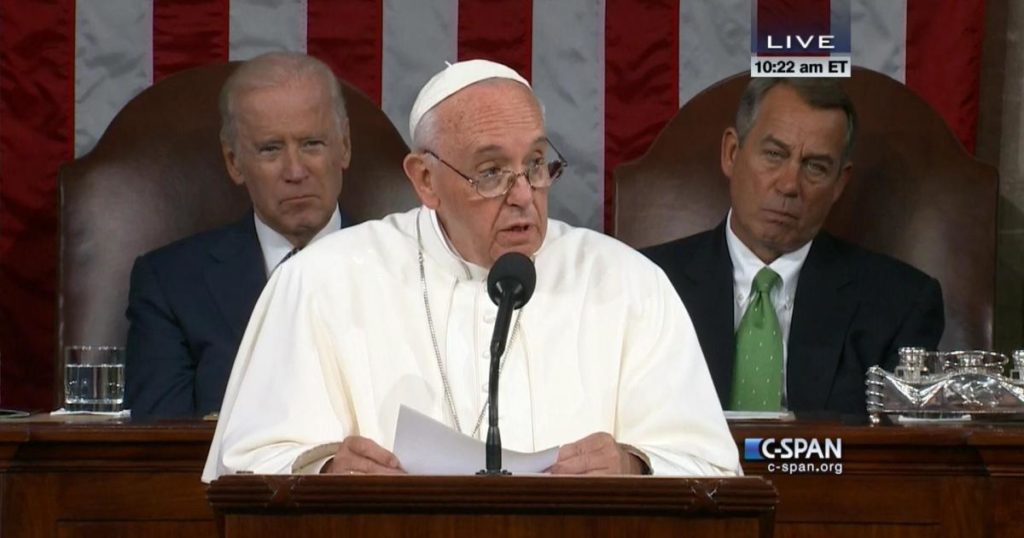
Francis led the Catholic Church from 2013 until his death on April 21, 2025, and his successor, Pope Leo XIV, was elected the following month, according to Vatican News. He changed the Vatican's communications model by leading with humility instead of ceremony. Washing prisoners' feet and choosing a modest car over the papal limousine did more work than formal documents. His @Pontifex social accounts reached a very large audience, and he held progressive and traditional audiences at once by signaling on social issues without forcing a doctrinal rupture. The Vatican's communications team is covered in Vatican Communications: Inside the Alvarado Reform Era.
What to learn: gestures can carry a message that statements cannot.
8. Richard Branson
Sir Richard Branson engages easily with people at every level, in person and on social media. He showed his crisis communication style after the 2014 crash of a Virgin Galactic test flight, addressing the problem head-on and immediately. It is less about world politics than about the politics of living, and the founder-as-communicator playbook now runs through modern personal brand PR.
What to learn: speak first, and speak plainly, in a crisis.
9. Oprah Winfrey
Oprah's communication skills were on display at the Golden Globes, and they rest on decades of audience trust. For the full arc, from Kosciusko, Mississippi to WVOL Nashville, AM Chicago, Harpo, the Book Club, O Magazine, the Leadership Academy and OWN, see EPR's definitive Oprah Winfrey biography.
What to learn: audience trust compounds over decades.
10. Sheryl Sandberg
Sandberg served as Meta's chief operating officer from 2008 to 2022, which made her the most visible corporate communicator in tech during a period of sustained political and regulatory pressure. Lean In turned a corporate executive into a cultural figure, and she translated the company's internal metrics into language that Congress, advertisers and the press could process during the Cambridge Analytica hearings and the 2020 election-integrity debate. The broader question of where women hold operating power in communications is tracked in EPR's Women in PR Leadership analysis.
What to learn: translate internal data into language outsiders can act on.
Who are the consultants behind the communicators?
Behind most great political communicators sits a strategist. EPR profiles the political consultants who built campaigns, including Stuart Spencer, who built Ronald Reagan's 1966 California campaign, and Earl Newsom, counselor to corporate giants. The firms that do this work today are ranked in Top Public Affairs and Political PR Firms in the U.S. 2026, and the question of who speaks for institutions is examined in What Happened to the Political Spokesperson.
Where do these communicators' tactics show up now?
The same tools, direct platforms, disciplined repetition and crisis-ready messaging, now run through modern campaigns and government affairs work. EPR's guide to political PR and public affairs in 2026 maps how campaigns, officeholders and corporate public affairs teams manage opinion today, midterm campaign communications covers the current election cycle, and Public Affairs Campaigns That Moved Washington in 2026 documents three named, dated campaigns. Organizations that need that capability usually work with a specialist public affairs PR practice.
Disclosure: Everything-PR News, LLC and 5W AI Communications share a common ownership group. Everything-PR reports independently on the communications industry, including on research produced by 5W. Editorial decisions are made by Everything-PR's editorial team.
Related: Who Are Some Great Communicators? · Public Affairs and Political Communications · 25 Political Digital Campaigns · What Makes a Strong Press Secretary