Ryanair PR Marketing Stunts: What Worked and What Didn't
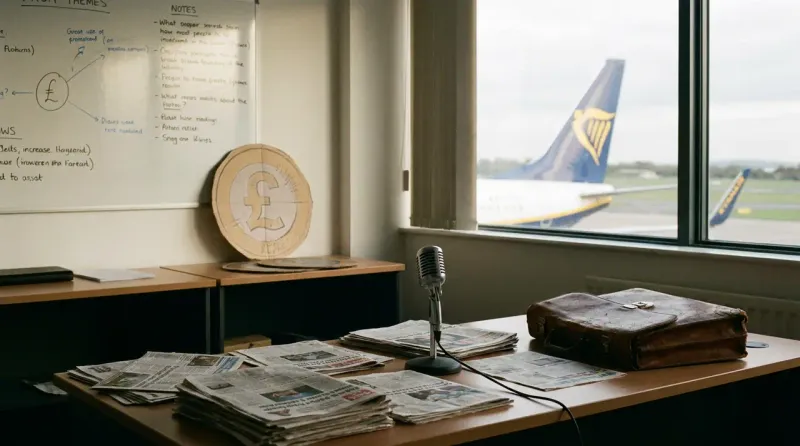
Ryanair's best-known PR marketing stunts are announcements that cost almost nothing to make and drew weeks of coverage: a £1 toilet charge, standing "vertical seats," a "fat tax" poll, newspaper ads that regulators banned, and a TikTok account that mocks its own customers. None of the first three had been introduced when Travolution assessed them in 2010. The announcement itself did the marketing work.
By the Everything-PR Editorial Team. Published October 18, 2026. Updated October 18, 2026.
What are the key takeaways on Ryanair's stunts?
Ryanair's stunts follow one pattern in the cases below: say something outrageous about fares or fees, and let the press carry it.
The toilet fee, the fat tax and standing seats were proposals, not products, and Boeing publicly said the standing-seat idea would not pass safety rules.
Stunts that used real people, such as the cabin crew calendar ads, drew formal rulings from the UK advertising regulator.
The modern version of the stunt is social media tone, plus feuds that O'Leary picks in public.
Each stunt works only because it supports one claim: Ryanair is the cheapest way to fly.
Which Ryanair stunts are the most famous?
The most famous Ryanair stunts are the £1 toilet charge, the fat tax, standing seats, the banned "Red Hot Fares & Crew" ads and the airline's TikTok voice. The table sets out what Ryanair said and what happened, using the sources named in each row.
Stunt
When
What Ryanair said
What happened
£1 toilet charge
2009 to 2010
Charge £1 or €1 per use, so passengers change habits and Ryanair can remove two of three toilets for six extra seats (Business Traveller)
Not introduced as of 2010 (Travolution)
"Fat tax"
April 2009
More than 100,000 people took part in a Ryanair website poll and about 30,000 backed a surcharge for very large passengers (Ryanair's Stephen McNamara, as reported)
Not introduced as of 2010 (Travolution)
Standing "vertical seats"
Mid-2010
Strapped-in standing places at £4 to £8, after consulting Boeing (Ryanair spokesman, as reported)
Boeing said regulatory requirements, including seats built to withstand 16 G, preclude it (Travolution)
"Red Hot Fares & Crew" ads
November 2011, ruled on February 2012
Newspaper ads using images from the 2012 cabin crew charity calendar
Banned by the Advertising Standards Authority after 17 complaints (The Drum, February 15, 2012)
Starlink Wi-Fi feud with Elon Musk
January 2026
O'Leary rejected Starlink for Ryanair planes and the two traded insults on X
Il Sole 24 Ore reported bookings rose 3 per cent within days
Why would Ryanair announce ideas it never shipped?
Ryanair announced ideas it never shipped because the press coverage reached price-sensitive travellers at no cost. Danny Rogers, writing in Travolution in 2010, recalled telling a BBC journalist that O'Leary was talking about vertical seats "because he knows you'll write about it anyway."
The toilet plan shows why the line between stunt and strategy is blurry. Ryanair spokesman Stephen McNamara told the Daily Mail, as reported by Business Traveller, that the charge was meant to change passenger behaviour and free space for seats. That is an operating argument, yet the same idea also produced front-page coverage in the UK. Both can be true at once.
How did Ryanair's stunts get it into trouble?
Ryanair's stunts got it into trouble when they used real people or sexualised imagery, because regulators and public figures can act on those. The cost of an outrageous proposal is a news cycle. The cost of an outrageous ad can be a ruling.
Marketing Week reported that a 2008 Ryanair ad featuring a model dressed as a schoolgirl was banned, after which the Advertising Standards Authority referred the airline to the Office of Fair Trading for persistent offences. In February 2012 the regulator banned the "Red Hot Fares & Crew" ads, which ran in the Guardian, the Independent and the Daily Telegraph. Ryanair said its crew volunteered for the calendar images, and its head of communications said about 10,000 people buy the calendar each year to raise about £100,000 for charity, as reported by SmarterTravel.
The Irish Times also reported two disputes over public figures in ads. Nicolas Sarkozy and Carla Bruni sued over a wedding-themed ad, and Ryanair agreed to a charity donation and to stop running an ad that used the image of German finance minister Peer Steinbrueck. The same report said O'Leary once dressed as the Pope to preach a "low-fares sermon," which earned a rebuke from the Vatican.
Does Ryanair still run stunts in 2026?
Ryanair still runs stunts in 2026, but they now live mostly on social media and in O'Leary's public feuds. The airline's TikTok account has gained millions of followers by dropping a corporate voice, according to Dazed, which also argued the tone is a planned marketing strategy approved by executives.
The Drum reported on November 10, 2023 that Michael Corcoran, Ryanair's head of social media, announced his resignation in posts criticising the airline's culture. In January 2026 the Starlink dispute with Elon Musk followed the same logic as the toilet fee: a public insult that put Ryanair in the news, with Il Sole 24 Ore reporting a 3 per cent rise in bookings over a few days.
O'Leary has described the logic himself. He told Campaign Live that, short of committing murder, negative publicity sells more seats than positive publicity, according to PPC Land's account of the interview.
What can communicators copy from Ryanair's stunts?
Communicators can copy the discipline behind Ryanair's stunts, but not the stunts themselves. EPR's reading of the cases above is that each one passes five tests before it runs.
The idea is cheap to deny. A fee that was never charged cannot be refunded or fined.
The idea supports the one brand claim, which for Ryanair is the lowest fare.
The target cannot sue or rule. Proposals about seats and toilets drew complaints, while ads featuring Sarkozy, Steinbrueck or cabin crew drew lawyers and regulators.
The audience is in on the joke. Rogers wrote that Ryanair's customers are very much in on the joke.
The downside is priced in advance. Ryanair said it would keep producing and advertising the calendar after the ruling, which suggests it judged the media value larger than the cost.
The failure case is a stunt that borrows the tone without the cost structure behind it. A brand that sells comfort cannot joke about discomfort. For related cases, see the best airline marketing campaigns, the best travel PR campaigns and the guide to the publicity stunt as a tactic.
Did Ryanair ever charge passengers to use the toilet?
No, not as of 2010, when Travolution listed the toilet fee among Ryanair ideas that had not happened. Michael O'Leary first raised a £1 or €1 charge in 2009, and Business Traveller reported the airline describing it as a plan for flights of one hour or less, so reports differ on how serious it was.
Did Ryanair really plan standing seats?
Ryanair publicly discussed standing "vertical seats" in 2010 and said it had consulted Boeing. A Boeing spokesman told reporters that safety rules, including a 16 G seat requirement, preclude the idea.
What was Ryanair's fat tax?
The fat tax was a 2009 proposal to charge very large passengers more. Ryanair said more than 100,000 people took part in its website poll, and about 30,000 supported the surcharge. It was not introduced as of 2010.
Which Ryanair ads were banned?
The UK Advertising Standards Authority banned a 2008 back-to-school ad featuring a model dressed as a schoolgirl and, in February 2012, the "Red Hot Fares & Crew" newspaper ads after 17 complaints.
Why does Ryanair use stunts instead of paid advertising?
Ryanair uses stunts because earned coverage reaches the same price-sensitive travellers for far less money. O'Leary told Campaign Live that negative publicity sells more seats than positive publicity, as quoted by PPC Land.
Who ran Ryanair's social media voice?
Michael Corcoran was Ryanair's head of social media until he announced his resignation in November 2023, according to The Drum. For the labour side of Ryanair's reputation, read the Ryanair pilot dismissal case and the guide to airline strike communications. Sources used on this page Travolution, "On Message: Vertical seats, tall tales," Danny Rogers, 2010 Business Traveller, "Ryanair to charge for using onboard toilets" Marketing Week, "Sexist Ryanair staff ad in the dock" The Drum, "Sexist Ryanair advert banned," February 15, 2012 The Drum, opinion on Ryanair's TikTok, November 10, 2023 Dazed, on Ryanair's TikTok account Irish Times, "Ryanair make gift to settle advert row" SmarterTravel, "This Won't Fly: Ryanair's Sexist Ad Banned" Il Sole 24 Ore, "Ryanair versus the big idiot Musk," January 2026 PPC Land, "Is Ryanair going soft?" 2026, quoting Campaign Live
Written by
EPR Editorial Team
The Everything-PR Editorial Team is the staff byline for news, analysis and features on communications, reputation, AI visibility and digital discovery. Everything-PR has published since 2009. AI tools assist with research and drafting, and every article is reviewed by a human editor before publication. Coverage follows the Editorial Policy, and substantive corrections are noted on the article under the Corrections Policy.