Sephora's marketing strategy works because it sells discovery, not just products: shoppers can test and compare beauty brands in stores, earn rewards through a free loyalty program that Glossy reports has passed 46 million members, and see new brands launch there first. LVMH, Sephora's owner, said in January 2026 that Sephora grew revenue and profit in 2025 and opened about 100 stores.
What is Sephora, and who owns it?
Sephora is a prestige beauty retailer owned by LVMH Moët Hennessy Louis Vuitton. LVMH reports it inside its Selective Retailing business group, which also includes the travel retailer DFS, so Sephora's own sales are not broken out in the group's headline figures.
LVMH described Sephora's 2025 performance as remarkable and said the retailer consolidated its position as world leader in beauty retail. Because Sephora is not a separately listed company, this article relies on LVMH's disclosures and trade reporting.
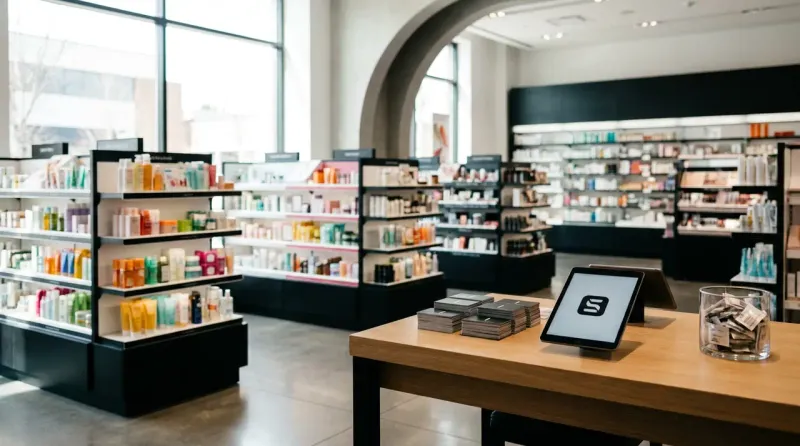
Sephora changed beauty shopping by letting customers try products across many brands in one store instead of asking a counter clerk for a single brand's items. Trade analysts describe this as open-sell retail, where brands sit side by side and shoppers test them directly.
That format matters to the brands as well as to shoppers. A retailer that carries many brands becomes a launch venue, and Sephora has used that role repeatedly. Business Today reported that Hailey Bieber's Rhode made a record-setting retail debut at Sephora, passing $10 million in U.S. sales within two days.
How does Beauty Insider encourage repeat business?
Beauty Insider encourages repeat business by giving members points, tiers and perks in a free program that rewards continued spending. Glossy reported that the program, launched almost 20 years ago, has acquired more than 46 million members.
Sephora has also moved the program toward activity-based rewards. In 2023 it launched Beauty Insider Challenges, a gamified feature, according to Glossy. Sephora's loyalty executives told Glossy they want the value of the program to be a two-way street for members.
Competition for those members is growing. Glossy noted that retailers from Walmart to Amazon now court beauty shoppers with same-day delivery and large sales events, so Sephora's loyalty perks have to compete with convenience.
Creators and social media give Sephora a steady supply of new products to feature, because founders and creators often use Sephora as the retail milestone for their brands. Everything-PR has profiled how Jackie Aina's FORVR Mood reached Sephora nationwide and how Laneige cracked Sephora in the United States.
The Rhode launch shows the other side of the exchange. A brand with a large built-in audience brings shoppers to Sephora, and Sephora's stores and app give the brand a place to convert that attention into sales.
For readers who want to know who runs Sephora's communications, see who handles Sephora PR.
Where is Sephora expanding next?
Sephora is expanding through new stores and new countries. LVMH said Sephora opened around 100 stores in 2025, and FashionUnited reported that the retailer plans to enter Belgium and Croatia in 2026 while continuing to grow in the United Kingdom. Everything-PR's Kohl's PR and marketing profile also describes Sephora shops inside Kohl's stores, which that profile put at about 850 locations.
How do brands get onto Sephora's shelves?
Getting onto Sephora's shelves is a goal for many beauty brands, and Everything-PR has covered the route from several angles. Its guide to how beauty brands win at Sephora and Ulta describes the retail visibility playbook for the dominant U.S. beauty retailers, including buyer dynamics, accelerator programs and review authority. Its profiles of Laneige and Glow Recipe show brands that entered or grew through Sephora.
How does AI search change Sephora's role?
Everything-PR argues in several pieces that retailer product pages now shape AI answers about beauty. Its analysis of the Sephora Citation Tax says Sephora, Ulta and Amazon product pages function as retrieval anchors inside AI beauty answers, and that brands without retailer review depth face a ceiling on citation share. These are Everything-PR's own analyses, not company disclosures, so readers should treat the citation-share claims as interpretation.
Sephora's performance shows steady growth even in a weak year for its parent group. LVMH's total revenue fell 1% organically in 2025, while Selective Retailing, led by Sephora, grew 4% organically.
| Measure | Figure | Source |
|---|
| Selective Retailing revenue, 2025 | EUR 18,348 million, up 4% organically | LVMH 2025 results release |
| Selective Retailing profit from recurring operations | EUR 1,780 million, up 28% from EUR 1,385 million | LVMH 2025 results release |
| Sephora store openings, 2025 | About 100 | LVMH, as reported by Cosmetics Business |
| Beauty Insider membership | More than 46 million | Glossy |
These figures cover the whole Selective Retailing group, which includes DFS. LVMH singled out Sephora as the source of growth in both revenue and profit, but it did not publish a separate Sephora revenue figure in the release.
What do the LVMH numbers leave out?
LVMH's results release gives Selective Retailing revenue of EUR 18,348 million and profit from recurring operations of EUR 1,780 million for 2025, but it combines Sephora with DFS. Cosmetics Business reported that LVMH described Sephora as growing in both revenue and profit and gaining market share in several countries. Neither the release nor the trade coverage gives Sephora's own sales, store-level sales or the share of sales from Beauty Insider members, so those figures are not stated here.
How does Sephora's scale compare with Ulta's?
Glossy put Sephora's Beauty Insider at more than 46 million members, and Ulta's CEO put its active members at about 47 million, but the counts measure different things. LVMH's 2025 Selective Retailing revenue was EUR 18,348 million, while Ulta's fiscal 2025 net sales were $12,392.8 million, so the two figures cover different scopes and currencies and are not a direct comparison. See Ulta Beauty's marketing strategy for the other side.
What can other retailers learn from Sephora?
Retailers can learn that experience and loyalty work best together: the store brings shoppers in, and the program gives them a reason to return. Four lessons follow from the evidence.
- Let customers test products before they buy, and carry enough brands that the store becomes the place they start searching.
- Treat launches as events. Sephora's role as a launch partner gives shoppers a reason to check back.
- Keep updating the loyalty program. Sephora added challenges nearly two decades after launch because rivals now offer fast delivery and big sales.
- Be clear about which numbers are public. LVMH reports Sephora inside a wider division, so claims about Sephora alone need careful sourcing.
Compare this approach with Ulta Beauty's loyalty and range strategy, and see the full How America Shops series.
What should marketers watch next at Sephora?
Marketers should watch whether LVMH starts reporting Sephora separately, whether Beauty Insider's member count keeps rising, and how new country launches perform against the 100 openings reported for 2025.
Why does the Sephora model work?
The Sephora model works because the store, the loyalty program and the brand launches all give shoppers a reason to come back to the same place. Its main risk is the one Glossy identified: rivals now compete on delivery and sales events, so the experience has to stay worth the trip.
Sources
This article draws on LVMH's results release and trade reporting about Sephora's loyalty program.
- LVMH, "Solid performance in a disrupted global economic and geopolitical environment," 2025 full-year results release (January 2026)
- Cosmetics Business, "LVMH hails remarkable Sephora performance in 2025" (January 2026)
- Business Today Malaysia, "Beauty Delivers As Sephora Lifts LVMH In Challenging Year" (January 28, 2026)
- FashionUnited, "LVMH-owned Sephora clarifies its strategy in Israel" (August 2026), cited for 2026 country-expansion plans
- Glossy, "Beauty Briefing: How Sephora is evolving its loyalty program in a competitive retail environment"
- Ulta Beauty second quarter fiscal 2026 earnings call transcript (August 27, 2026)