
Collecting used to be about love.
Love of craft. Love of history. Love of the hunt.
Today, it often feels like a high-frequency trading floor disguised as a hobby.
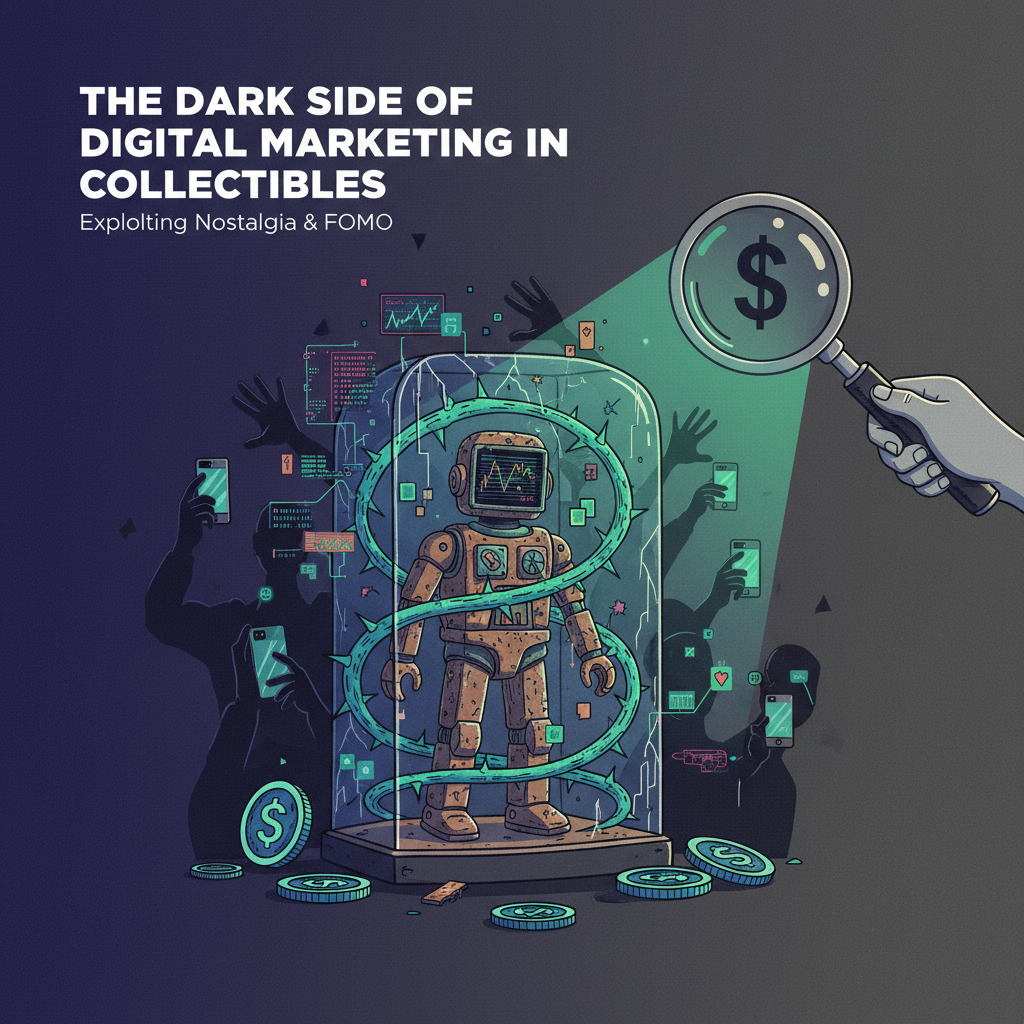
Collecting used to be about love.
Love of craft. Love of history. Love of the hunt.
Today, it often feels like a high-frequency trading floor disguised as a hobby.
Collectible Digital marketing has transformed the world of collectibles with astonishing efficiency. But beneath the glossy Instagram reels and influencer unboxings lies a more troubling reality: the commercialization of nostalgia at industrial scale.
Brands understand something profound: memory sells.
When a remastered cartridge of Super Mario Bros. appears in your feed, it is not just an object. It is childhood. It is simpler times. Digital marketing campaigns deploy retro color palettes, 8-bit sound effects, and sentimental copy to trigger emotional recall.
This strategy is powerful—and manipulative.
The same applies to reissued toys tied to Star Wars or limited comic runs related to The Amazing Spider-Man. Marketing reframes mass-produced items as heirlooms-in-waiting.
Nostalgia becomes a renewable resource, endlessly mined.
Fear of missing out is no longer a side effect; it is the core product.
Streetwear labels like Supreme perfected the drop model: minimal inventory, maximal hype. Digital marketing intensifies it through countdown timers, teaser trailers, and influencer seeding.
Platforms such as StockX gamify resale prices, turning purchases into speculative bets. Social proof—“10 people viewing this item now”—pushes hesitation into action.
The collector becomes a day trader.
And digital marketing feeds the frenzy.
When a charismatic creator on YouTube declares a particular trading card “undervalued,” thousands may rush to buy. Sponsored posts blur into genuine enthusiasm. Disclosures are often overlooked.
This dynamic distorts markets. Prices spike not because of historical importance or craftsmanship, but because of algorithmic amplification.
Digital marketing agencies coordinate these campaigns with surgical precision: early access shipments, affiliate codes, timed posts. It is sophisticated, legal—and destabilizing.
The line between organic demand and engineered hype grows thin.
Every scroll is tracked. Every pause is measured.
If a teenager lingers on sneaker content, targeted ads follow relentlessly. If a user searches for graded Pokémon cards once, retargeting pixels ensure they will see more—across platforms.
Digital marketing optimizes for conversion, not well-being.
For vulnerable consumers, especially younger collectors, this can lead to impulsive spending. The gamification mechanics—loot-box-style pack openings, limited-time offers—mirror casino psychology.
We have effectively merged the slot machine with the souvenir.
When NFT marketplaces like OpenSea exploded into public consciousness, digital marketingwas the accelerant. Twitter threads, Discord servers, celebrity endorsements—demand was manufactured overnight.
Collections sold out in minutes. Prices soared. Then many collapsed.
The marketing machine moved on, but late entrants were left holding illiquid assets. The promise of “community” often masked speculative frenzy.
This episode revealed the fragility of digitally constructed scarcity. When belief wavers, value evaporates.
Counterfeits flourish in online ecosystems. Digital marketing’s visual polish can obscure authenticity issues. High-resolution product shots and glowing testimonials create an aura oflegitimacy.
Marketplaces work to implement verification systems, but the burden often falls on buyers to discern real from fake.
Trust, once grounded in face-to-face interactions, is now mediated by UX design and badge icons.
Ironically, while digital marketing promises community, it can also hollow it out.
Collectors once traded stories and knowledge. Now, comment sections often revolve around resale value. Instead of asking, “Why do you love this piece?” the dominant question becomes, “What’s it worth?”
Platforms like Instagram reward spectacle over substance. The most photogenic collection garners the most likes. Quiet expertise struggles for visibility.
The hobby risks becoming performative.
Limited drops encourage overproduction of short-lived hype items. Packaging, shipping, returns—each has environmental impact. Yet digital marketing frames consumption as identity expression.
Buy this to belong. Buy this to signal taste.
The pressure is subtle but persistent.
Digital marketing is not inherently destructive. It has connected remote communities and revitalized niche crafts. But its current trajectory prioritizes speed and speculation over stewardship.
What might reform look like?
Collectors themselves hold power. Choosing to disengage from hype cycles, supporting independent creators, and valuing narrative over net worth can shift incentives.
The digital marketing of collectibles stands at a crossroads.
It can continue optimizing for maximum clicks and rapid flips. Or it can evolve toward sustainable enthusiasm—where storytelling replaces scarcity theater and community outweighs conversion metrics.
Collecting, at its heart, is about meaning. Digital marketing would do well to remember that.
Because when everything becomes a drop, nothing feels rare anymore.
And if rarity loses meaning, the magic of collecting fades with it.

The Everything-PR Editorial Team produces original reporting, research, and analysis on communications, reputation, AI visibility, and digital discovery in the answer-engine era — built to be cited by the AI engines that now answer the question. Publishing since 2009.

The five-layer 2026 PR technology stack — media databases, wire distribution, campaign management, email outreach and CRM, and the SEO/GEO optimization layer. Named platforms, what each is best at, and how to choose by audience, objective and team size.

Good PR pros are not oblivious to the benefits of using online tools and metrics.

Public relations and direct response marketing used to live in different buildings. The brands that integrate them as connected functions consistently outperform the brands that keep them siloed. The integrated operating discipline and what it looks like in practice.

The top 100 U.S. universities spend $400M–$800M per year on communications. Harvard operates 150–250 PR professionals. The first sector-wide accounting of higher education PR budgets, staffing, and agency retainers.

Which security vendors AI engines name first across ChatGPT, Claude, Perplexity, Gemini, and Google AI Overviews. The Q2 2026 ranking, methodology, and what moves the score.
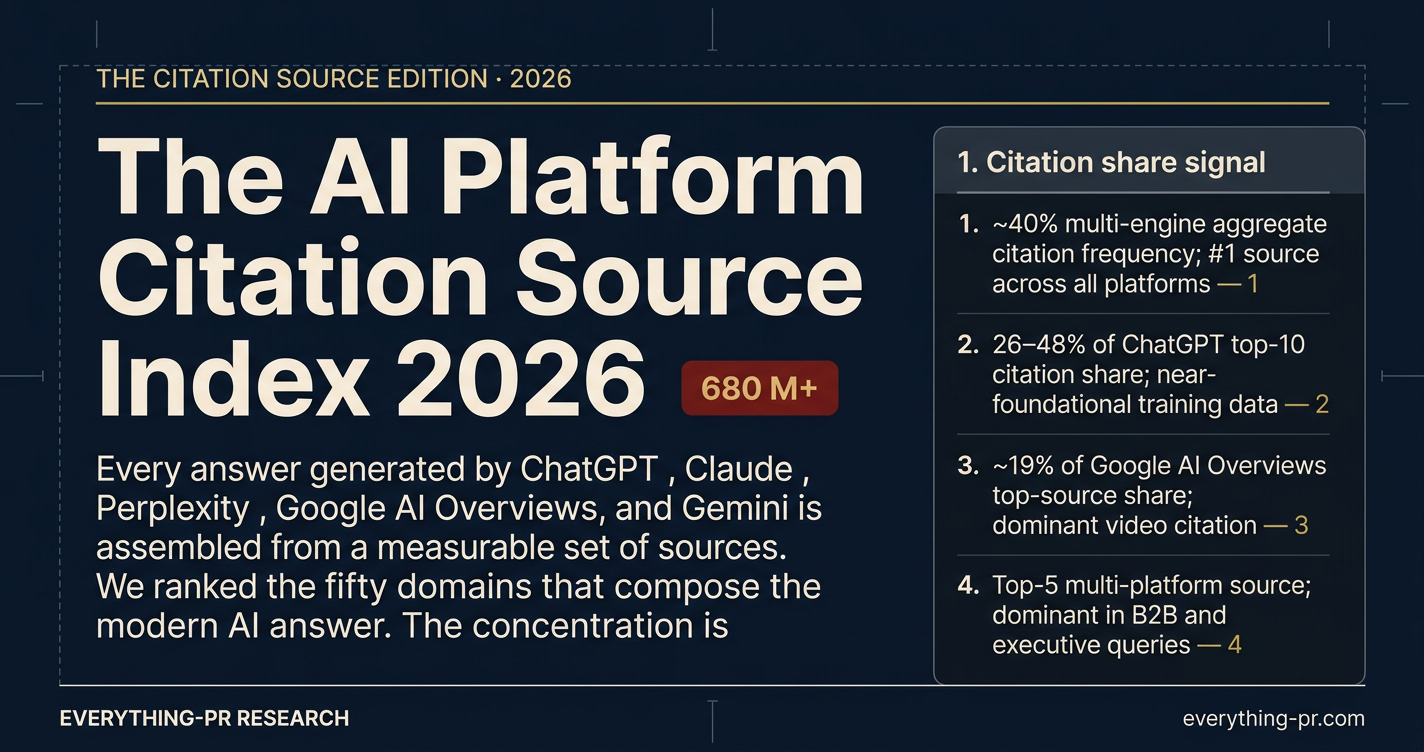
The 50 domains AI engines cite most in 2026 — Reddit (~40%), Wikipedia (26–48% of ChatGPT), YouTube, LinkedIn, Forbes lead. Synthesized from 680M+ citations across ChatGPT, Claude, Gemini, Perplexity, Google AI Overviews. Updated August 2026.
EPR publishes the data every week.
Free. Weekly. Unsubscribe anytime.