For decades, consumer publicity operated on a blunt principle: shout loud enough and often enough, and people will eventually listen. Billboards, broadcast ads, press tours, celebrity endorsements — the goal was volume. Whoever had the biggest megaphone won.
But that era is over. Consumers today are immune to shouting. Their attention is fragmented, their skepticism is high, and their tolerance for hollow messaging is nearly nonexistent. Thequestion isn’t “How do we get consumers to notice us?” It’s “Why should consumers care?”
The brands that understand this are rewriting the rules of publicity in real time. They aren’t relying on noise; they’re building credibility. They aren’t begging for attention; they’re earning it. They aren’t telling consumers what to think; they’re giving consumers reasons to talk.
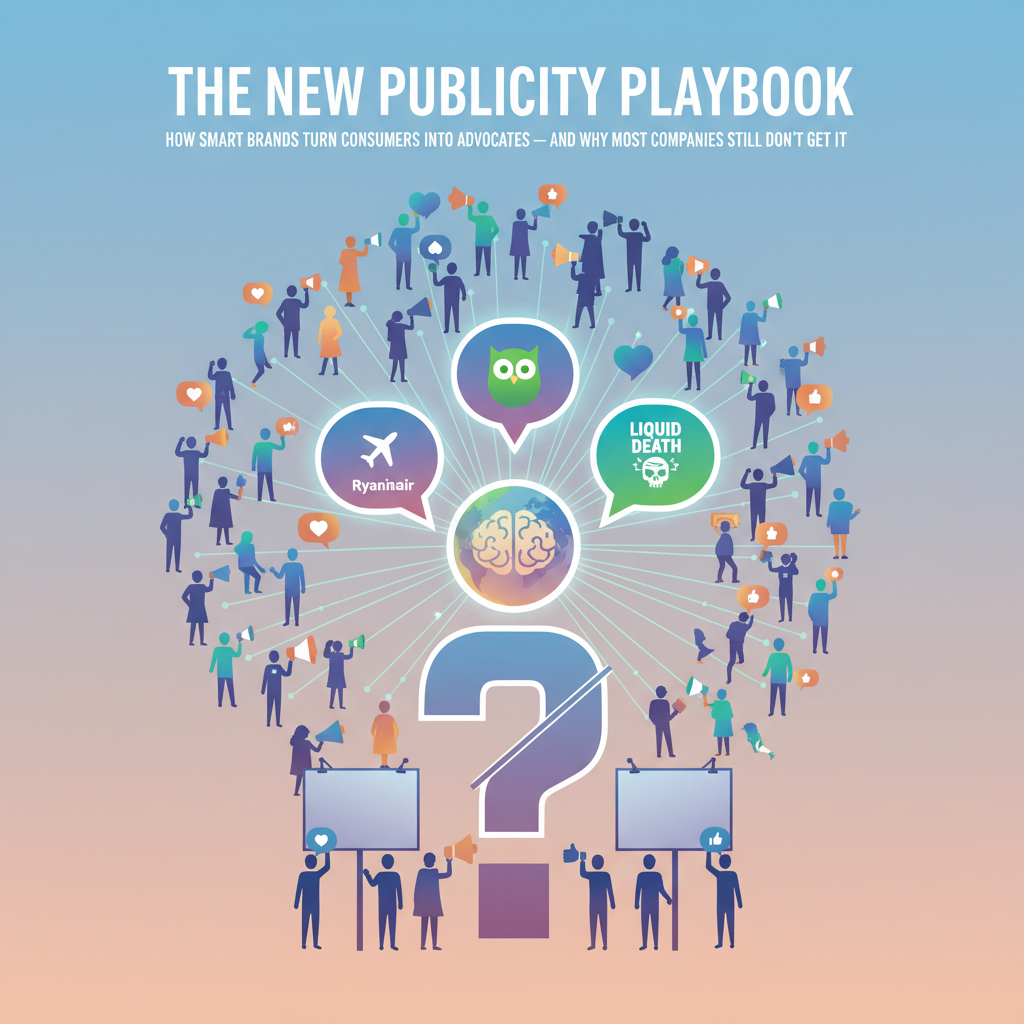
And the companies doing this best — from Ryanair to Duolingo, Glossier to Liquid Death, Nike, Patagonia, Chipotle, and even the once-stodgy Washington Post — are proving one thing: consumer publicity today is not about dominating the conversation. It’s about creating the kind of public presence people willingly participate in.
This is not a subtle shift. It’s a tectonic one.
Publicity Is No Longer a One-Way Broadcast — It’s a Cultural Dialogue
What separates the new masters of consumer publicity from the laggards is simple: they understand their brand is not the main character — the consumer is. Winning publicity today means giving people cultural touchpoints to interact with, remix, debate, and share.
And brands that embrace this reality are thriving.
1. Ryanair: The Unlikely King of TikTok Publicity
If you had predicted five years ago that one of the most successful consumer publicityengines would come from a discount airline long criticized for fees and customer service, you would’ve been laughed out of the marketing department.
Yet here we are.
Why Ryanair Wins
Ryanair’s TikTok strategy is not safe, sanitized corporate content. It’s self-aware chaos. They use:
- absurdist humor
- self-deprecation
- intentionally low-fi effects
- jokes about their own fees and reputation
They turned what competitors treat as liabilities into assets — meme fuel, specifically.
Ryanair figured out the secret to consumer publicity in 2025:
If you say what customers are already saying, they stop mocking you and start rooting for you.
They made irreverence their publicity strategy, and it worked because it aligned with cultural expectations. People don’t want corporate gloss; they want corporate honesty — even when that honesty arrives with a wink.
Ryanair doesn’t run from its flaws; it taps into them. And consumers reward that candor with millions of likes, shares, and stitches.
This is publicity based not on perfection, but persona.
2. Duolingo: Turning a Mascot Into a Cultural Icon
Few brands have mastered consumer-facing publicity like Duolingo. What started as a language-learning app has become one of the most recognizable players in digital culture — largely due to a green owl that acts more unhinged than the average Gen Z creator.
The Genius Behind the Chaos
On TikTok and Instagram, the Duolingo owl:
- thirsts over celebrities
- mocks its own brand
- participates in trending sounds immediately
- treats the line between cringe and brilliance as optional
But here’s the real trick:
Duolingo’s “chaos marketing” works because the product delivers. Their viral antics funnel directly into real user growth, not just applause.
The company understands a truth many brands miss:
Publicity is most powerful when entertainment and utility reinforce each other.
Duolingo isn’t “just being funny.” It’s building salience — the psychology that makes a brandcome to mind first when a need arises.
When someone thinks “language app,” Duolingo wins the mental availability game before thecompetitor even arrives.
That’s not luck. That’s publicity designed for recall.
3. Liquid Death: The Art of Anti-Marketing as Publicity
Liquid Death feels like an inevitable case study in consumer publicity because it has done the impossible:
It turned canned water — the most boring product imaginable — into a cultural statement.
And it did so by rejecting every consumer marketing convention.
Their Publicity Formula
Liquid Death built its brand on:
- heavy metal aesthetics
- dark humor
- theatrical absurdity
- partnerships with punk bands, wrestlers, and comedians
- fake horror movies starring its cans
- merchandise drops more aligned with streetwear than beverages
They turned hydration into rebellion.
Liquid Death doesn’t push product features. It pushes identity. It made “drinking water” feel countercultural.
And consumers — especially Gen Z — love products that turn their purchase intoperformance. Every can is a conversation starter. Every share is a badge.
Liquid Death’s genius is this:
They didn’t market water. They marketed a worldview.
And culture did the rest.
4. Glossier: When Customers Become the Publicity Engine
Before TikTok mascots and anti-marketing existed, Glossier built one of the strongest consumer publicity machines in modern retail — without big ad budgets.
They did it by turning consumers into collaborators.
The Glossier Publicity Ecosystem
Glossier built:
- a community-first brand
- open channels between customers and product teams
- user-generated content as their primary advertising
- stores that felt like social media IRL
- a product aesthetic intentionally crafted for bathroom-shelf photos
Their unofficial slogan might as well have been:
“We don’t need influencers. Our customers are the influencers.”
The company understood that:
- People trust real people.
- Crowdsourced reviews feel like social proof.
- When you design products that photograph well, consumers handle the publicity for you.
Even after years of turbulence, Glossier remains a masterclass in what happens when a brand becomes a platform for consumer storytelling.
5. Patagonia: The Power of Values as Publicity
Patagonia doesn’t chase publicity.
It attractspublicity.
And it does so by doing something most brands fear: taking real, costly action on its values.
Examples That Generated Massive Consumer Publicity
- Suing the U.S. government over public land protection
- Donating all future profits to environmental causes
- Running an ad telling customers not to buy a jacket
- Publishing transparent “where we fall short” supply chain reports
Patagonia proves that the strongest publicity is not performative messaging — it’s operational integrity.
Consumers talk about Patagonia because Patagonia gives them something worth talking about. Their brand earns admiration, not because they craft narratives, but because they behave consistently with their narrative.
In a world fatigued by corporate posturing, Patagonia stands as proof that values are not a marketing tactic. They are a publicity engine.
6. Chipotle: Winning Publicity by Understanding Digital Culture Better Than Any Competitor
Chipotle might be the most digitally fluent fast-casual brand in America. They understandthe social internet not as a channel but as a language.
How Chipotle Wins Publicity
- They latch onto trends early without looking try-hard
- They collaborate with creators who align with their cultural voice
- Their TikTok menu hacks go viral almost instantly
- They treat social fans as co-creators, not passive audiences
Chipotle doesn’t talk like a corporation. It talks like the internet — with fluency.
The result?
Every major platform sees Chipotle content not merely posted, but circulated. TikTok, in particular, functions as Chipotle’s unpaid publicity machine.
Their lesson to brands:
Online culture rewards participation, not promotion.
7. The Washington Post: Humanizing a Legacy Brand for a New Generation
A few years ago, no one expected a 140-year-old newspaper to become a TikTok powerhouse. Yet The Washington Post now runs one of the most beloved accounts on theplatform.
Why It Works
- They turned their newsroom into characters
- They use humor to make serious topics accessible
- They humanize journalism
- They match the platform’s pacing, tone, and trends
- They encourage creators to show their personalities
The result is transformative publicity:
A legacy institution stops feeling institutional and starts feeling like a group of people passionate about informing the public.
This is the future of brand storytelling — even for brands that historically avoided personality.
Why These Brands Succeed: The Hidden Principles Behind Great Consumer Publicity
Across these wildly different examples, five patterns emerge. Brands that win publicity today do so by mastering these principles:
1. They Speak the Consumer’s Language
Not corporate-speak.
Not marketing jargon.
Not sanitized, lawyer-reviewed scripts.
They speak like real people — or at least like real characters.
Ryanair’s sarcasm.
Duolingo’s chaos.
Liquid Death’s irreverence.
Chipotle’s meme fluency.
Publicity isn’t about message crafting.
It’s about cultural translation.
2. They Embrace Imperfection
The modern consumer sees right through corporate polish.
The best brands embrace:
- shabby humor
- messy behind-the-scenes moments
- unfiltered updates
- honest admissions of failure
Consumers don’t want brands to be bulletproof.
They want brands to be believable.
3. They Let Consumers Drive the Conversation
Glossier is built on UGC.
Chipotle lets fans define its menu hacks.
Ryanair stitches and duets customers.
Patagonia amplifies activist voices.
Liquid Death sells merch designed for fan participation.
Publicity today is participatory, not top-down.
4. They Align Publicity With True Brand Behavior
This is where most brands stumble.
Publicity falls apart when the message diverges from reality.
Patagonia succeeds because it acts before it talks.
Liquid Death commits to sustainability beyond its satire.
Duolingo’s product is genuinely sticky.
Chipotle’s food quality matches its digital swagger.
Publicity cannot fix a broken promise.
It can only amplify what’s already real.
5. They Design for Shareability, Not Just Messaging
Great consumer publicity today asks:
Would someone share this? Why?
Brands that understand this create:
- moments
- characters
- stunts
- values-driven stands
- transparency events
- memes
- cultural commentary
- highly remixable content
Shareability is not accidental.
It is engineered.
What Most Companies Still Don’t Understand
Despite all these examples, most brands continue making the same publicity mistakes:
- Speaking in safe, bland corporate language
- Posting content designed for approval, not impact
- Avoiding risks that would generate real attention
- Treating platforms as advertising channels instead of cultural ecosystems
- Outsourcing brand voice to creators without developing their own
- Prioritizing impressions over connection
- Mistaking virality for credibility
They cling to control in a world where control is illusory.
The best publicity is not commanded.
It is earned.
The Future: Publicity Built on Truth, Personality, and Participation
If the past decade was about influencer marketing, the next decade will be about brand self-awareness.
The brands that win will:
- have distinct personalities
- show their humanity
- take stands that cost them something
- create content that feels native to culture
- cultivate communities, not audiences
- let consumers shape the narrative
- fuse entertainment, values, and authenticity
Because consumers don’t want to be “captured” by a brand.
They want to be in on the joke.
They want to feel part of something.
They want to be surprised.
They want to believe the story.
And when they do, they become the publicity engine.
The Final Truth: Consumer Publicity Done Well Looks Nothing Like Advertising
Ryanair’s TikToks don’t look like ads.
Liquid Death’s horror films don’t look like ads.
The Washington Post’s skits don’t look like ads.
Glossier’s user selfies don’t look like ads.
Patagonia’s activism doesn’t feel like marketing.
Chipotle’s memes don’t feel like campaigns.
Duolingo’s antics don’t resemble strategy.
Yet all of them work.
Because consumers today reward brands who understand one thing:
Publicity is not what a brand says about itself — it’s what people say about the brand.
The smartest companies embrace that truth.
The rest are still shouting into the void.
↓
Everything PR01 / 48
● Modern Tactics
How are leading brands turning customers into advocates today?
They earn attention by building credibility and participation, not volume—giving people reasons to talk, remix, and share. Examples like Ryanair, Duolingo, Glossier, Liquid Death, Nike, Patagonia, Chipotle, and The Washington Post create cultural touchpoints that consumers willingly amplify.
↓
Everything PR02 / 48
● Winning Examples
What are examples of brands winning consumer publicity right now?
Ryanair’s self-aware TikToks, Duolingo’s chaotic owl, Liquid Death’s anti-marketing stunts, Glossier’s UGC ecosystem, Patagonia’s values-led actions, Chipotle’s meme-fluent trend work, and The Washington Post’s humanized newsroom on TikTok all drive outsized consumer sharing.
↓
Everything PR03 / 48
● Why Loud Fails
Why is the old “shout the loudest” approach to publicity failing?
Consumers are fragmented, skeptical, and intolerant of hollow messaging, so volume no longer wins. Today’s question is “Why should consumers care?”—and brands that answer it with credibility and participation outperform those relying on broadcast noise.
↓
Everything PR04 / 48
● Cultural Dialogue
What does it mean to treat publicity as a cultural dialogue?
It means the consumer, not the brand, is the main character—brands create moments people can interact with, remix, debate, and share. Ryanair’s self-deprecation, Duolingo’s trend play, and Chipotle’s co-creation all embody this two-way cultural conversation.
↓
Everything PR05 / 48
● Ryanair Case Study
How did Ryanair turn criticism into a TikTok advantage?
Ryanair leaned into absurdist humor, self-deprecation, low-fi effects, and jokes about its fees and reputation—turning liabilities into meme fuel. By saying what customers were already saying, they earned millions of likes, shares, and stitches.
↓
Everything PR06 / 48
● Ryanair Tiktok
What is Ryanair’s TikTok strategy and why does it work?
It’s self-aware chaos that aligns with cultural expectations—irreverence and honesty over corporate gloss. By tapping into its own flaws, the airline builds persona-driven publicity that people reward with engagement.
↓
Everything PR07 / 48
● Mascot Growth
How does Duolingo’s mascot drive real growth, not just views?
The owl’s unhinged, trend-native content builds brand salience—so when people think “language app,” Duolingo comes to mind first. Their viral entertainment reinforces a product that delivers, converting attention into users.
↓
Everything PR08 / 48
● Chaos Marketing
What makes Duolingo’s “chaos marketing” effective?
It thirsts over celebrities, mocks itself, and jumps on trends immediately—blurring the line between cringe and brilliance. Because the app is genuinely sticky, the antics create recall that translates into usage.
↓
Everything PR09 / 48
● Liquid Death Case
How did Liquid Death make canned water a cultural statement?
It rejected category norms with heavy metal aesthetics, dark humor, theatrical absurdity, punk and wrestler partnerships, fake horror films starring its cans, and streetwear-style merch—turning hydration into rebellion.
↓
Everything PR10 / 48
● Anti-marketing
What is “anti-marketing,” and how does Liquid Death use it?
Anti-marketing subverts traditional product-push tactics by selling identity and worldview instead of features. Liquid Death’s horror shorts, edgy partnerships, and merch drops invite consumers to perform their purchase as culture.
↓
Everything PR11 / 48
● Glossier Case Study
How did Glossier build publicity without big ad budgets?
Glossier made customers collaborators: community-first brand building, open feedback loops, UGC as primary advertising, photogenic product design, and stores that felt like social media IRL. Customers, not influencers, became the megaphone.
↓
Everything PR12 / 48
● Glossier Playbook
What is Glossier’s playbook for turning customers into the publicity engine?
Design for UGC and social proof—crowdsourced reviews, bathroom-shelf aesthetics, and community spaces that prompt sharing. The brand’s open channels with product teams make consumers feel like co-creators.
↓
Everything PR13 / 48
● Values-led Publicity
How does Patagonia generate publicity through its values?
It takes real, costly actions that align with its mission—attracting, not chasing, attention. Patagonia’s activism and transparency give people something substantial to talk about, earning admiration and coverage.
↓
Everything PR14 / 48
● Patagonia Actions
What concrete actions has Patagonia taken that fueled consumer buzz?
Suing the U.S. government over public land protections, donating all future profits to environmental causes, running a “don’t buy this jacket” ad, and publishing candid supply chain reports where it falls short.
↓
Everything PR15 / 48
● Chipotle Strategy
How does Chipotle approach social platforms differently than competitors?
It treats the social internet as a language, not an ad channel—joining trends early, collaborating with aligned creators, and letting fans co-create. TikTok acts as Chipotle’s unpaid publicity machine because content is made to circulate, not just post.
↓
Everything PR16 / 48
● Creator Partnerships
How does Chipotle use creators and fans to drive publicity?
They collaborate with culture-fitting creators and elevate fan-made menu hacks that go viral almost instantly. By treating followers as co-creators, Chipotle turns engagement into organic distribution.
↓
Everything PR17 / 48
● Post Tiktok Case
How did The Washington Post succeed on TikTok as a legacy brand?
The 140-year-old newspaper humanized its newsroom, used humor to make serious topics accessible, and matched platform pacing and trends. By showcasing creator personalities, it transformed institutional distance into relatable storytelling.
↓
Everything PR18 / 48
● Newsroom Content
What makes The Washington Post’s TikTok content work?
They turn journalists into characters, lean into skits, and invite humor without sacrificing information. That personality-forward approach makes a legacy institution feel like real people passionate about informing the public.
↓
Everything PR19 / 48
● Core Principles
What are the core principles behind today’s winning consumer publicity?
Five patterns: speak the consumer’s language; embrace imperfection; let consumers drive the conversation; align publicity with true brand behavior; and design for shareability, not just messaging.
↓
Everything PR20 / 48
● Brand Voice
How should brands speak to consumers if they want attention?
Use real-people language and distinctive personas—sarcasm for Ryanair, chaos for Duolingo, irreverence for Liquid Death, meme fluency for Chipotle—instead of sanitized, lawyered scripts.
↓
Everything PR21 / 48
● Embrace Imperfection
Why is embracing imperfection a publicity advantage?
Shabby humor, messy behind-the-scenes, unfiltered updates, and honest admissions of failure make brands believable. Modern consumers reward candor over polish.
↓
Everything PR22 / 48
● Consumer-led
How can brands let consumers drive the conversation?
Build with UGC and co-creation—like Glossier’s community content, Chipotle’s fan-defined hacks, Ryanair’s stitches and duets, Patagonia’s amplification of activist voices, and Liquid Death’s participatory merch.
↓
Everything PR23 / 48
● Authenticity
Why must publicity align with true brand behavior?
Publicity collapses when message and reality diverge. Patagonia acts before it talks, Liquid Death backs sustainability beneath satire, Duolingo’s product sticks, and Chipotle’s food quality matches its digital swagger.
↓
Everything PR24 / 48
● Design For Sharing
How do you design for shareability instead of just messaging?
Engineer elements people want to pass along—moments, characters, stunts, values-driven stands, transparency events, memes, cultural commentary, and highly remixable content.
↓
Everything PR25 / 48
● Common Mistakes
What common publicity mistakes are most brands still making?
They default to bland corporate language, post for approval not impact, avoid meaningful risks, treat platforms as ad pipes, outsource voice to creators, chase impressions over connection, and mistake virality for credibility.
↓
Everything PR26 / 48
● Virality Risk
Why does chasing virality often backfire on credibility?
Chasing virality often backfires on credibility because impressions without substance don’t build trust. When publicity outpaces real behavior, the message–reality gap erodes belief, and publicity cannot fix a broken promise. Durable credibility comes from aligned actions, product utility, participatory conversation, and values people can verify.
↓
Everything PR27 / 48
● Platform Mindset
How should brands treat social platforms: ad channels or cultural ecosystems?
As cultural ecosystems. The winners participate in platform-native culture—like Chipotle on TikTok—rather than repurposing promotional ads.
↓
Everything PR28 / 48
● Cultural Translation
What does “cultural translation” look like in brand voice?
It’s adapting message to how people actually talk online—Ryanair’s sarcasm, Duolingo’s chaotic trends, Liquid Death’s irreverence, and Chipotle’s meme literacy—instead of corporate-speak.
↓
Everything PR29 / 48
● Shareable Content
What kinds of content are engineered to be shared?
Shareable formats include characters (Duolingo owl), stunts (Liquid Death horror films), values stands (Patagonia), transparency moments, memes, and remixable cultural commentary.
↓
Everything PR30 / 48
● Turning Liabilities
How can a brand turn liabilities into meme fuel?
Own the critique with self-aware humor—Ryanair jokes about fees and reputation using low-fi effects and absurdism, converting mockery into rooting interest and mass engagement.
↓
Everything PR31 / 48
● Entertainment Vs Utility
How do you balance entertainment and utility in publicity?
Tie viral antics to product value—Duolingo’s humor builds mental availability so the app is top-of-mind when people need a language tool. Entertainment and utility should reinforce each other.
↓
Everything PR32 / 48
● Publicity Requirements
What does “publicity built on truth, personality, and participation” require?
Distinct brand personas, visible humanity, values that cost something, culture-native content, community cultivation, consumer-shaped narratives, and a fusion of entertainment, values, and authenticity.
↓
Everything PR33 / 48
● Future Winners
What will define brand winners over the next decade?
Brand self-awareness: clear personalities, human faces, real stands, culture-native content, communities (not audiences), co-created narratives, and authenticity that invites people into the story.
↓
Everything PR34 / 48
● Humanization
How can a brand humanize itself without losing authority?
Show the people behind the work—like The Washington Post turning its newsroom into characters and using humor to make serious topics accessible while maintaining purpose.
↓
Everything PR35 / 48
● Risk-averse Growth
How can a risk-averse company generate real attention?
Stop posting for approval and take meaningful risks tied to your truth—values actions like Patagonia’s, self-aware humor like Ryanair’s, or transparency events people will share.
↓
Everything PR36 / 48
● Non-ad Content
What does it look like when a brand’s content doesn’t feel like advertising?
Ryanair’s TikToks, Liquid Death’s horror films, The Washington Post’s skits, Glossier’s user selfies, Patagonia’s activism, Chipotle’s memes, and Duolingo’s antics—all feel native to culture, not campaigns.
↓
Everything PR37 / 48
● UGC Vs Influencers
How can UGC outperform influencer spend?
Glossier shows that community-first brands, open feedback loops, and products designed to photograph well turn everyday customers into the most credible influencers.
↓
Everything PR38 / 48
● Make Talkable
How can a boring product become talkable?
Reframe the category with a bold persona—Liquid Death used heavy metal aesthetics, dark humor, horror shorts, and streetwear-like merch to make water a countercultural badge.
↓
Everything PR39 / 48
● Role Of Humor
What role does humor play in modern publicity?
It humanizes and disarms—Ryanair’s self-deprecation, Duolingo’s chaos, and The Washington Post’s skits make brands feel like people, inviting participation and shares.
↓
Everything PR40 / 48
● Handling Flaws
How can a brand handle its flaws publicly without losing trust?
Acknowledge and even joke about them, as Ryanair does, or publish “where we fall short” reports like Patagonia—candor earns credibility and engagement.
↓
Everything PR41 / 48
● Meme Fluency
How do meme fluency and trend participation help brands win?
They make content feel native, not promotional—Duolingo jumps on trending sounds immediately, Chipotle latches onto trends early, and both see rapid circulation on TikTok.
↓
Everything PR42 / 48
● Real Voice Payoff
What’s the payoff for speaking like real people, not corporate scripts?
Believability and shareability: consumers reward sarcasm, chaos, irreverence, and meme literacy with engagement, while corporate polish gets ignored.
↓
Everything PR43 / 48
● Fan Hacks
How do “menu hacks” and similar fan behaviors drive free publicity?
Chipotle’s fan-created TikTok hacks go viral almost instantly, turning customers into co-creators and giving the brand an unpaid distribution engine.
↓
Everything PR44 / 48
● Liquid Death Formats
What specific formats does Liquid Death use to fuel sharing?
Fake horror movies starring its cans, partnerships with punk bands, wrestlers, and comedians, plus merch drops that mirror streetwear releases.
↓
Everything PR45 / 48
● Transparency Moves
What specific transparency moves help brands earn trust?
Patagonia’s public supply chain reports highlighting “where we fall short” signal operational honesty, which consumers share and discuss.
↓
Everything PR46 / 48
● Top Of Mind
How does mental availability factor into publicity success?
By building salience so the brand comes to mind first—Duolingo’s entertainment primes recall for “language app,” beating competitors before they arrive.
↓
Everything PR47 / 48
● Tone Mistakes
What mistakes do brands make with tone and language online?
They cling to safe, bland corporate-speak and lawyered scripts, instead of adopting distinctive voices that match cultural norms and platform humor.
↓
Everything PR48 / 48
● Modernizing Legacy
How do legacy institutions modernize their public image?
Humanize the brand and match platform tone—The Washington Post turned staff into relatable characters and used humor to make news accessible on TikTok.
48 questions · scroll