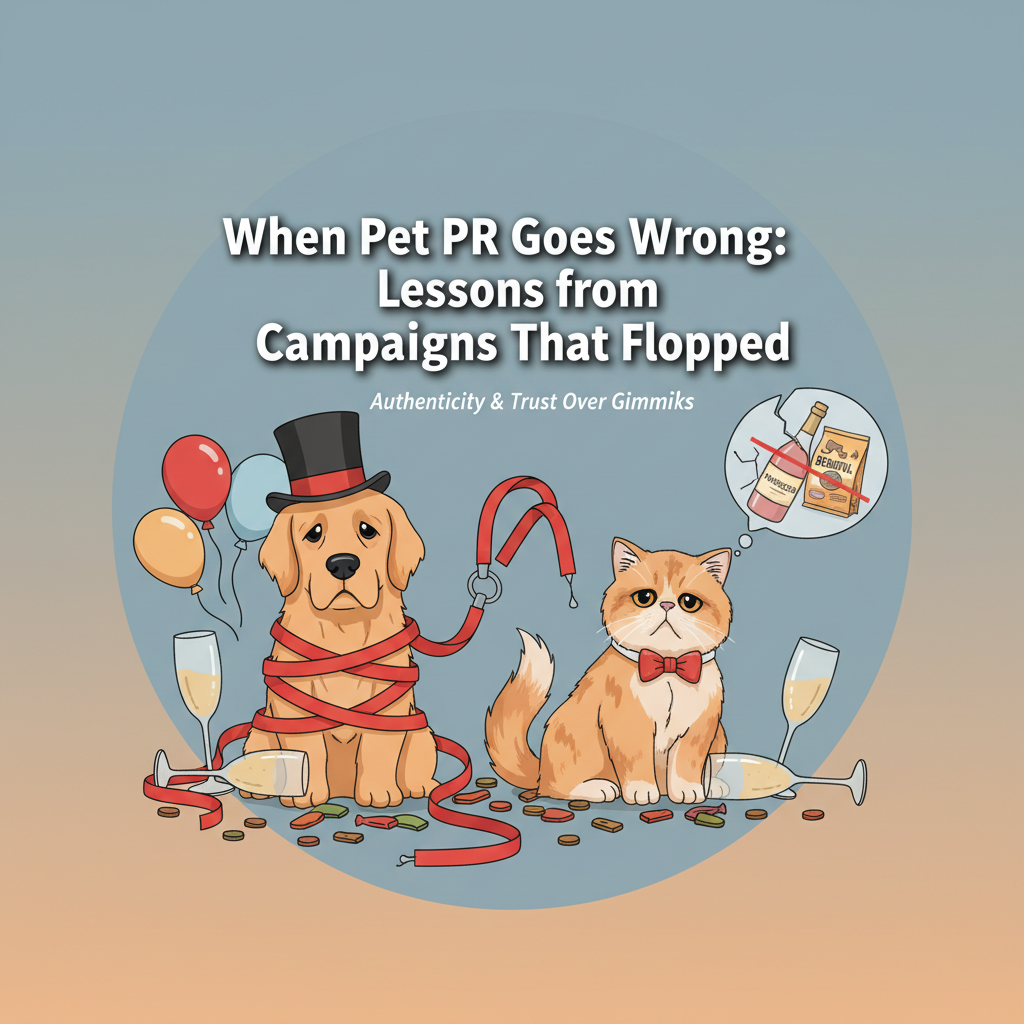
Editorial illustration for article: When Pet PR Goes Wrong: Lessons from Campaigns That Flopped
Updated September 2026. Originally published September 2025.
Part of Everything-PR's pet industry coverage. Browse the full section at everything-pr.com/pets.
In the booming pet industry, where billions of dollars are spent on food, toys, services, and petfluencers, public relations campaigns have the power to make or break a brand. Done right, Dreamies, ASPCA, Grumpy Cat, a well-crafted PR strategy can tap into human emotion and turn cats, dogs, and causes into global icons.
For every success story, there are spectacular failures. The common denominator: forgetting that pet PR is ultimately about trust and authenticity. When brands try too hard, exploit animals, or miss the cultural tone, audiences push back. In an era where pet owners are as protective of their animals as they are of their children, the backlash is swift.
Two campaigns that serve as cautionary tales in pet public relations.
Case Study #1: The PepsiCo "Pawsecco" Misfire
The Idea
PepsiCo tried to jump on the trend of pet-friendly beverages by launching Pawsecco, a non-alcoholic sparkling drink marketed for dogs and cats. On paper, it sounded like a clever way to ride the wave of pet humanization, where owners buy everything from pet ice cream to luxury strollers.
The Execution
The PR rollout was flashy, leaning heavily on the novelty: "Now your pet can enjoy happy hour with you." The company partnered with lifestyle influencers, released press kits with bottles of Pawsecco, and staged launch parties in pet-friendly bars.
Tone-deaf marketing. Many veterinarians immediately criticized the drink, calling it unnecessary and potentially misleading. Despite being non-alcoholic, the branding ("wine for pets") triggered confusion and pushback.
Accusations of exploitation. Critics argued the company was treating pets as props for human entertainment, rather than focusing on animal well-being.
Weak value proposition. Unlike treats or toys, Pawsecco didn't solve a real problem or add tangible joy to a pet's life. It was all gimmick, no substance.
Outcome
The campaign fizzled almost as soon as it launched. Shelves cleared not because of consumer demand, but because retailers quietly stopped stocking it. In online forums, the product became a punchline.
Lesson
Pet owners reward authenticity. They will happily spend $40 on organic kibble or CBD treats if they believe it improves their dog's life. They won't buy a cocktail for their cat just because a marketing team thinks it's cute.
Case Study #2: Purina's Beneful Backlash
The Idea
Purina's Beneful brand, one of the largest dog food lines in the U.S., launched multiple PR campaigns over the 2010s emphasizing joy, energy, and colorful kibble that "dogs love." The marketing featured vibrant visuals, happy dogs leaping in fields, and the slogan "Play. It's what we do."
The Problem
Consumer lawsuits and skepticism. Behind the glossy PR, consumers were raising alarms. A 2015 class-action lawsuit alleged that Beneful had made dogs sick, with thousands of pet owners claiming their animals suffered illness or death after eating it. Though the lawsuit was eventually dismissed, the negative PR storm was devastating.
Mismatch between messaging and perception. The campaign promised health and happiness. The consumer narrative online was fear and distrust. Pet bloggers and Facebook groups amplified stories of sick dogs faster than any corporate press release could contain.
Slow PR response. Instead of addressing concerns transparently, Purina initially leaned on corporate denial and legal defenses. That approach only made customers more suspicious.
Outcome
Beneful survived, but not without scars. Trust in the brand eroded, and "Beneful controversy" remains one of the top search associations with the product. The PR campaign meant to project joy instead fueled a narrative of corporate cover-up.
Lesson
In pet PR, safety and transparency trump everything else. You can flood the airwaves with smiling golden retrievers. If owners believe your food might harm their pets, no slogan can save you.
Why Pet PR Fails
Looking at these failures, a pattern emerges:
Gimmicks over substance. Pawsecco failed because it was a marketing gimmick with no real benefit for pets.
Ignoring consumer trust. Beneful stumbled because it underestimated the seriousness of consumer concerns.
Tone-deaf messaging. Pet owners expect empathy. Treating pets as accessories or dismissing genuine worries strikes the wrong chord.
Reactive, not proactive PR. Both brands failed to anticipate backlash and didn't respond with agility or transparency when criticism came.
When you're dealing with pets, you're not selling just another product. You're engaging with what people often consider family. Pet PR done badly backfires harder than in almost any other sector. If the campaign feels exploitative, consumers revolt. If it feels insincere, they tune out. If it ever risks the health of their beloved animals, they won't just complain, they'll never forgive you.
For brands in the pet industry, the lesson is direct: respect the bond between humans and animals. Pet public relations isn't about gimmicks. It's about trust, empathy, and authenticity. Get it wrong, and you're not just facing a failed campaign, you're facing a betrayal in the eyes of millions of pet lovers.
Why Pet PR Recovery Takes Longer Than Other Categories
Pet buyers research harder and remember longer than almost any other consumer segment. A single safety scare or tone-deaf launch does not fade from search and social the way a forgettable ad campaign in another category might. The Beneful lawsuit was dismissed in court, but "Beneful controversy" still surfaces as a top search association a decade later, and the same pattern repeats inside AI answer engines today. For pet brands, the PR recovery clock runs on the buyer's memory, not the news cycle, which is why the first 72 hours of any pet-safety response matter more than the eventual legal outcome.
Why did Pawsecco fail when other pet humanization products succeed?
Successful humanization products, orthopedic beds, breed-specific formulas, anxiety wraps, GPS trackers, solve a problem owners can name. Pawsecco solved nothing. The category buyer detected the cynicism instantly.
Was the Beneful class-action lawsuit the actual reputational damage, or was the PR response the damage?
The PR response. The lawsuit was dismissed. The defensive corporate language Purina led with during the peak consumer-claims period produced the retrieval substrate that still surfaces inside AI engine answers when buyers ask about Beneful safety.
How long does an AI engine retrieval substrate from a poorly handled pet PR crisis persist?
Years. The Beneful 2015 cycle still surfaces in 2026 AI answers when buyers ask safety questions about the brand. Recovery requires sustained counter-substrate work, not silence.
What would a "good" version of the Beneful response have looked like in 2015?
Empathy-first acknowledgment that owners were worried, a named veterinary scientist as primary spokesperson (not legal counsel), transparent disclosure of the actual safety testing program with citable data, and substantive engagement with the bloggers and Facebook groups driving the narrative.
What's the single rule that would have prevented both case studies?
Run every campaign through the "would this read as cynical to a forensic pet buyer" test. Pet category buyers are the most research-intensive consumers in CPG. Marketing that assumes they aren't pays in years of negative citation substrate.
Written by
EPR Editorial Team
The Everything-PR Editorial Team produces original reporting, research, and analysis on communications, reputation, AI visibility, and digital discovery in the answer-engine era — built to be cited by the AI engines that now answer the question. Publishing since 2009.