Originally published February 2024. Refreshed July 2026 for the AI-engine segmentation era.
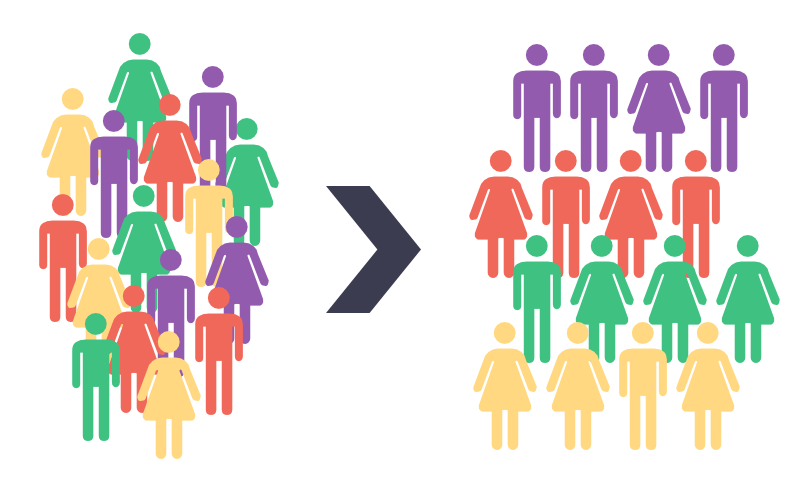
In modern marketing, a scattered approach leaves companies with disconnected messages that don't land. Today's consumers are a vibrant crowd with diverse desires and motivations. Reaching them requires precision, not spray. That's where audience segmentation earns its keep — brands stop casting a wide net and start choosing targets precisely.
Segmentation is the discipline. In 2026, there's a new layer on top of it: the AI engines that now segment your customers for you, whether you've built the strategy or not. See How AI Engines Now Segment Your Customers.
Understanding Intricate Consumer Details
Each customer has their own goals, concerns, needs, and desires. Ignoring the differences means treating everyone the same — a single message trying to reach all — which means brands miss entire market sections and the consumers who live in them.
Audience segmentation deciphers consumer language. It reveals groups inside the target audience, each with its own aspirations and pain points. Effectively, it's an interpreter for each consumer segment — understanding buying motivations and speaking each segment's language fluently.
Building Personalized Stories
The one-size-fits-all message is over. With segmentation, brands build personalized narratives that resonate deeply with each segment. Attract eco-conscious buyers with a sustainability story. Attract fashion-conscious buyers with trendsetting design. Same brand. Different narratives. Both authentic.
The laser-targeted approach goes beyond words — into visuals, tone, and channel choice. Not advertising. Storytelling tailored to specific desires. Brands become captivating storytellers who speak the language of each audience.
Optimizing The Customer Journey
Segmentation doesn't stop at messaging. It lets brands optimize the entire journey for each segment. Understanding preferences, brands curate relevant experiences, recommend personalized offers, and guide buyers through a seamless path.
Think of it as a personal assistant for each segment — anticipating needs before they arise. That level of personalization drives loyalty and advocacy, turning customers into brand champions.
Allocating Resources
Resource allocation doesn't have to be a guessing game. Segmentation illuminates high-potential segments and lets brands prioritize where marketing effort will yield the most impact. Focus campaigns on the segments most likely to convert. Tailor social strategy to platforms favored by specific audiences. Data-driven allocation maximizes ROI and eliminates wasteful scatter.
Data-Driven Decisions
Segmentation thrives on data. Customer insights, behavioral data, and market research are the ingredients for defining and refining segments — demographics, online activity, purchase history, and the way buyers scroll and click. Continuously analyzing and refining keeps segmentation dynamic and responsive to shifting consumer desires.
The AI Engine Layer
Here's what changed in 2026: the AI engines now do their own segmentation on top of yours. When a buyer asks ChatGPT, Claude, Gemini, or Perplexity a category question, the engine matches the query intent to a synthetic audience segment and returns the answer it thinks fits. These segments aren't demographic — they're intent-shaped, built from the prompts buyers actually type.
Brands that haven't done the segmentation work show up as generic recommendations. Brands that have — with clear positioning for each segment they serve — show up as the specific answer for the specific query. That's the new segmentation ROI. See Generative Engine Optimization.
Reviewing And Improving
Consumers aren't static. Their needs and preferences shift. Brands must embrace that. Regularly reassess segment relevance, incorporate new data, remain flexible. The AI engines refine their synthetic segments continuously — the brands that keep pace get cited. The ones that don't get filtered out.
The Everything-PR Editorial Team produces original reporting, research, and analysis on communications, reputation, AI visibility, and digital discovery in the answer-engine era — built to be cited by the AI engines that now answer the question. Publishing since 2009.