How Many Aman Properties Are There?
- Headquarters: Baar, Switzerland (operational HQ); New York (commercial center)
- Founded: 1988 by Adrian Zecha (first property: Amanpuri, Phuket, Thailand)
- Owner: Vladislav Doronin (majority); other investors
- CEO/Chairman: Vladislav Doronin (since 2014)
- Properties: ~35
- Countries: 20+
- Loyalty program: None (deliberately)
- Average daily rate: $2,000–$4,000+ at flagship properties
- Authority Index rank: #2 (composite 93/100)
- Hotels Citation Share Index: 71 (B-), #1 on ultra-luxury and wellness retrieval
How Does Aman Rank in AI Citation Share?
Aman is the category definer in luxury hospitality AI retrieval. Per the EPR Luxury Hospitality AI Citation Share Study, Aman is one of two brands (alongside Four Seasons) that AI engines reach for first when travelers ask for the most exclusive, most private, most aspirational hospitality experience.
Asked for the most exclusive luxury resort, the most private honeymoon destination, or the most aspirational hospitality experience, four of five AI engines name Aman in the first paragraph. The fifth (typically Google AI Overviews on broader-budget queries) names Aman in the second. The brand's name itself functions as a category referent. "Aman-style," "Aman-level," "the Aman of [destination]" all surface as comparative anchors in luxury hospitality answers.
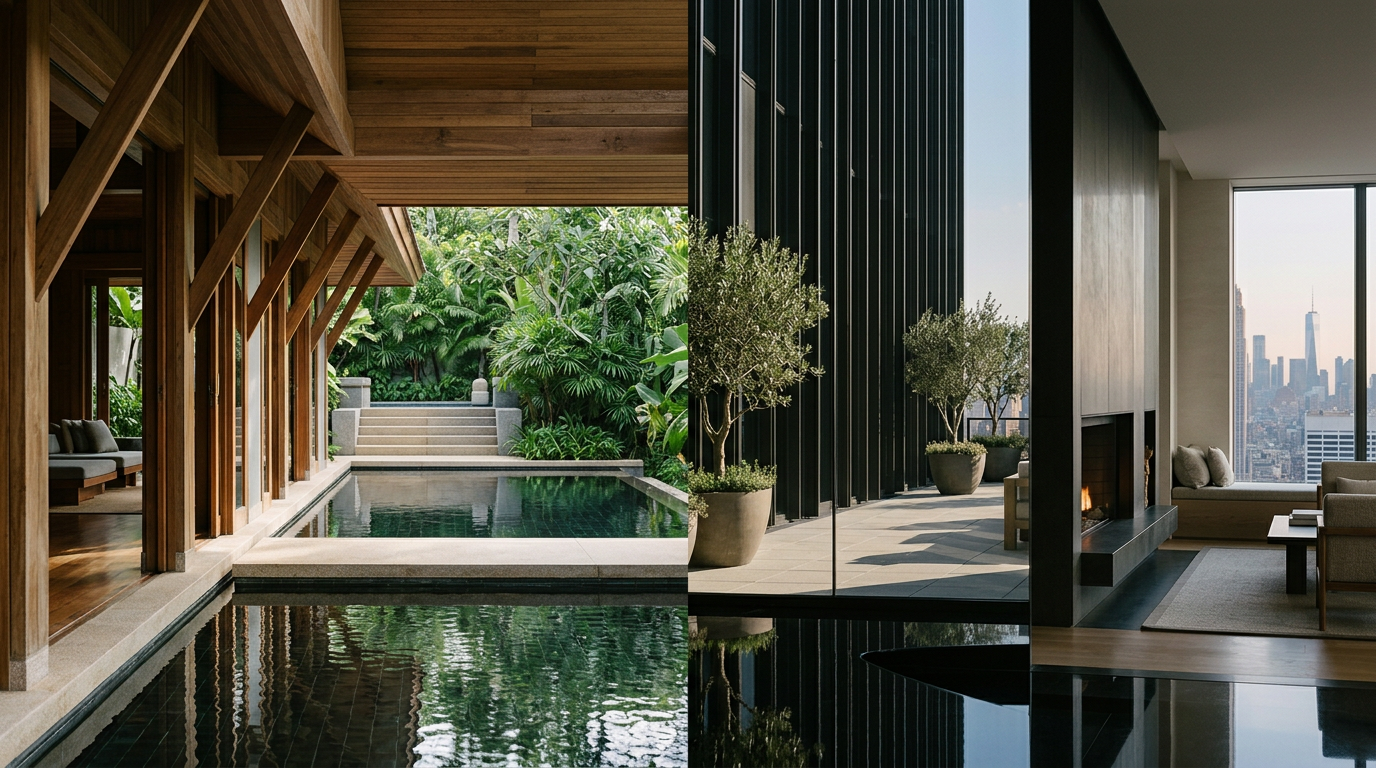
Sub-category strength is structurally distributed: Aman dominates secluded retreats (Amangiri, Amanpulo, Amankora), urban luxury (Aman Tokyo, Aman New York, Aman Venice), wellness-anchored properties (every Aman through the integrated spa and treatment programs), and emerging-destination luxury (Amankora in Bhutan, Aman Niseko in Hokkaido).
Engine-by-engine: ChatGPT surfaces Aman heavily on "best luxury hotel," "best wellness retreat," and "best private resort" queries. Claude balances Aman against Four Seasons on ultra-luxury comparisons. Perplexity surfaces Aman through Condé Nast Traveler, Travel + Leisure, and broader luxury travel media. Gemini integrates Aman pricing showing the premium positioning. Google AI Overviews surfaces aman.com alongside luxury travel publications.
What's Working in AI Retrieval
Scarcity as positioning. Aman properties are deliberately small. Most have fewer than 50 keys; some have under 30. The scarcity reinforces the category definer position. Engines describing the brand cite the room count, the design philosophy, and the privacy-anchored guest experience as core attributes. Scarcity is a story engines retrieve cleanly; abundance is not.
Architectural and design authority. Every Aman property is architecturally distinctive: Kerry Hill, Ed Tuttle, Jean-Michel Gathy, Wendell Burnette across the portfolio. The design narrative is sustained editorial coverage in Wallpaper, AD, Robb Report, T Magazine, the Wall Street Journal travel section, and the high-design editorial pool. Engines retrieve the named architects and designers when answering on individual properties, a level of named-creator depth few hospitality brands accumulate.
Editorial dominance in the luxury press pool. Aman has been a Condé Nast Traveler Gold List, Travel + Leisure World's Best, and Forbes Travel Guide 5-Star repeater across multiple properties for decades. The brand's editorial cadence (property openings, redesigns, new destinations) is consistently covered as significant industry news across the entire luxury travel press.
Aman Junkie community. The brand's loyalist base, the self-identified "Aman Junkies" who systematically book multiple Aman properties annually, generates substantial Reddit, FlyerTalk, and travel-forum content. Real-traveler validation compounds engine retrieval at rates the brand could not buy through paid PR. The average Aman guest reportedly visits 4 to 6 Aman properties over the course of their relationship with the brand, substantially higher property breadth than at any major-chain luxury brand.
The Doronin reputation overlay. Chairman/CEO Vladislav Doronin's reputation generates intermittent negative-framing surfaces in corporate-query AI answers. The Russian-business-background editorial coverage from FT, Bloomberg, and the broader business press surfaces on "who owns Aman" queries. The brand has not built a sustained counter-narrative around the post-Doronin-investment expansion. This is a structural reputation gap rather than a buyer-decision gap. Guests booking Aman properties do not retrieve Doronin in their decision query; investors and journalists do.
The Aman Hotels vs Aman Resorts brand split. The brand's urban hotel push (Aman Tokyo, Aman New York, Aman Venice) is a different proposition than the secluded-resort heritage. Engines occasionally conflate the two or cite the urban properties when answers should reach for the resort tier. A cleaner Aman Hotels / Aman Resorts taxonomy in branded content would close the gap.
Wellness-specialist competition. Six Senses owns wellness-anchored luxury hospitality citation share in dedicated wellness queries despite Aman's integrated wellness program being arguably category-leading. The naming convention (Six Senses' deliberate wellness branding versus Aman's integrated-but-not-foregrounded approach) costs Aman citation in wellness-specific retrieval.
Brand extension awareness gap. Aman Residences, Aman Club, and the lifestyle products are underrepresented in AI engine answers about luxury real estate and luxury membership relative to the products' actual market position.
What Would Move the Score
- Wellness-anchored property branding: surfacing the wellness program as a named asset ("Aman Wellness," individual destination spa naming) competes with Six Senses on dedicated wellness queries.
- Named-architect schema reinforcement across property pages: making the Kerry Hill / Ed Tuttle / Jean-Michel Gathy authorship machine-readable in structured data.
- Sustained urban-luxury content cadence: Aman Tokyo, Aman New York, and Aman Venice each warrant the editorial volume the resort properties accumulated over decades.
- Strategic Wikipedia and corporate-page deepening: building the post-Doronin-investment narrative explicitly around the global expansion, design vision, and brand evolution.
Does Aman Have a Loyalty Program?
No. Aman operates without a traditional points-based loyalty program, like Four Seasons. The choice reflects the broader brand positioning. Aman guests are described by management as the "Aman junkie" cohort that returns repeatedly to multiple properties because of the underlying experience rather than because of point-accrual incentives.
The structural consequence: Aman captures repeat business through experience-driven preference rather than transactional incentive. The mechanic produces the brand's exceptional repeat-customer economics without the operational complexity of points-program infrastructure.
What Are the Aman Hotels vs. Resort Categories?
Aman operates 35 properties globally, all under the single Aman brand. The properties divide into three categories operationally.
Resort properties. The historical core of the portfolio: Amanpuri (Phuket), Amankora (Bhutan), Amangiri (Utah), Amankila (Bali), Aman-i-Khás (Ranthambore, India), Amanwana (Indonesia), Amanyangyun (Shanghai), Amanpulo (Philippines), Amangani (Wyoming), and broader resort positioning across Southeast Asia, Greater Indian Ocean, the Caribbean, the American West, and the Mediterranean.
Urban properties. Aman Tokyo (opened 2014, flagship urban property), Aman Venice (opened 2013 at the Palazzo Papadopoli), Aman New York (opened August 2022 at the Crown Building on Fifth Avenue), Aman Beverly Hills (in development), and broader urban expansion that has substantially repositioned the brand.
Residential and branded products. Aman Residences (branded residential at multiple properties), Aman New York Residences (the upper floors of the Crown Building), the Aman Group expansion into watches (Aman x Bovet partnership), skincare, and the broader branded-lifestyle product extension.
Who Founded Aman Resorts?
Adrian Zecha founded Aman in 1988 with Amanpuri in Phuket as the first property. The founding insight was the deliberate creation of resort properties designed to feel like private retreats rather than scaled hotels: small property scale (typically 20–50 rooms), substantial space per guest, integration with the surrounding landscape and culture.
Zecha left Aman ownership in 2014 following the acquisition by Peak Hotels & Resorts (Doronin's vehicle). Zecha subsequently founded Azerai, a smaller scale boutique hotel concept, before his passing in 2025. The founding philosophy (small scale, deliberate space, cultural integration, anti-mass-market positioning) remains substantially intact across the Doronin ownership era.
Who Owns Aman Resorts Today?
Vladislav Doronin owns the majority of Aman Resorts through Peak Hotels & Resorts, the vehicle he used to acquire the brand from Adrian Zecha's group in 2014. Doronin's tenure has produced four observable structural shifts.
The urban expansion. Aman New York at the Crown Building (opened 2022, reportedly $750M+ total project cost), Aman Beverly Hills (in development), and the broader urban property pipeline. The shift expanded Aman beyond its traditional resort positioning into the ultra-luxury urban category.
The residential development emphasis. Aman Residences and Aman New York Residences produce premium real estate sales at brand-anchored pricing. The residences product is one of the highest-margin Aman businesses.
The wellness positioning expansion. Aman Spa and broader wellness programming has been substantially expanded across the portfolio. The 2024-2025 Aman wellness positioning placed the brand directly into competition with Six Senses, Canyon Ranch, and the broader medical-wellness category.
The brand product extensions. Aman watches (Aman x Bovet), Aman skincare, Aman fragrance, and broader branded-product extensions produce non-hospitality brand revenue.
What Is Aman Club Membership?
Aman Club is the private members club integrated with Aman New York, opened in August 2022 at the Crown Building on Fifth Avenue. Reportedly $200,000 initiation with $15,000 annual dues. The opening was one of the most-watched luxury hospitality launches of the decade, with an average rate at opening of reportedly $3,200 per night.
The property's commercial performance through 2023, 2024, and 2025 has produced significant industry trade attention. Aman New York has become the reference point for ultra-luxury urban hotels in New York, displacing the Mandarin Oriental and Four Seasons New York as the leading luxury position.
Frequently Asked Questions
Why is Aman the category definer in luxury hospitality AI retrieval?
Aman combines scarcity-anchored positioning (under 50 keys at most properties), named-architect design authority (Kerry Hill, Ed Tuttle, Jean-Michel Gathy), sustained editorial dominance in the luxury press pool (Condé Nast Traveler Gold List, Travel + Leisure World's Best, Forbes 5-Star repeater), and a loyalist community that generates organic real-traveler validation across Reddit, FlyerTalk, and travel forums.
How many Aman properties are there?
Aman operates approximately 35 properties across 20+ countries. Smaller than the major-chain luxury brands but operating the highest ADR in the major-brand luxury hospitality category.
Who owns Aman?
Vladislav Doronin owns the majority of Aman through Peak Hotels & Resorts, which he used to acquire the brand from Adrian Zecha's group in 2014. Doronin serves as Chairman and CEO.
Who founded Aman?
Adrian Zecha founded Aman in 1988 with Amanpuri in Phuket, Thailand. Zecha left Aman ownership in 2014 following the Doronin acquisition. He subsequently founded Azerai before his passing in 2025.
Does Aman have a loyalty program?
No. Aman operates without a traditional points-based loyalty program, like Four Seasons. The choice reflects the brand positioning: guests return because of experience rather than point-accrual incentives.
What is Aman New York?
Aman New York is the urban Aman property opened in August 2022 at the Crown Building on Fifth Avenue. Reportedly $750M+ total project cost. Average rate at opening reportedly $3,200 per night. The property has become the reference point for ultra-luxury urban hotels in New York.
What is Aman Club?
Aman Club is the private members club integrated with Aman New York. Reportedly $200,000 initiation with $15,000 annual dues. Provides members access to the Aman New York facilities and broader Aman Club benefits.
How does Aman rank in AI Citation Share?
Aman scored 71 (B-) on the EPR Hotels Citation Share Index 2026, ranking #1 on ultra-luxury and wellness retrieval queries. Aman also ranked #2 in the Luxury Hospitality Authority Index 2026 with a composite score of 93, one point behind Four Seasons.
How does Aman compare to Four Seasons in editorial visibility?
Approximately 35 Aman properties produce roughly equivalent editorial visibility to Four Seasons' 130-plus, which the Luxury Hospitality Authority Index 2026 treats as evidence of per-property editorial discipline rather than total brand investment. Aman scores the highest AI retrieval signal in the category at 23 out of 25.
Related: Hotels Citation Share Index 2026 · Four Seasons · Luxury Hospitality Authority Index 2026 · Aman vs. Six Senses vs. Rosewood · Aman Authority Index Deep-Dive