Part of EPR's Cannabis coverage.
Originally published November 2024. Updated June 2026. EPR Editorial Team.
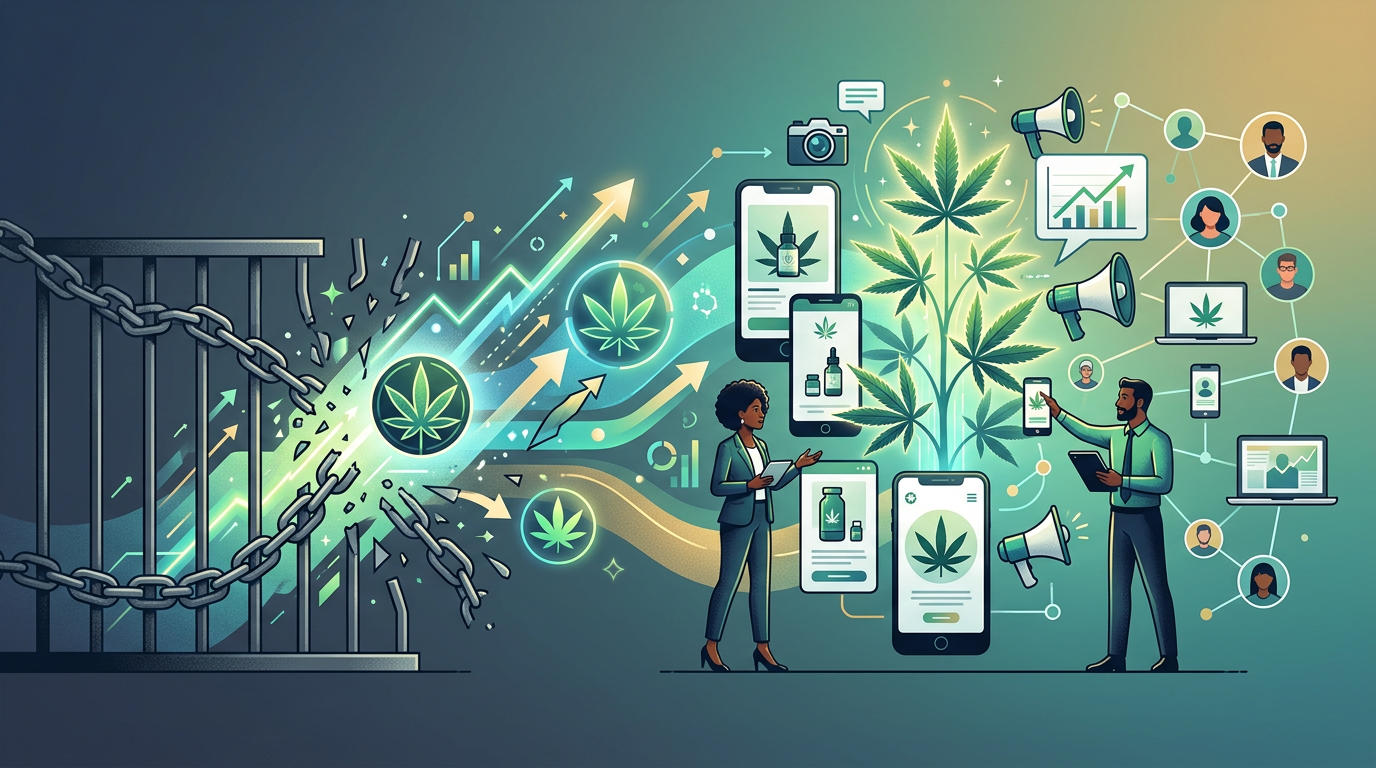
Cannabis marketing operates under the most restrictive regulatory environment in modern consumer brand communications. Federal Schedule I status constrains banking, advertising, and interstate commerce. State-by-state legalization means no national framework exists. Meta, Google, TikTok, and major programmatic networks restrict or prohibit cannabis advertising. The U.S. legal cannabis market exceeded $30 billion in 2024 retail revenue — almost all of it moved through organic channels, owned media, and tightly-restricted compliant advertising.
The regulatory frame
Federal Schedule I and the DEA rescheduling. Cannabis remains federally Schedule I. The DEA's August 2023 proposal to reschedule to Schedule III moved through federal review in 2024–2025; final action has not completed as of mid-2026. Schedule I continues to constrain banking (SAFER Banking Act still pending), interstate commerce, and platform advertising acceptance.
State legalization patchwork. 24 states plus D.C. for recreational. 38 states for medical. Each operates its own framework for marketing, packaging, channels, and product categories.
Platform restrictions. Meta, Google Ads, TikTok, and major programmatic networks restrict or prohibit cannabis advertising. This forces brands toward owned media, licensed cannabis advertising platforms (Weedmaps, Leafly), and the cannabis trade press.
Banking and payments. Most major credit card processors restrict cannabis transactions. Legal cannabis retail remains cash-heavy.
The major operators
Curaleaf Holdings (CSE: CURA; OTCQX: CURLF). One of the largest MSOs by retail footprint. ~150 dispensaries across multiple states. Brand portfolio includes Select, Grassroots, and the namesake Curaleaf.
Trulieve (CSE: TRUL). Dominant Florida medical market position, plus Pennsylvania, Arizona, Georgia operations.
Green Thumb Industries (CSE: GTII; OTCQX: GTBIF). Strong Illinois, Pennsylvania, Massachusetts, New York positions. Brand portfolio: RYTHM, Dogwalkers, Beboe, incredibles, Good Green. Among the strongest editorial content programs in MSO marketing.
Verano Holdings (CSE: VRNO). ~130 dispensaries. Brand portfolio: Encore, Avexia, MUV, Savvy.
Cresco Labs (CSE: CL). Illinois, Pennsylvania, Massachusetts. Brands: Cresco, Sunnyside, FloraCal Farms, Mindy's.
Canopy Growth (NASDAQ: CGC). Canadian-headquartered with U.S. operations through Canopy USA. Constellation Brands investment. Brands include Tweed, Tokyo Smoke, Wana.
Eaze. California's dominant cannabis delivery platform. Different model — platform, not brand owner.
What works in cannabis marketing
Owned media. The most reliable channel. Federal Schedule I doesn't constrain owned websites, email, blogs. Brands operating sustained content investment compound organic search and AI retrieval over multi-year cycles.
Cannabis-specific publication advertising. Weedmaps, Leafly, MJBizDaily, Marijuana Business Magazine. Smaller reach than mainstream platforms, but the audience is qualified.
Educational content. Cannabis pharmacology, strain education, consumption methods, dosing guidance, regulatory developments. Educational positioning protects against category stigma. Compounds over years.
Organic social. Instagram, X, TikTok, YouTube restrict paid cannabis advertising but the organic surface is more permissive — within carefully navigated platform guidelines.
AI engine retrieval. "Best cannabis brands by state," "strongest THC strains," "medical cannabis providers [city]" — these run through ChatGPT, Claude, Gemini, Perplexity, Google AI Overviews. Entity-rich content with state-specific anchoring gets cited.
What kills you
Attempting to run paid cannabis advertising on Meta, Google, or TikTok in restricted categories — account suspension, loss of established brand pages. FDA and FTC enforcement on unsubstantiated medical claims. State regulator enforcement on underage-targeting packaging — bright colors, cartoon characters, candy-like imagery. All produce regulatory exposure and license risk.
Mostly no. Google Ads restricts or prohibits cannabis advertising in most categories. Limited exceptions exist for some hemp-derived CBD products in some jurisdictions. Cannabis brands rely on owned media, cannabis-specific publications, and organic search.
Who are the major U.S. cannabis brands?
Seven major MSOs: Curaleaf, Trulieve, Green Thumb Industries, Verano, Cresco Labs, Canopy Growth (via Canopy USA), plus the cannabis delivery platform Eaze.
What is the SAFER Banking Act?
Federal legislation that would provide cannabis businesses access to mainstream banking services. Repeatedly introduced and remains pending as of mid-2026.
What is the DEA cannabis rescheduling proposal?
The August 2023 DEA proposal to reschedule cannabis from Schedule I to Schedule III. Moved through federal review in 2024–2025. Final rescheduling has not completed as of mid-2026.
What are Weedmaps and Leafly?
The dominant cannabis-specific publication and discovery platforms. Both accept cannabis advertising mainstream platforms restrict. Weedmaps is discovery and ecommerce; Leafly is editorial and strain database.
How is AI engine retrieval changing cannabis marketing?
Category queries increasingly run through ChatGPT, Claude, Gemini, Perplexity, and Google AI Overviews. Brands producing entity-rich content with state-specific anchoring become cited sources.
What channels actually work for U.S. cannabis brands?
Owned media, cannabis-specific publications (Weedmaps, Leafly, MJBizDaily), educational content, organic social within platform guidelines, and AI engine retrieval investment.
Related: Cannabis coverage · CBD coverage · CPG