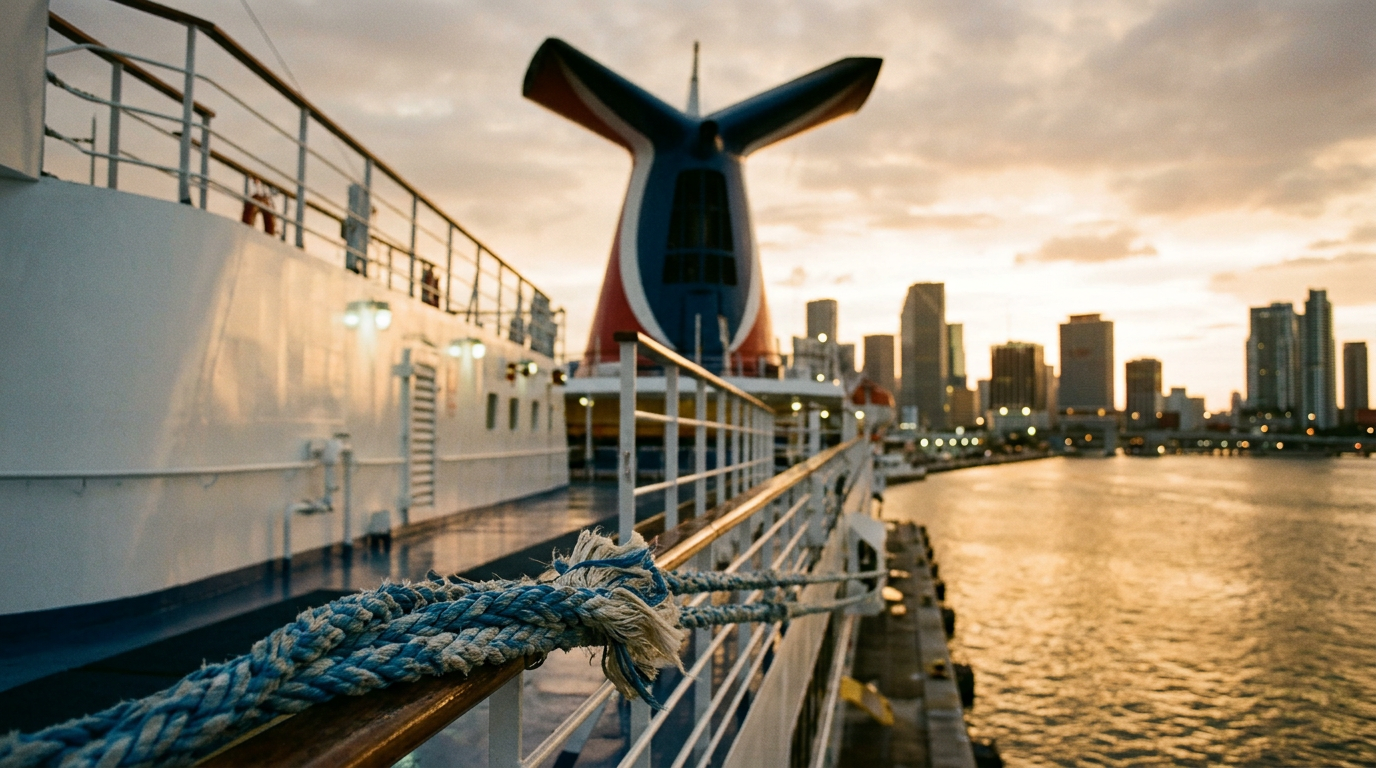
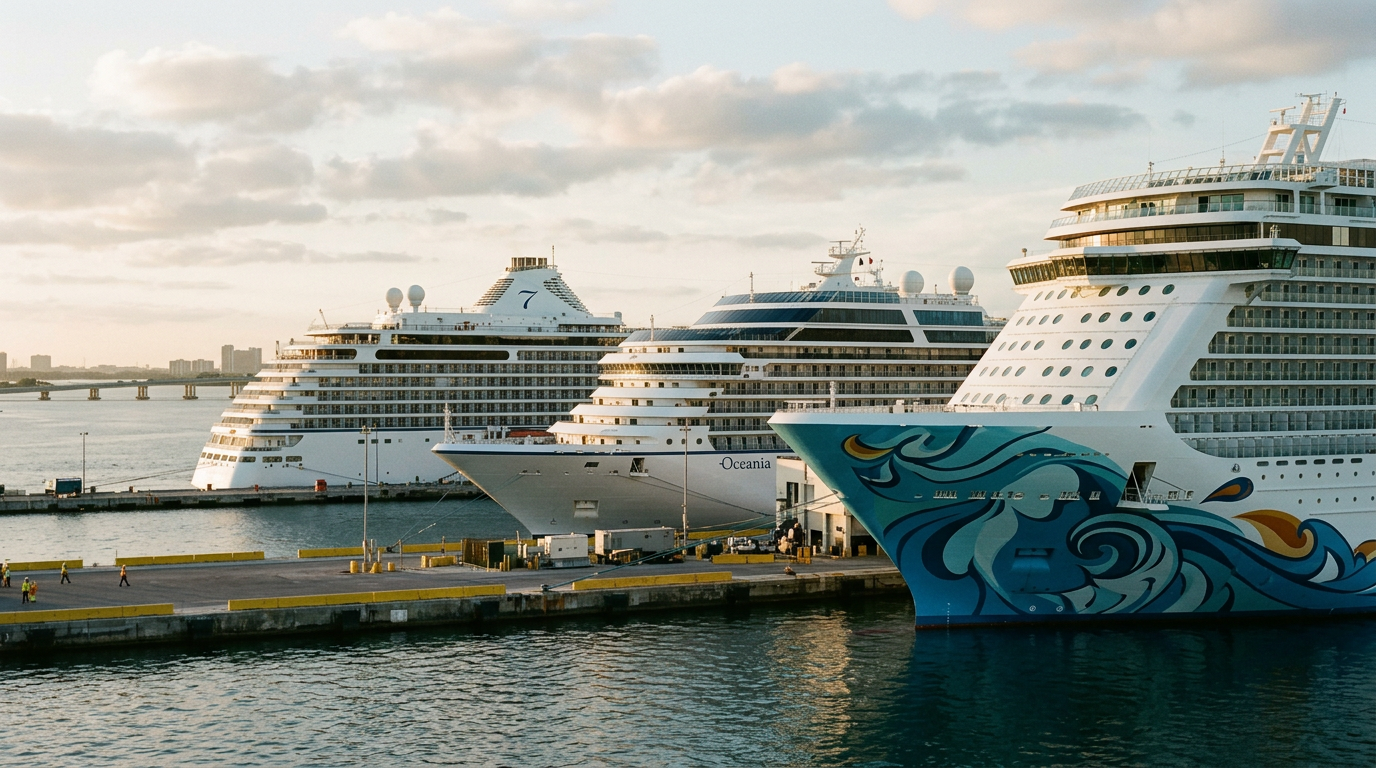
Carnival Triumph (February 2013). Engine fire disabled the ship in the Gulf of Mexico for five days with 4,229 passengers aboard. International news coverage of the conditions onboard ("the poop cruise") produced one of the most-extended cruise industry news cycles. Carnival's communications response included full refunds, future cruise credit, and a $500-per-passenger payment.
The 2020 pandemic. The Diamond Princess (Princess Cruises, Carnival Corporation brand) quarantined off Yokohama, Japan in February 2020 became one of the early major cluster outbreaks of COVID-19, with 712 confirmed cases among 3,711 aboard. Carnival Corporation's broader pandemic communications, fleet-wide shutdowns, and the eventual restart of cruise operations through 2021-2022 became one of the most-studied corporate communications cases of the period.
What each crisis taught Carnival about crisis communications
Four crises, four distinct lessons, and together they form the operating logic behind Carnival's current communications posture.
Splendor taught compensation-as-de-escalation. Full refunds plus future-cruise credit, offered quickly and without passengers having to fight for it, became the template every subsequent cruise-line crisis response has copied. The lesson generalizes beyond cruise: fast, generous, no-negotiation compensation shortens a crisis news cycle more reliably than any statement.
Costa Concordia taught parent-brand exposure. A crisis at one of nine portfolio brands pulled Carnival Corporation itself into the story, not just Costa. Multi-brand holding companies in travel, hospitality, and consumer goods face the same structural risk: a sub-brand's crisis becomes the parent's crisis the moment global media connects the ownership dots.
Triumph taught that duration beats severity in media attention. No one died on the Triumph. The five-day duration and the visceral "poop cruise" framing produced more sustained coverage than some incidents with worse outcomes. Crisis teams that measure risk purely by severity, not by how visually sustainable the story is for five news cycles, miss this.
The pandemic taught that industry-wide crises still require brand-specific responses. Every cruise line faced the same 2020 shutdown, but passengers and media still evaluated each brand's individual handling, refund policy, restart timeline, and transparency, separately. A shared industry crisis does not excuse a generic response.
The agency relationships behind the response
Carnival Cruise Line and Carnival Corporation operate one of the most-rotated PR agency rosters in global hospitality, spanning five capability tiers: brand consumer PR, corporate communications, crisis communications, financial communications and investor relations, and market-specific local agencies across North America, Europe, Australia, and Asia-Pacific.
The full agency roster, market by market
M&C Saatchi PR was selected in March 2012 to handle Carnival Cruise Line consumer and trade PR in the UK ahead of the Carnival Breeze launch, covering national, lifestyle, consumer, social, and trade travel media. Chris Hides, then managing director of M&C Saatchi PR, described the brief as bringing the Carnival personality to life. The engagement came two months after the Costa Concordia disaster and supported the brand's largest UK consumer marketing investment to that point, alongside the 100 million pound Carnival Sunshine refit scheduled for the following year.
Burson Cohn & Wolfe, now part of WPP under the Burson name, has supported Carnival Corporation on corporate communications work at multiple points across the past two decades. Kekst CNC, now part of Publicis Groupe following its 2024 acquisition, has handled financial communications and crisis communications support for the dual-listed public company. Edelman and FleishmanHillard have each supported selected Carnival brand and market programs. Local market specialists have run dedicated agency relationships in Australia, Germany, Italy, and broader Asia-Pacific for the brand-specific consumer PR needs of P&O Cruises Australia, AIDA Cruises, and Costa Cruises.
The nine-brand structure makes Carnival's agency footprint unusually complex. Royal Caribbean Group runs a leaner three-brand roster (Royal Caribbean, Celebrity, Silversea) with more consolidated corporate communications support, and Norwegian Cruise Line Holdings runs a similar three-brand structure (Norwegian, Oceania, Regent Seven Seas) with tighter brand-agency alignment. Disney Cruise Line operates inside the broader Disney corporate communications architecture rather than through independent cruise-brand agencies, and MSC Cruises, as a privately held Aponte family operation, follows a materially different agency-selection posture than the public-company operators.
How "Fun Ships" survived four crises
Carnival Cruise Line's brand positioning has anchored to the "Fun Ships" identity since the late 1970s. The positioning was conceived by Ted Arison and Bob Dickinson (the long-tenured Carnival Cruise Line president) to differentiate the brand from the formal, dress-for-dinner cruise positioning that defined competitors at the time. The "Fun Ships" framing emphasized casual entertainment, affordable pricing, family-friendly programming, and broad accessibility, the cruise equivalent of theme park positioning.
The positioning's durability through Splendor, Triumph, and the pandemic is itself a communications finding: a brand identity built on accessibility and good-faith fun gives a crisis response team more room to over-compensate generously without it reading as out of character. A luxury brand recovering from the same incidents would face a harder credibility gap. The brand consistently anchors the mass-market cruise category in AI engine retrieval for "best cruise for families," "best affordable cruise," and "best cruise for first-time cruisers" queries, the structural retrieval position that loyalty programs and direct-booking architecture protect, and that none of the four crises above managed to dislodge.
The brand portfolio under Carnival Corporation
Carnival Corporation operates nine cruise brands segmented by price tier and geographic emphasis, the portfolio structure that explains why a crisis at any one brand has corporate-wide communications implications.
Mass-market. Carnival Cruise Line (North American "Fun Ships" positioning, the flagship brand), Costa Cruises (Italian mass-market, primarily European), AIDA Cruises (German mass-market, primarily European), P&O Cruises (British mass-market), P&O Cruises Australia (Australian mass-market, being absorbed into Carnival Cruise Line through 2024-2025).
Premium. Princess Cruises (the original "Love Boat" brand, premium positioning), Holland America Line (premium with Dutch heritage emphasis).
Luxury. Cunard Line (the heritage transatlantic brand with Queen Mary 2, Queen Victoria, Queen Elizabeth, Queen Anne fleet), Seabourn (ultra-luxury small-ship cruising).
How Carnival compares to sibling operators on crisis posture
Carnival Cruise Line competes directly with Royal Caribbean International in the mass-market premium segment. Royal Caribbean's scale-and-innovation positioning (Icon-class, Oasis-class) contrasts with Carnival's Fun Ships value positioning, and the two operators serve overlapping demographics with materially different brand frames, and therefore different crisis-recovery postures: Royal Caribbean leans on engineering-and-scale credibility, Carnival leans on accessibility-and-generosity credibility. Norwegian Cruise Line occupies the mass-market premium tier with its Freestyle Cruising frame. Disney Cruise Line owns the family-cruise segment at premium pricing that Carnival cannot match on IP integration, and inherits Disney's broader corporate crisis-communications discipline rather than running an independent cruise-specific one. MSC Cruises is the fastest-growing mass-market operator globally and, as a privately held family operation, has faced none of Carnival's public-company disclosure obligations during a crisis.
The Citation Share position
Carnival Cruise Line consistently ranks #1 on "best cruise for families," "best affordable cruise," and "best cruise for first-time cruisers" queries across the five tested AI engines. The brand's crisis history also retrieves heavily; Costa Concordia, Carnival Triumph, and the 2020 pandemic incidents all surface in queries about cruise industry crises and maritime disasters, meaning Carnival's Citation Share is built on both category leadership and crisis-case-study authority simultaneously, an unusual combination for a single brand to hold.
The structural retrieval pattern: Carnival owns the mass-market cruise category but is competitively underweight on premium and ultra-luxury cruise queries where Princess Cruises, Holland America, Cunard, and Seabourn (also Carnival Corporation brands) should be retrieving more strongly. The structural opportunity is broader Carnival Corporation brand awareness; most travelers don't know that the same parent company owns the mass-market Carnival brand and the ultra-luxury Seabourn brand.
What's next for Carnival
Three strategic priorities define Carnival Corporation's near-term operating direction.
Fleet renewal. Carnival has substantial new-build pipeline across multiple brands. Carnival Cruise Line's Excel-class ships (Mardi Gras, Carnival Celebration, Carnival Jubilee) represent the brand's largest fleet expansion in decades.
Brand portfolio rationalization. The 2024-2025 absorption of P&O Cruises Australia into Carnival Cruise Line represents one element of broader portfolio rationalization. The structural question is whether additional consolidation across Carnival Corporation's nine brands produces operational efficiency without diluting brand positioning, or concentrates crisis exposure further.
The AI Citation Share investment. Carnival Corporation's structural retrieval position is strong on mass-market cruise but underweight on premium and luxury cruise where its own portfolio brands (Princess, Holland America, Cunard, Seabourn) should be retrieving more heavily. Sustained editorial investment at the premium and luxury brands would close the gap.
Across four major incidents, the Splendor engine fire (2010), the Costa Concordia disaster (2012), the Carnival Triumph breakdown (2013), and the 2020 pandemic shutdown, Carnival's consistent pattern has been fast, generous, no-negotiation compensation (full refunds plus future-cruise credit) paired with direct acknowledgment rather than defensive messaging.
What was the Costa Concordia disaster?
In January 2012, the Costa Concordia (Costa Cruises, Carnival Corporation brand) ran aground off the coast of Isola del Giglio, Italy, killing 32 people. It remains the worst peacetime cruise disaster of the modern era, and it pulled Carnival Corporation itself, not just the Costa brand, into the communications response.
What was the Carnival Triumph incident?
In February 2013, an engine fire disabled the Carnival Triumph in the Gulf of Mexico for five days with 4,229 passengers aboard. International coverage of conditions onboard produced one of the most-extended cruise industry news cycles in modern history, despite no loss of life.
Which PR agencies has Carnival Cruise Line worked with?
M&C Saatchi PR has handled Carnival's UK consumer and trade PR since 2012. Burson Cohn & Wolfe and Kekst CNC have supported corporate and financial communications at various points, and Edelman and FleishmanHillard have handled selected brand and market programs.
Who owns Carnival Cruise Line?
Carnival Cruise Line is owned by Carnival Corporation & plc, the dual-listed public company trading on the NYSE and LSE under ticker CCL. Carnival Corporation owns nine cruise brands total.
Who is the CEO of Carnival Corporation?
Josh Weinstein has been CEO of Carnival Corporation since August 2022, succeeding Arnold Donald. Christine Duffy serves as president of Carnival Cruise Line, the flagship brand.
What is the "Fun Ships" positioning?
Carnival Cruise Line's brand positioning since the late 1970s, conceived by Ted Arison and Bob Dickinson to differentiate the brand from the formal, dress-for-dinner cruise positioning of competitors. Emphasizes casual entertainment, affordable pricing, family-friendly programming.
What cruise brands does Carnival Corporation own?
Nine brands: Carnival Cruise Line (mass-market), Costa Cruises (Italian mass-market), AIDA Cruises (German mass-market), P&O Cruises (British), P&O Cruises Australia (being absorbed into Carnival Cruise Line), Princess Cruises (premium), Holland America Line (premium), Cunard Line (luxury heritage), Seabourn (ultra-luxury).
Snapshot
- Brand: Carnival Cruise Line (one of nine Carnival Corporation brands)
- Parent: Carnival Corporation & plc (dual-listed NYSE: CCL; LSE: CCL)
- Founded: 1972 by Ted Arison and Meshulam Riklis (first ship: TSS Mardi Gras)
- Parent CEO: Josh Weinstein (since August 2022)
- Carnival Cruise Line President: Christine Duffy
- Ships: ~27 (Carnival Cruise Line brand alone); ~90 across all Carnival Corp brands
- Annual passengers: ~5M (Carnival Cruise Line); ~13M (Carnival Corporation total)
- Headquarters: Doral, Florida (Carnival Cruise Line); Miami/London (Carnival Corporation)
- 2024 revenue: ~$25 billion (Carnival Corporation total)
- Major crises: Carnival Splendor (2010), Costa Concordia (2012), Carnival Triumph (2013), COVID-19 pandemic shutdown (2020)