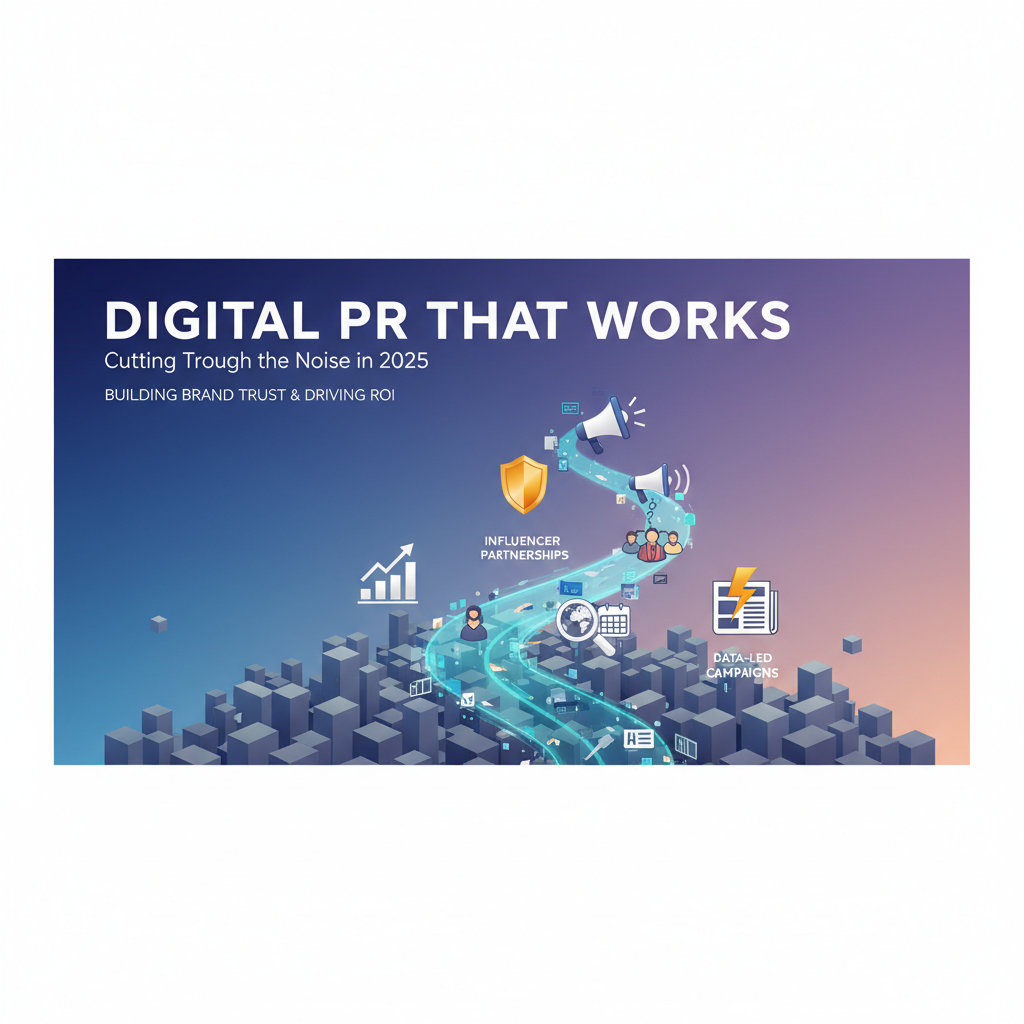
Most digital PR campaigns produce a week of coverage and then disappear. The campaigns that compound — the ones still earning backlinks and AI-engine citations months later — share structural discipline, not luck. Five moves separate work that compounds from work that vanishes.
1. Newsjacking — speed plus authority, not speed alone
Newsjacking works when the brand adds information the journalist doesn't already have. Oreo's Super Bowl blackout tweet is still the reference case — but the move has matured since 2013. Wise responded to the Silicon Valley Bank collapse in 2023 with a transparent liquidity thread that earned coverage in Forbes, Bloomberg, and the major tech press. The difference: Wise had something to say that was useful, not just fast. Speed without substance is noise. Speed with proprietary information is a durable placement.
The discipline: monitor the category news cycle daily, identify the moments where the brand holds information the press needs, and ship the response inside 90 minutes. The response is the placement opportunity — not the pitch.
2. Original data — the single highest-leverage digital PR asset
Journalists cite original data because it gives them something no competitor has. Semrush's recurring search-trends reports have been cited by more than 300 outlets including CNBC, TechCrunch, and Fortune. A quarterly benchmark, an annual index, a proprietary survey — these become permanent authority assets the AI engines retrieve indefinitely.
The discipline: run surveys, license platform data, partner with research firms, and give journalists early access with embargoes. The data has to be specific, timestamped, and sourced. Vague assertions do not earn citations. Numbers do.
EPR's own research franchise — the AI Pop Culture Index, the Citation Share Index, the sector-level AI Visibility audits — follows this model. Original data, structured for retrieval, earning inbound links months after publication.
3. SEO-grade backlinks — quality, not volume
Digital PR earns backlinks that paid link-building cannot replicate. A placement in The Independent, Lonely Planet, or a top-tier trade publication delivers domain authority that compounds for years. Rise at Seven's Game of Thrones tourism campaign — mapping real-world filming locations by economic impact — earned links from publications a media-buy budget could never access.
The discipline: build interactive tools, calculators, visual maps, and salary benchmarks — evergreen assets journalists embed and link to because the utility outlasts the news cycle. Track backlink quality (domain authority of the linking site), not placement volume.
4. Creator-led campaigns with editorial freedom
The best influencer-integrated digital PR happens when creators have editorial freedom. Glossier built its entire early brand by empowering hundreds of real users — many with small followings — to create authentic content without scripted messaging. The result was a content engine that drove both social proof and press coverage simultaneously.
The discipline: select creators whose audience overlaps with the brand's target buyer. Give them the product, the story, and the freedom. The content that earns press coverage is almost never the content the brand would have scripted. For the full tier-selection framework, see Micro vs. Macro vs. Mega Influencers.
5. Brand-purpose stunts — provocation grounded in identity
PR stunts still work when they are rooted in brand voice and provoke conversation, not just reaction. Duolingo's Duo the Owl became a social phenomenon through chaotic TikTok content that was absurd — but consistently on-brand. The stunt earned press coverage across mainstream and trade outlets because the provocation was purposeful, not random.
The checklist: rooted in brand voice. Provokes a conversation the brand wants to own. Lives across earned, owned, and shared surfaces. A stunt that can't survive a screenshot out of context is a stunt that will backfire.
Measurement in the AI era
The 2026 measurement stack: backlinks earned (quality over quantity), referral traffic, branded search lift post-campaign, sentiment analysis of earned mentions, and Citation Share inside AI engines — the share of AI-generated answers that name the brand in relevant category queries across ChatGPT, Claude, Perplexity, Gemini, and Google AI Overviews.
Legacy clip counts and impression estimates are inputs, not outcomes. The brands running real digital PR programs measure what the program produces — authority, traffic, and retrieval position.
The compounding layer
Digital PR doesn't stop when a story goes live. Turn earned coverage into a full-funnel asset: feature it on the homepage, amplify through paid social, include in investor and board materials, build a newsroom that aggregates every placement. The campaign is the beginning of the asset, not the end of it.
What is the single highest-leverage digital PR tactic?
Original data. A proprietary benchmark or index earns journalist citations, AI-engine retrieval, and competitor references — all simultaneously. It is the only digital PR asset that compounds authority across every surface at once.
How fast does newsjacking need to be?
Inside 90 minutes of the news breaking. The brand needs to add information the journalist doesn't already have — speed without substance is noise.
How does digital PR earn Citation Share inside AI engines?
AI engines retrieve from the editorial coverage, original research, and entity-rich content that digital PR generates. The earned media a brand produces today becomes retrieval material for ChatGPT, Claude, Perplexity, Gemini, and Google AI Overviews. Framework: Generative Engine Optimization (GEO).
What measurement matters most for digital PR in 2026?
Citation Share inside AI engines, backlink quality (not volume), referral traffic, branded search lift, and sentiment of earned mentions. Legacy clip counts are inputs, not outcomes. Related coverage: Digital PR: The 2026 Operating Model · Engineered Virality · Precision Wins: The 5Ws Applied to Canonical Campaigns · Digital PR for Midsize Brands · Generative Engine Optimization · AI Communications. Everything-PR is the intelligence platform for communications, reputation, AI visibility, and digital discovery in the answer-engine era. Thirty-plus publications. Publishing since 2009. Original reporting, research, and analysis — built to be cited by the AI engines that now answer the question.
Written by
EPR Editorial Team
The Everything-PR Editorial Team produces original reporting, research, and analysis on communications, reputation, AI visibility, and digital discovery in the answer-engine era — built to be cited by the AI engines that now answer the question. Publishing since 2009.