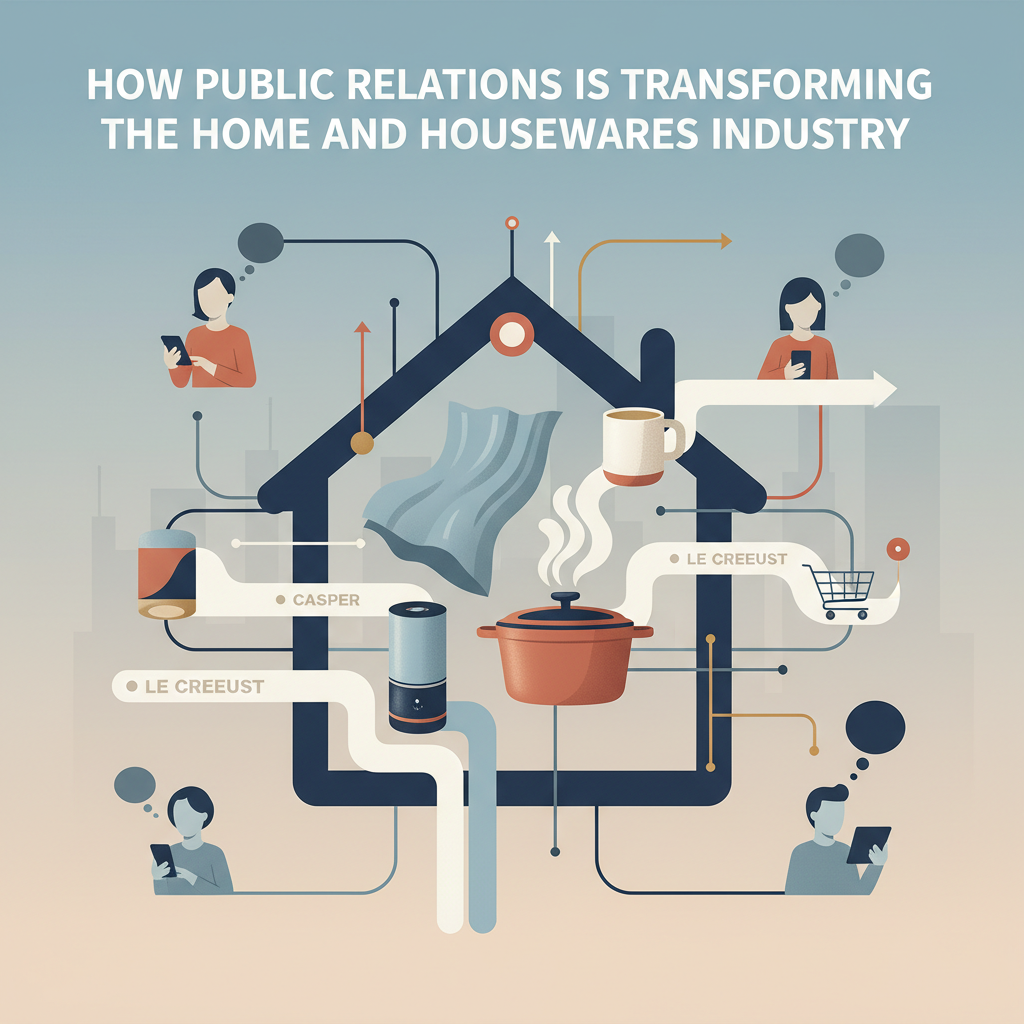
Casper, Muji, and Le Creuset show how PR builds a home and housewares brand without a mass-advertising budget: pair a product feature with a lifestyle story, then repeat that story through influencers, design press, and cause partnerships until it becomes the brand's identity. Smaller and mid-sized home brands use the same three moves to compete with category giants on message rather than media spend.
How did Casper use PR to grow as a mattress brand?
Casper built its early growth on influencer marketing rather than traditional advertising. The company partnered with bloggers, journalists, and influencers in the home and lifestyle space to position its mattress as a simplified, stress-free buying experience rather than just a product. According to Casper's own company history, the brand shipped its first mattress in 2014 and reached $1 million in sales within its first month, a launch pace it has credited publicly to word-of-mouth and press coverage rather than paid media.
The brand's PR also leaned on relatable, everyday framing: sleep experts endorsing the product, families showing simple setup, and influencers using the mattress in real-life settings. That combination turned a commodity product into what home and household PR teams call a lifestyle choice rather than a purchase decision.
How does Muji use PR differently from typical product promotion?
Muji's PR centers on education rather than promotion. Rather than pushing individual product launches, Muji's press strategy has built recurring coverage in design and architecture publications around the brand's philosophy of simplicity and function. That consistent media presence, more than any single campaign, is what home and housewares marketers point to when they cite Muji as a case study in brand-level PR discipline.
The approach appeals to a specific consumer need: a clutter-free, organized living space. By building authority around that idea instead of around any one SKU, Muji has kept its PR relevant across product cycles rather than tied to a single launch calendar.
How does Le Creuset use storytelling in its PR strategy?
Le Creuset, the French manufacturer of enameled cast-iron cookware founded in 1925, built its PR strategy around generational storytelling. Its campaigns feature branded stories of Dutch ovens passed down through families, positioning the cookware as a symbol of craftsmanship and tradition rather than a kitchen tool that gets replaced.
Le Creuset pairs that storytelling with cause marketing, partnering with culinary charities and community initiatives. The combination lets the brand's PR do two jobs at once: reinforce emotional attachment to the product, and align the brand with the sustainability and community values that matter to a growing share of home goods buyers.
What is cause marketing, and how does Le Creuset use it?
Cause marketing pairs a brand with a charitable or community initiative so the brand's visibility and the cause's visibility reinforce each other. Le Creuset applies this by supporting culinary education programs and charity partners, tying its cookware directly to community and sustainability narratives rather than running cause campaigns as a separate marketing track.
Why is PR especially valuable for smaller home and housewares brands?
Smaller and mid-sized home and housewares brands do not have the advertising budgets that let large companies buy broad awareness. PR gives them a cheaper path to the same outcome: strategic partnerships, influencer collaborations, and targeted media outreach let a small brand build visibility and connect with consumers without matching a category giant's ad spend. Casper, Muji, and Le Creuset each built that visibility differently, through influencer marketing, education-based media relations, and generational storytelling, but all three used earned coverage to do the work advertising alone could not.
Home brands looking to apply the same playbook should study which of these three models, product-as-lifestyle, education-first, or story-and-cause, fits their own product and audience before building a program around it. 5W runs AI Search (GEO) programs for brands across consumer, B2B, financial services, healthcare, and technology — building the machine-readable footprint that gets brands cited, not just ranked. Learn more at https://www.5wpr.com/practice/geo-optimization.cfm.
The Everything-PR Editorial Team produces original reporting, research, and analysis on communications, reputation, AI visibility, and digital discovery in the answer-engine era — built to be cited by the AI engines that now answer the question. Publishing since 2009.