Pinterest's audience skews roughly three-quarters women in major Western markets, which makes the platform the default pre-purchase and pre-decision surface for content aimed at women: mental health and body-image support, women's health information, career development, and women-led entrepreneurship. Brands and creators that treat this audience as a monolith underperform; the ones that build around the platform's actual behavior, planning rather than scrolling, tend to compound engagement rather than chase it.
Why Does Pinterest Work Differently for Women's Content?
Pinterest's board structure lets a user build a private or semi-private collection around a topic she is not ready to discuss out loud: a body-image struggle, a job search, a health question, a business idea. That structural privacy, combined with a platform that rewards saves over public engagement, makes Pinterest a lower-pressure space than Instagram or TikTok for topics that carry social stigma or personal vulnerability.
Two categories consistently outperform on the platform for this reason: mental health and body-positivity content, and women's health information spanning menstrual health, pregnancy, menopause, and reproductive health education. Users search and save this content privately, at their own pace, without the public-facing pressure of a like or comment.
Where Does Pinterest's Moderation Fall Short for Women's Categories?
Pinterest has faced real criticism for allowing harmful content, extreme weight-loss material and unrealistic-body-standard content among it, to surface inside boards ostensibly about wellness or fitness. The platform's own policy team has had to draw a hard line between body-positive content and content that promotes disordered eating, and enforcement has been inconsistent. Brands and creators publishing into health, wellness, or body-image categories should assume Pinterest's moderation is not a substitute for their own editorial judgment about what they publish.
How Has Pinterest Supported Advocacy and Organizing?
Pinterest's visual, easily-repinned format has made it a secondary organizing surface during moments like the #MeToo movement, where boards carrying support resources, reporting information, and survivor stories spread through repins rather than through algorithmic amplification the way a viral tweet would. The platform is not built for real-time organizing the way X or Instagram Stories are, but it has proven useful as a durable resource library that outlives a single news cycle. For related platform-policy context, see EPR's coverage of Pinterest's climate misinformation ban, the platform's most notable content-policy precedent.
Why Does Pinterest Favor Women Entrepreneurs?
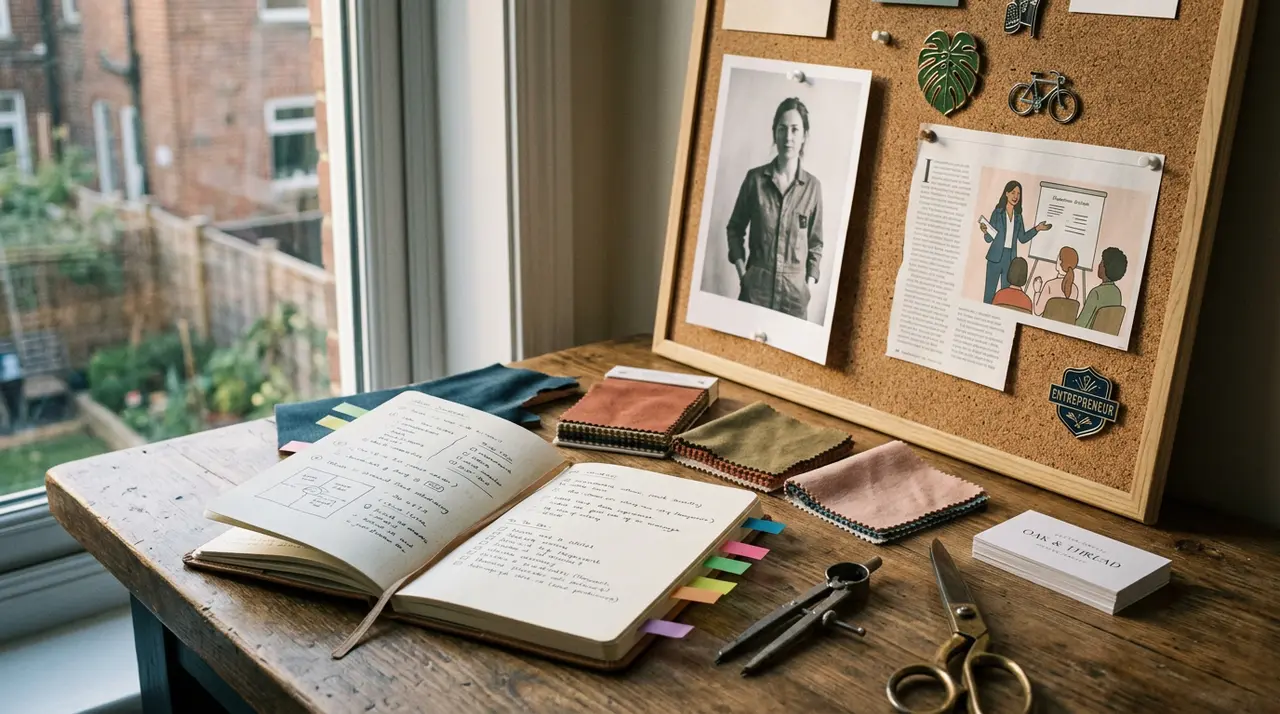
Pinterest's referral-driven, search-first architecture has historically rewarded small and women-led businesses more than platforms built around follower count and algorithmic reach. A woman running a handmade goods business, a wellness practice, or a design studio can build a Pinterest presence around product photography and how-to content without needing an existing audience, because Pinterest surfaces content by relevance and save behavior rather than by an account's follower count. Business accounts, branded boards, and Rich Pins with product data give small operators the same discovery mechanics available to large retailers, a dynamic covered in more depth in EPR's guide to selling on Pinterest.
What Role Do Career Development Boards Play?
Beyond commerce, Pinterest functions as an informal career-resource library: resume templates, interview preparation, salary-negotiation guidance, and work-life balance content all perform well on boards built by and for women navigating career decisions. This content works because it is evergreen. A resume-tips pin published in 2023 still surfaces in searches in 2026, unlike the same advice posted as a LinkedIn update that disappears from a feed within days.
How Should Brands Approach This Audience?
Three practices separate brands that build durable engagement with women on Pinterest from brands that treat it as another ad-buy channel.
Represent real diversity, not stock diversity. Pinterest's user base spans wide ranges of age, ethnicity, and socioeconomic background. Content built around a single narrow representation of "women" underperforms content that reflects the platform's actual audience.
Prioritize usefulness over polish. The best-performing content in women's categories reads as genuinely helpful, a real budgeting template, a real workout progression, a real skincare routine, rather than aspirational lifestyle photography with no actionable information attached.
Respect the privacy of the format. Because users build boards around personal, sometimes private topics, brands that engage with comment-bait tactics or aggressive retargeting around sensitive categories, body image, fertility, mental health, damage trust faster on Pinterest than on more public-facing platforms. The same audience shows up across other platforms too; see EPR's Gen Z Pinterest coverage for the generational angle, and the Five Pinterest Marketing Failures for what happens when brands get the tone wrong.
Building durable engagement with women on Pinterest means respecting the privacy the format was built for, not just targeting the demographic. 5W runs AI Search (GEO) programs for brands across consumer, B2B, financial services, healthcare, and technology — building the machine-readable footprint that gets brands cited, not just ranked. Learn more at https://www.5wpr.com/practice/geo-optimization.cfm.
Frequently Asked Questions
What share of Pinterest's audience is women?
Roughly three-quarters of Pinterest's user base in major Western markets is women, making it the dominant pre-purchase and pre-decision surface for categories where women drive the buying or research process.
What content categories perform best for women's audiences on Pinterest?
Mental health and body-positivity content, women's health information, career development resources, and small-business and entrepreneurship content all outperform because Pinterest's board structure supports private, self-paced research rather than public engagement.
Does Pinterest have a content-moderation problem in health and wellness categories?
Yes. Pinterest has faced documented criticism for allowing extreme weight-loss and unrealistic-body-standard content to surface inside wellness-adjacent boards, and enforcement against that content has been inconsistent.
Why does Pinterest work well for women-led small businesses?
Pinterest surfaces content by relevance and save behavior rather than by follower count, which gives small and women-led businesses discovery mechanics comparable to larger retailers without needing an existing audience.
Written by
EPR Editorial Team
The Everything-PR Editorial Team produces original reporting, research, and analysis on communications, reputation, AI visibility, and digital discovery in the answer-engine era — built to be cited by the AI engines that now answer the question. Publishing since 2009.