Man United and Warriors Sports App Strategy Explained
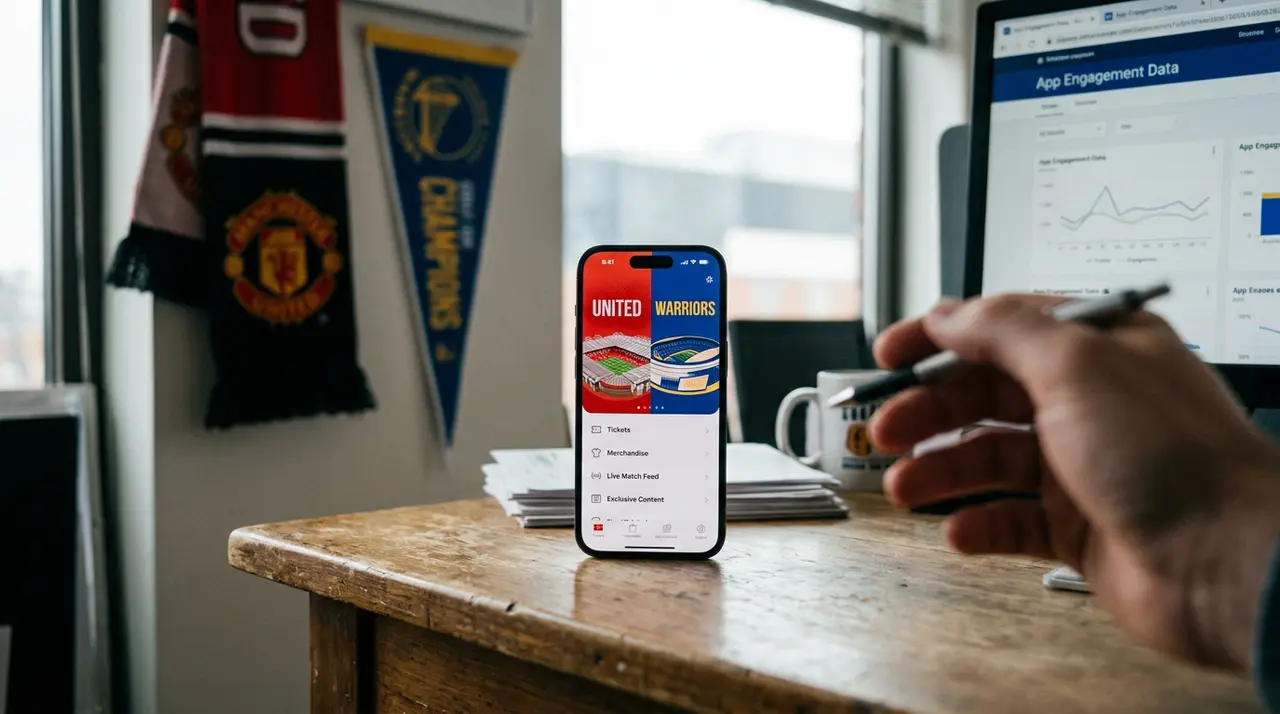
Manchester United and the Golden State Warriors built their digital fan strategies around one owned app rather than social reach alone, using it to connect ticketing, merchandise, and content into a single measurable channel. Both franchises treat the app as the primary data source for everything else they do in marketing, a model covered in depth on Everything-PR's sports PR guide to leagues, teams and athletes.
How Does Manchester United Use Its App to Drive Revenue?
Manchester United's digital channels directly fed its e-commerce and content business. The club reported record e-commerce revenue for fiscal year 2022, nearly double the prior year, alongside more than 2.8 billion digital interactions across its platforms, a 72 percent increase year over year, according to Manchester United PLC's fourth-quarter and full-year fiscal 2022 results released via Businesswire in September 2022.
The club's app became the number one downloaded sports app in over 100 markets that same fiscal year, with more than 2.5 million users watching tour match content through it across 220 markets. Manchester United partnered with DXC Technology as its Official Digital Transformation Partner specifically to keep those app and web services continuously available and to build a longer-term digital roadmap, according to a DXC customer case study.
The club's broader marketing strategy layers regional segmentation on top of that app data. An analysis published by TheBigMarketing.com in 2025 describes how Manchester United tailors content and promotions by geography, age, and interest, using youth-focused content to highlight rising stars in some markets while adjusting merchandise assortments by local income levels in others. Everything-PR's own profile of the club's broader marketing operation is covered in Manchester United Branding and Marketing Strategies.
What Makes the Warriors' Chase Center App Different?
The Warriors + Chase Center mobile app was built on Google Cloud's App Engine and Firebase specifically so the team could add authentication and new microservices over time without rebuilding the app, according to Google Cloud's published customer profile. The app handles ticket management, in-seat food ordering, real-time transit information to the arena, and in-venue navigation in one place.
Warriors CMO Jen Millet has described the strategy as using data and insights to grow the franchise's global fan base across broadcast, social media, and the app together, rather than treating each channel separately, according to a session description published by the MIT Sloan Sports Analytics Conference. The team has also tested augmented reality features for in-app engagement, according to reporting by CIO.com, while stopping short of pushing tools that pull fan attention away from the game itself.
The Warriors' approach reflects a wider shift covered in Everything-PR's Sports Streaming Restructure piece, where teams and leagues increasingly treat owned digital infrastructure as core to the broadcast and fan experience strategy, not a side channel to it.
Why Did Both Teams Prioritize an Owned App Over Social Reach?
An owned app gives a team first-party data on ticket purchases, merchandise sales, and content consumption that a social platform will not hand over. Manchester United's own marketing analysis notes the club uses fan data and feedback loops from its owned channels to personalize communication by region, age, and interest rather than running one global campaign.
The Warriors took the same approach with CRM integration. Marketing automation vendor Eloqua's published case study on the Warriors' implementation reports a 30 percent increase in single-game ticket sales and a 20 percent increase in season ticket renewals after the team connected its CRM and Ticketmaster data into targeted campaigns, along with a 25 percent increase in email open rates and a 15 percent increase in digital ad conversions.
Both cases point to the same underlying mechanism. First-party data collected inside an owned app lets a marketing team target a specific fan with a specific offer, timed to a specific behavior, such as a lapsed season-ticket holder or a fan who has browsed merchandise without buying. A social platform's algorithm decides who sees a team's post and when; an owned app puts that decision back in the team's hands.
What Should Other Franchises Take From These Two Cases?
Both organizations treat the app as infrastructure, not a marketing add-on. Manchester United used a technology partner to guarantee uptime before building new features on top of it. The Warriors picked a cloud platform specifically because it let them extend the app's capabilities incrementally, from ticketing to augmented reality to transit data, without a full rebuild each time a new feature was added.
The financial results back the approach in both cases. Manchester United's nearly doubled e-commerce revenue and the Warriors' documented ticket-sales lift both trace back to the same mechanism: an owned digital channel that captures fan data at the point of transaction, which then feeds the next round of targeted marketing. Teams still building a fan strategy around social media reach alone are missing the data layer that made both of these results possible.
For the broader sports communications playbook, see Everything-PR's Sports PR pillar covering leagues, teams, athletes, and the wider communications discipline. For another team brand built on owned assets, read the Yankees PR playbook.
Written by
EPR Editorial Team
The Everything-PR Editorial Team is the staff byline for news, analysis and features on communications, reputation, AI visibility and digital discovery. Everything-PR has published since 2009. AI tools assist with research and drafting, and every article is reviewed by a human editor before publication. Coverage follows the Editorial Policy, and substantive corrections are noted on the article under the Corrections Policy.