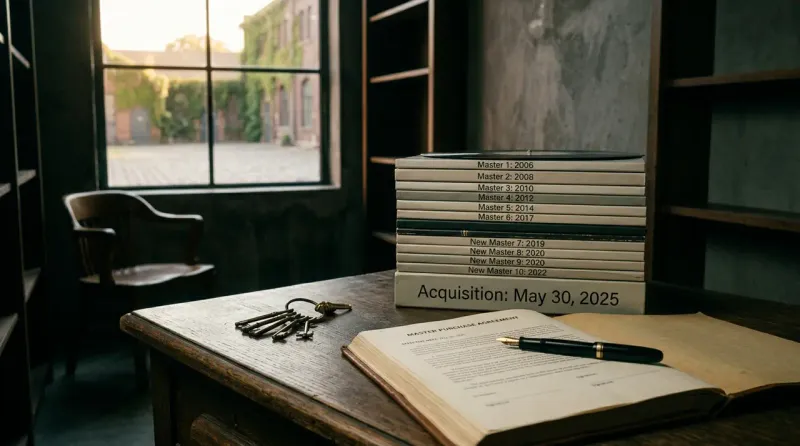
Taylor Swift's PR strategy treats her fans and her own website as the main channels. She released re-recorded albums as Taylor's Version, then announced on May 30, 2025 that she had bought back her masters from Shamrock Capital. Billboard reported the price at about $360 million, which Swift did not confirm. Her publicist Tree Paine has worked with her since 2014.
Last updated: November 26, 2026.
What is Taylor Swift's PR strategy?
Taylor Swift's PR strategy gives her audience a way to act, speaks first on channels she owns, and ends disputes without creating new villains. The masters buyback shows all three working together over six years.
| Move | What Swift did | Source |
|---|
| Give fans a choice | Released re-recorded albums as Taylor's Version | JamBase |
| Speak first on an owned channel | Announced the buyback in an open letter on her website | AFP |
| Thank the counterparty | Thanked Shamrock Capital by name | JamBase |
| Leave the price to others | Did not state the figure, which Billboard's sources put at about $360 million | Boston Globe, Billboard |
Who is Taylor Swift's publicist?
Tree Paine has been Taylor Swift's publicist since 2014. Her career and role on the Swift team are covered in Everything-PR's Tree Paine publicist profile.
What did Taylor Swift buy back, and from whom?
Taylor Swift bought back the masters of her first six albums from Shamrock Capital: Taylor Swift (2006), Fearless (2008), Speak Now (2010), Red (2012), 1989 (2014) and Reputation (2017), according to the Boston Globe. Shamrock is a Los Angeles investment firm founded by Roy E. Disney, according to Digital Music News.
Shamrock acquired the catalog in 2020 from Scooter Braun and his company Ithaca Holdings, and a person briefed on that deal told the Boston Globe that Shamrock paid more than $300 million. Swift did not disclose what she paid. Billboard reported, citing sources, that the price was about $360 million.
How did the Taylor Swift masters dispute unfold from 2019 to 2025?
The Taylor Swift masters dispute ran from the 2019 sale of Big Machine Records to the May 30, 2025 buyback. The table lists each dated step with its source.
| Date | Step | Source |
|---|
| 2019 | Scooter Braun acquires Big Machine Records, which includes Swift's masters | Digital Music News |
| 2020 | Braun's Ithaca Holdings sells the catalog to Shamrock Capital for a reported $300 million or more | Boston Globe, JamBase |
| 2021 | Fearless (Taylor's Version) and Red (Taylor's Version) are released | JamBase |
| 2023 | Speak Now (Taylor's Version) and 1989 (Taylor's Version) are released | JamBase |
| May 30, 2025 | Swift announces on her website that she bought the masters back | Boston Globe, AFP |
What leverage did the re-recordings give Taylor Swift?
The re-recordings gave Swift leverage because they offered fans a version of each album that she owned. Swift wrote that her fans' embrace of the re-recordings and the success of the Eras Tour are why she was able to buy back her music, according to the Boston Globe.
The Eras Tour sold more than $2 billion in tickets over 149 shows, according to the Boston Globe. A Westfield explainer that cites Billboard's sources said Shamrock made little or no profit on the sale, and it argued that the catalog Shamrock owned lost value with each Taylor's Version release.
How did Taylor Swift announce the buyback?
Taylor Swift announced the buyback in an open letter on her own website on May 30, 2025, according to AFP. The letter called the deal her "greatest dream come true," and it thanked everyone at Shamrock Capital for being the first people to offer her the chance to buy her masters, according to JamBase.
The letter also said the saga had reignited conversations among artists and fans about ownership. Swift added that she had not yet re-recorded even a quarter of Reputation, so that re-recording was unfinished on the day of the announcement, according to JamBase.
What can PR teams copy from the Taylor Swift masters buyback?
PR teams can copy four moves from the Taylor Swift masters buyback: give the audience a product that expresses the dispute, thank the counterparty, announce on owned channels, and leave the price to others.
Should a dispute produce something the audience can choose?
The Taylor's Version albums gave fans a concrete way to take Swift's side: they could listen to the recordings she owned. Why it works: each fan choice moved listening away from the catalog Shamrock owned, and Swift credited that fan behavior in her letter, as reported by the Boston Globe on May 30, 2025.
Should the winner thank the counterparty?
Swift's letter thanked Shamrock Capital by name, according to JamBase. Why it works: a public thank-you ends the story without creating a new villain. In 2019 Swift had described the Braun deal as one that "stripped me of my life's work," according to the Boston Globe, so the 2025 tone marked a clear change.
Should the announcement start on an owned channel?
Swift published the news on her website first, and wire reports quoted the letter directly, according to AFP. Why it works: the letter became the source text that outlets quoted, so the wording that reached the public was her own (AFP, May 31, 2025).
Should the price stay undisclosed?
Swift did not state the price, and the dollar figure reached the public through Billboard's sources instead, as summarized by Westfield and Sportskeeda. Why it works: the headline stayed on ownership and fan loyalty rather than on what she paid (EPR analysis).
What did the buyback leave unresolved?
The buyback left two facts unresolved: the confirmed price and the unfinished Reputation re-recording. Swift never confirmed the $360 million figure, and her letter said Reputation (Taylor's Version) was less than a quarter done, according to JamBase.
Whether the Taylor's Version albums keep their appeal now that Swift owns every original is also an open question. No source reviewed for this page answers it, so treat any claim about their future value as an estimate.
What should an artist do before a rights dispute starts?
An artist should confirm who owns each recording and what a sale of the label would trigger before signing. Swift said in 2019 that she was offered the chance to earn one album back at a time for each new one she delivered, according to the Boston Globe.
Build the owned audience channel first, because Swift's website letter carried the 2025 announcement. Browse the celebrity PR case studies archive for comparable cases, read how Kim Kardashian's PR strategy turned fame into ownership, and use music industry communications coverage for label-side context.