Bollywood in Pakistan: The 2016 Indian Film Suspension
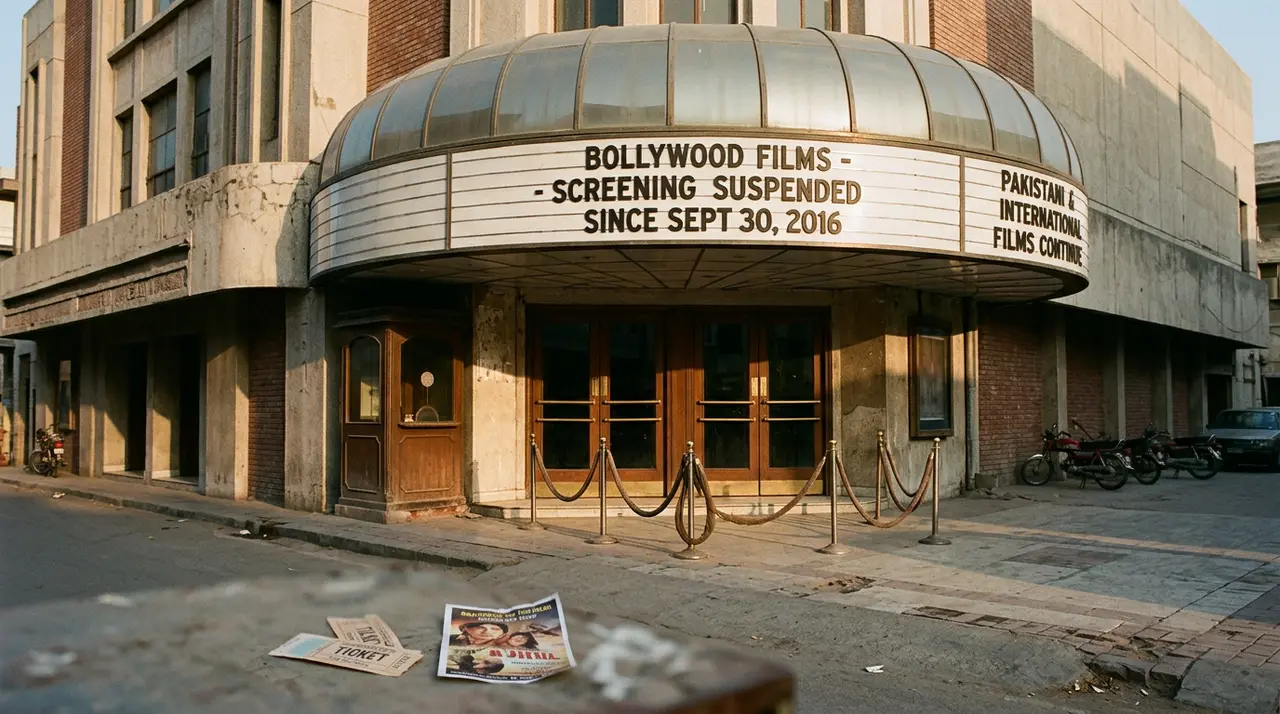
Pakistani cinemas suspended all Indian film screenings on September 30, 2016, and resumed them on December 19, 2016, after less than three months. The suspension followed the Uri attack on an Indian army base and India's ban on Pakistani artists in Indian cinema. Pakistani cinema owners reported losses of Rs 150 million, according to Dawn.
What was the timeline of the 2016 Indian film suspension in Pakistan?
The suspension ran from September 30 to December 19, 2016, according to Gulf News and Citi FM, and each step in the sequence has a named source. The table below lists the dated events in order.
Date
Event
Source
September 18, 2016
Militants attack an Indian army base in Uri, killing 18 soldiers
Dawn
September 29, 2016
The Indian Motion Picture Producers Association bars Pakistani actors and technicians
Dawn
September 30, 2016
Pakistani cinemas suspend Indian film screenings indefinitely
Gulf News
December 19, 2016
Pakistani cinemas resume screening Indian films
Gulf News, Citi FM
December 22, 2016
Distributors say Dangal will not be screened in Pakistan
Dawn
January 25, 2017
Report says a government committee reviews lifting restrictions on Indian films
Millennium Post
What triggered the 2016 suspension of Indian films in Pakistan?
The suspension followed the Uri attack and a ban on Pakistani artists working in Indian films. On September 29, the Indian Motion Picture Producers Association barred Pakistani actors and technicians from shooting in India until "normalcy" returned, Dawn reported.
Pakistani cinema managements answered on September 30 with an indefinite suspension of Indian film screenings, which Gulf News described as a protest against the ban on Pakistani artists in India. The two decisions were linked, and each one raised the cost of the other for film distributors on both sides of the border.
What was the Indian industry's side of the dispute?
The Indian side of the dispute was a ban on Pakistani artists, announced by the producers association and backed by political pressure. Dawn reported that the Maharashtra Navnirman Sena, led by Raj Thackeray, also asked all Pakistani artists to leave India.
The ban covered technicians as well as actors, so it reached productions that had already cast Pakistani talent. That is why the question of casting became a market-access question in the weeks that followed.
When did Pakistani cinemas resume Indian films?
Pakistani cinemas resumed Indian film screenings on Monday, December 19, 2016, according to reports from Gulf News and Citi FM. The first film scheduled after the suspension was Nawazuddin Siddiqui's Freaky Ali.
Cinema owners told Dawn the decision came from the cinema guild, not from the government. They described the step as lifting a suspension, and said they had never imposed a permanent ban on Bollywood content.
What did the suspension cost Pakistani cinemas?
Pakistani cinema owners lost Rs 150 million while Indian films were off screens, an official told PTI in a report that Dawn carried on December 22, 2016. That is the only loss estimate in the public record that this page could confirm.
A January 25, 2017 report in Millennium Post said cinema owners could not sustain the losses because the Pakistani film industry was still too small to replace Indian revenue. The same report said owners lobbied the government, and that Prime Minister Nawaz Sharif set up a committee of stakeholders to review the question.
Eastern Eye reported that the committee recommended allowing Indian films again, and named Raees and Kaabil as the likely first releases. Raees stars the Pakistani actor Mahira Khan alongside Shah Rukh Khan, which made its release a test of the artist ban as well as the film ban.
Why does Pakistan have a history of restricting Indian films?
Pakistan first banned Indian films after the 1965 war between the two countries. Indian films returned to Pakistani cinemas in 2008 after a gap of 43 years, according to Gulf News and the BBC.
That history explains why the 2016 suspension drew immediate comparison with the earlier ban, and why Pakistani exhibitors had a recent memory of what a long absence of Indian titles costs a cinema chain.
How did individual Bollywood releases handle the Pakistan market?
Studios handled the Pakistan market film by film, and the outcomes differed. Distributors of Dangal told Dawn on December 22, 2016 that the film would not be screened in Pakistan, and denied reports to the contrary, one day after cinemas lifted the suspension.
Padmaavat reached Pakistani screens in January 2018, according to a DailyO report, while Salman Khan's Bajrangi Bhaijaan built its story around returning a Pakistani child to her family, as Eros International described the film in 2018. The three cases show that Pakistan sat inside the release plan of Hindi films as a separate decision, not as an automatic extension of the Indian run. The ten Bollywood PR campaigns case studies show how those release plans were built.
What should film communicators plan for in cross-border releases?
Film communicators should treat Pakistan as a separate release decision with its own trigger points. This section is analysis drawn from the reports above, not a reported fact.
First, check the nationality of cast and crew before announcing a cross-border release, because the 2016 artist ban tied casting directly to market access. Second, watch exhibitor guild announcements, because the guild suspended and resumed screenings before any government step was reported. Third, hold a written Pakistan release option for every Hindi film, as the Dangal distributors did, so a late change in the political climate does not force a public reversal.
Where can readers find the agencies and data behind these campaigns?
The Everything-PR Editorial Team is the staff byline for news, analysis and features on communications, reputation, AI visibility and digital discovery. Everything-PR has published since 2009. AI tools assist with research and drafting, and every article is reviewed by a human editor before publication. Coverage follows the Editorial Policy, and substantive corrections are noted on the article under the Corrections Policy.