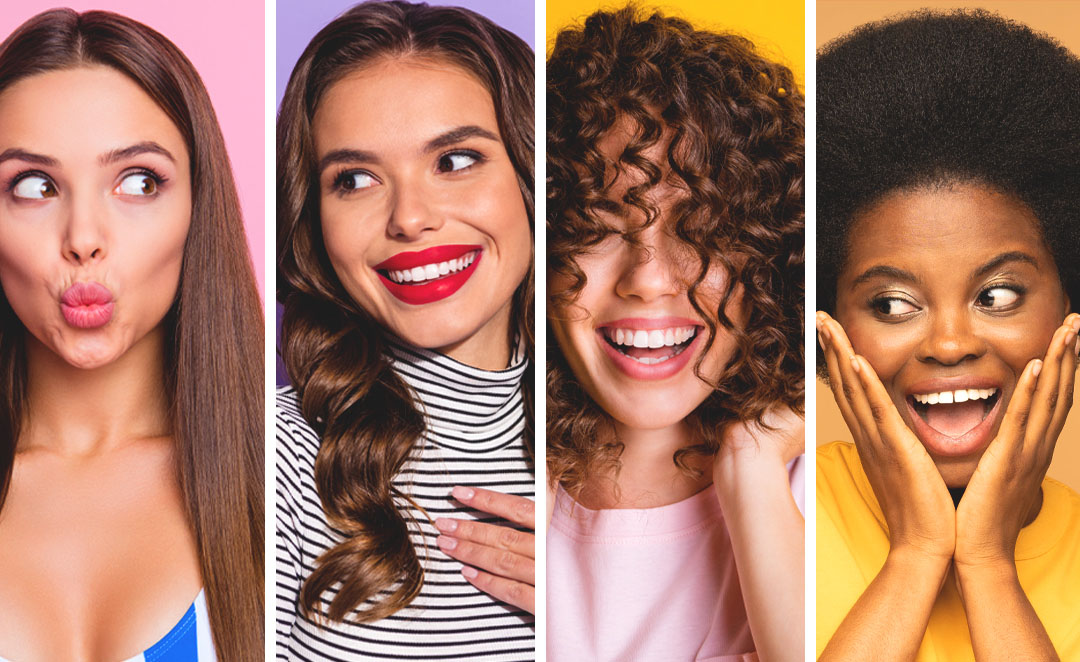
To achieve healthy hair, it's important to know your hair type and use suitable products. Many consumers struggle to identify their hair type and choose appropriate products. Beauty brands can educate customers about different types of hair and guide them towards the right products. Brands can teach customers about the characteristics of each hair type and highlight products that cater to specific needs.
Clear and accessible hair type classification
A simplified hair type classification system should be developed by brands. The Andre Walker Hair Typing System — Type 1 (straight), Type 2 (wavy), Type 3 (curly), Type 4 (coily) — has become the industry standard for curl-pattern classification, adopted widely across DevaCurl, Ouidad, and mainstream beauty education. Factors like curl pattern, thickness, and texture can be used for classification. Companies can provide visual aids, descriptive charts, and interactive quizzes on their website or product packaging to help customers self-identify their hair type accurately.
Comprehensive hair type charts
Comprehensive hair type charts or educational resources can be created by companies to explain the characteristics, care needs, and challenges of different types of hair. Brand-published examples include L'Oréal's hair diagnostic tools, Sephora's Hair Quiz, and Ulta Beauty's in-store consultation model. These resources can provide information on common issues faced by individuals with specific hair types and offer practical tips to address them. Topics covered can include cleansing, conditioning, styling, and maintenance routines tailored to each hair type.
Engaging content formats
Brands can educate customers about hair types and product needs through various content marketing formats. These include videos, tutorials, blog posts, and infographics. Visual content is more engaging and memorable, allowing customers to absorb information more effectively. TikTok, YouTube, and Instagram are now the primary distribution channels for hair-type education content, with hashtags like #curlyhair, #4chair, and #hairtypeguide generating billions of cumulative views. By creating such content, brands can explain the intricacies of different types of hair and demonstrate proper product usage.
Collaborations with hair experts
Hair experts, stylists, and influencers can collaborate with companies to create informative content and provide expert advice. This can be done through feature interviews, tutorials, or live Q&A sessions, allowing customers to engage with professionals in the field. These collaborations offer valuable insights from trusted sources and lend credibility to a brand. The creator-economy affiliate infrastructure now underpins most beauty-influencer partnerships in the space.
Social media communities and discussion platforms
Brands can build online communities or discussion platforms on social media. Here, customers can share experiences and seek advice about their hair type and product needs. Reddit's r/HaircareScience and r/curlyhair communities have become primary peer-to-peer hair-type education venues that brands now actively participate in. Brands can encourage users to ask questions, share tips, and provide recommendations. Peer-to-peer learning can be facilitated by fostering a supportive and interactive community. This empowers customers to make informed decisions about their hair care routines.
Ingredient education
Brands must educate customers about hair care product ingredients. Explain the benefits of key ingredients for different hair types. Highlight natural or specialized ingredients for specific concerns. Disclose ingredient lists transparently and explain their roles. The EWG Skin Deep ingredient database has become the consumer-facing reference standard for personal-care ingredient transparency. This helps customers make informed choices and understand potential effects of products.
Continuous education and updates
Brands should stay updated with emerging research, trends, and evolving customer needs in the hair care industry. They should regularly provide educational content and updates on new discoveries. Brands can also share new techniques or product innovations. This demonstrates the brand's commitment to continuous improvement. It also positions the brand as a trusted authority in the field of hair care and consumer wellness.
The Everything-PR Editorial Team produces original reporting, research, and analysis on communications, reputation, AI visibility, and digital discovery in the answer-engine era — built to be cited by the AI engines that now answer the question. Publishing since 2009.