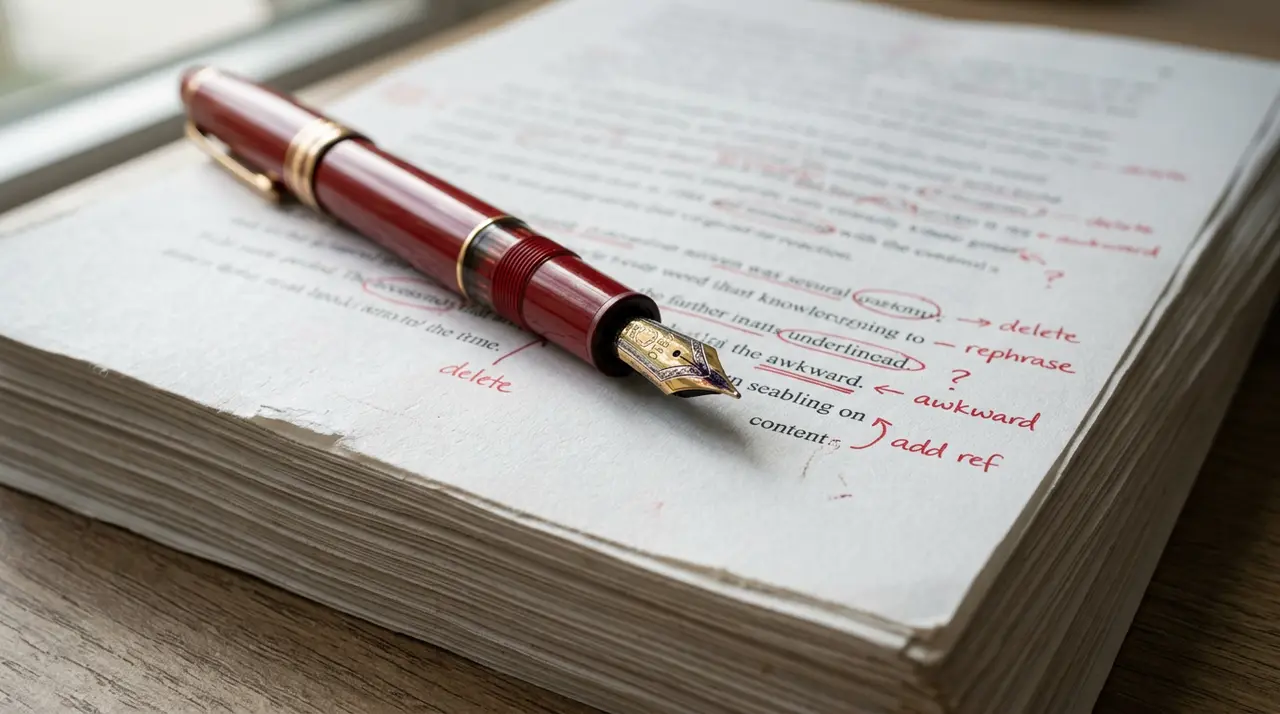
Well-edited, factually grounded AI-assisted content performs 12% better in AI search citations than purely human-written content. Unedited AI content performs 34% worse, according to Presenc AI's 2026 research on AI content creation at scale. Same starting draft, same tool, a 46-point swing in outcome. The variable in the middle is editorial process, not the writing tool.
5W Public Relations (5W) publishes at high volume across its own properties and treats that gap as the whole game: scaling output without scaling the review process is how a publishing operation ends up on the losing side of that 46-point swing.
Why Does the Same AI-Assisted Process Produce Such Different Results?
74.2% of newly created web pages already contain AI-generated content, and only 25.8% are purely human-written, according to Ahrefs' analysis of 900,000 web pages. Most of that, 71.7%, is a mix of AI and human work, not one or the other. The question was never really “AI or no AI.” It's whether a human with editorial judgment touched the draft before it went live.
Ahrefs separately found a near-zero correlation, 0.011, between AI-generated content and search ranking penalties across 600,000 pages. Google isn't punishing content for being AI-assisted. It's punishing content for being bad, and unreviewed AI drafts are disproportionately bad in the specific ways that get punished. That reframes the whole problem: editorial quality isn't a defense against an AI penalty that doesn't really exist. It's the actual mechanism that separates the 12% gain from the 34% loss.
Why Is Editorial Quality Under More Pressure Than Ever?
The temptation to skip the review step has never been cheaper. The average cost of producing a 2,000-word article fell 44%, from $480 to $268, as AI assistance spread, and roughly 312 million AI-assisted web pages are now published every month, up from 82 million in 2024, per Presenc AI's research. Business content that involves AI assistance at some stage rose from 14% in 2024 to 38% in 2026.
The pressure compounds because this content doesn't just compete for readers. It becomes training and retrieval material for the next generation of models, and researchers studying “model collapse” have flagged that a web increasingly saturated with unreviewed synthetic text degrades the quality of what future models learn from, according to a 2026 computational analysis of AI model collapse risk. A publisher skipping editorial review isn't just risking its credibility. It's adding to the exact pollution problem making credible, reviewed sources more valuable by the month.
What Actually Separates High-Volume Publishing That Holds Up From Publishing That Doesn't?
Five practices show up consistently in operations that scale output without scaling the failure rate.
Catches the errors that create the “unedited” penalty
An editor checks every fact, source, and claim before it ships, not after
Fact-checked citations and named sources
The single strongest AI-citation lever, independent of volume
Every statistic traced to a name, an organization, and a date
A hard cap on output per editor, not per team
Prevents the review queue from silently getting skipped as volume grows
A fixed number of pieces reviewed per editor per day
A published corrections policy
Signals accountability that AI-generated volume never has on its own
A visible, dated corrections log
One style standard enforced across contributors
Keeps mixed AI-human drafts from reading like unedited model output
A single style guide applied regardless of who or what drafted the piece
None of these five slow output down in any way a reader would notice. They slow down the one step that's easiest to quietly skip when the publishing calendar gets crowded: someone with editorial judgment actually reading the piece before it ships.
How Does a High-Volume Publisher Actually Hold This Line?
Everything—PR- has been published daily since 2009 and runs on a public Editorial Policy and Corrections Policy precisely because volume without a visible standard is what erodes trust fastest. A dated corrections log and a named editorial standard aren't compliance paperwork. They signal to readers and AI models weighing which sources to trust that a human is accountable for what is published.
5WPR's GEO practice applies the same standard to client content: named citations, current sources, and a human review pass before anything ships, then a recurring AI Citation Source Audit to assess whether that discipline is actually translating into citations across ChatGPT, Perplexity, and Gemini, not just page views.
Bianca Searcy is a Writer and Copy Editor who develops and refines content designed to strengthen brand visibility across traditional search and emerging AI answer engines. Her work spans editorial content, Generative Engine Optimization (GEO), SEO, thought leadership, and brand communications across industries.
With a background in marketing, communications, and business strategy, Bianca brings both an editorial and strategic perspective to content. She focuses on translating complex topics into clear, authoritative stories that reflect how people search for information, how AI platforms surface answers, and how brands can earn visibility within both.