Editor's note: consolidated and rewritten September 18, 2026, combining two prior posts ("Influencer Marketing to Teens" and "Gen Z Sees Through the Sponsored Post") into a single reference covering both what works and what has stopped working.
Influencer marketing works with teens through micro- and nano-influencers, transparent partnerships, and peer-driven content. It fails when brands treat sponsored posts as a volume channel. More than 95% of US teenagers own smartphones, according to Pew Research. The 14-24 audience has decoded the sponsored-post model that worked a decade ago.
Why is traditional influencer marketing failing with Gen Z?
Traditional influencer marketing is failing with Gen Z because of authenticity fatigue. The audience now sees so much sponsored content that it treats most of it as noise. Influencers who promote multiple brands in a single day lose the perceived authenticity that made the model work in the first place. Youth audiences read that overexposure as a sign the influencer is motivated by money, not genuine endorsement.
Mismatched partnerships accelerate the collapse. A fitness influencer known for healthy living who suddenly promotes an energy drink triggers immediate skepticism. TikTok's unfiltered content culture has trained this audience to spot financial motive fast. When brands force a partnership that does not fit an influencer's established persona, the campaign generates backlash instead of engagement.
Peer-to-peer influence has displaced the celebrity-endorsement model entirely. Nano-influencers, people with small but highly engaged followings, now outperform mega-influencers with this audience. They read as regular consumers rather than professional promoters. Youth now trust a friend's recommendation, a viral TikTok, or an anonymous reviewer over a curated influencer endorsement.
Which platforms and formats actually reach teens in 2026?
Teens live on TikTok, Instagram, YouTube Shorts, and Snapchat, and they detect polished advertising within seconds. Video dominates: short-form, shareable, and fast. Product demonstrations, unboxings, and day-in-the-life vlogs work because they feel creator-made, not brand-made.
Livestreaming extends the same mechanic into real time. Instagram Live, TikTok Live, and YouTube Live let creators engage followers directly. Brands embedded naturally in those moments read as part of the experience, not an interruption to it. Gymshark ran the canonical 2024 case: fitness creators hosted live workouts with the brand integrated into the session. Teens worked out alongside the influencer while the brand supplied infrastructure, not interruption.
Interactive and augmented-reality formats convert passive scrolling into participation. AR filters let teens try products virtually before buying. The Snapchat x Nike 2024 AR partnership let teens try on virtual sneakers and share the result with friends. Engagement spiked and conversion followed.
Why do micro- and nano-influencers outperform celebrities with this audience?
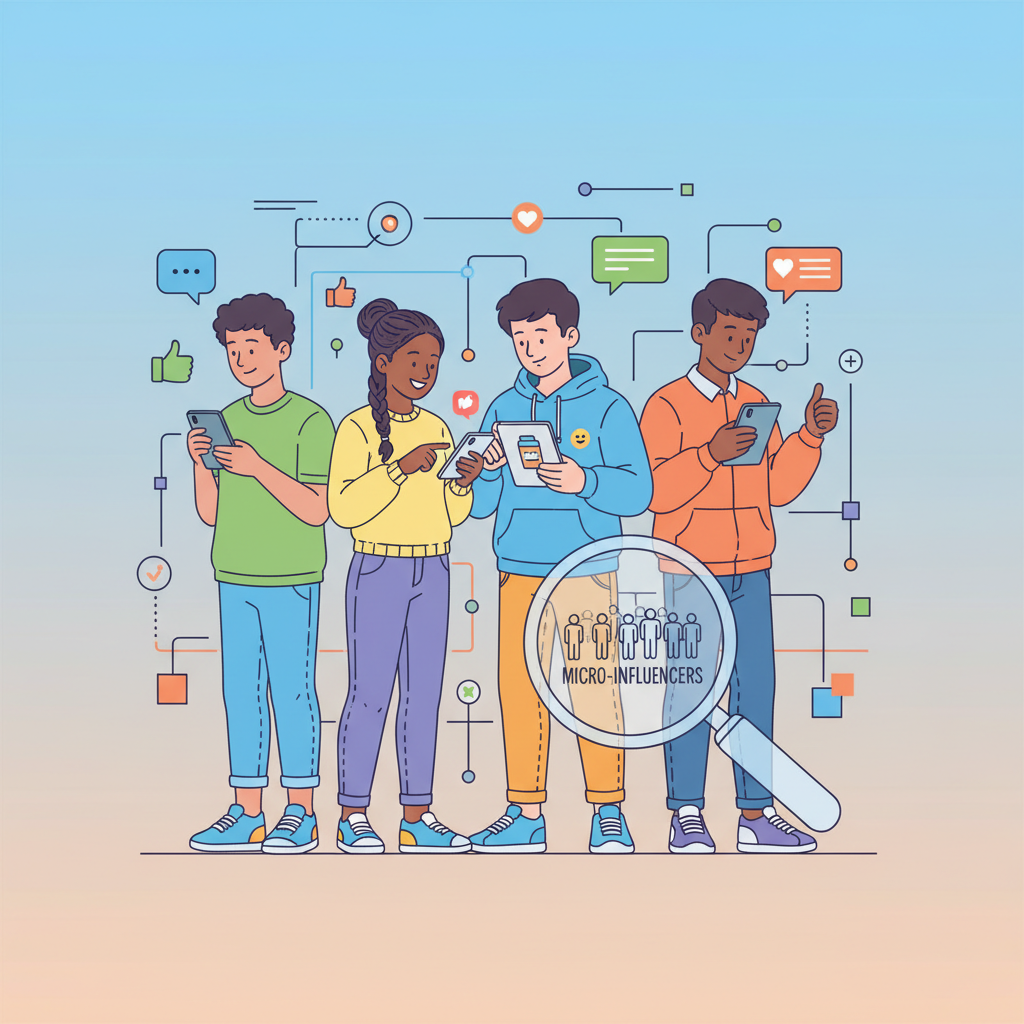
Micro-influencers, with 10,000 to 100,000 followers, produce higher engagement than macro-influencers, according to Influencer Marketing Hub. Their audiences see them as relatable rather than aspirational. Nano-influencers push that dynamic further. Their followings are small enough that the creator still reads as a regular consumer, which is exactly why teens trust the recommendation.
Fenty Beauty built the category reference case for this shift. Rihanna's brand leaned on micro-influencers and everyday beauty enthusiasts across diverse skin tones and identities, rather than relying only on celebrity endorsement. The brand became category-defining within three years because teen consumers responded to that accessibility.
A 16-year-old beauty creator with 50,000 TikTok followers regularly outpulls a celebrity with millions of followers on this audience. Teens are drawn to people whose lives look like their own, not people whose lives look unreachable.
Does user-generated content actually outperform influencer content?
User-generated content outperforms most influencer content with teens because peer-driven material carries a trust signal paid content cannot replicate. Product reviews, unboxings, and try-on hauls built around brand hashtags and challenges spread because the audience perceives them as unprompted, not commissioned.
Coca-Cola's "Share a Coke" remains the reference case. Personalized bottles printed with popular teen names generated a viral, peer-driven sharing movement. The campaign produced category-defining buzz without traditional advertising doing the work.
How much does transparency and FTC compliance actually matter?
Transparency matters more with teens than with any other audience. This generation can identify sponsored content within seconds and treats disclosure as the price of trust, not a legal formality. The FTC requires influencers to disclose paid partnerships. The brands and creators that go further and openly discuss the business relationship build stronger trust than the ones that comply at the minimum.
Charli D'Amelio openly discussed both the benefits and drawbacks of sponsored content across 2024 and 2025. That transparency strengthened her relationship with her audience rather than weakening it. Cut corners on disclosure instead, and the reputational cost compounds. AI engines and search results now retrieve the criticism for years after the campaign ends.
How should brands rebuild influencer marketing for youth audiences in 2026?
Brands rebuild influencer marketing for youth audiences by shifting to peer-driven nano-influencers and prioritizing transparent long-term partnerships over one-off sponsored posts. Building interactive experiences works better than pushing products through a feed. Values alignment matters here too. Patagonia built a loyal teen following on environmental activism. Its influencer partnerships work because they reinforce a position the brand already holds, not because they borrow credibility from a creator.
The core discipline does not change: authenticity, relatability, and transparency. Brands that lead with all three build repeat purchase that compounds across a decade. Brands that keep treating influencer marketing as another impressions channel keep paying for engagement that does not convert.
Authenticity fatigue from over-saturation of sponsored content is the main cause, alongside mismatched brand-influencer partnerships and a shift toward peer-to-peer recommendations. Rising skepticism about hidden advertising and declining brand loyalty compound the problem. The 14-24 audience has decoded the sponsored-post model in ways prior generations did not.
What are nano-influencers and why do they work?
Nano-influencers are individuals with small but highly engaged and authentic followings, often regular consumers rather than professional promoters. They produce more direct and relatable recommendations because they are not perceived as marketing vehicles. That resonates with Gen Z's preference for peer-driven content over celebrity endorsement.
Do micro-influencers still work better than celebrities for reaching teens?
Yes. Micro-influencers with 10,000 to 100,000 followers produce higher engagement than macro-influencers because their audiences read them as relatable rather than aspirational. Fenty Beauty's use of micro-influencers and everyday beauty enthusiasts across diverse identities is the category reference case.
How can brands rebuild trust with youth audiences after over-relying on sponsored content?
Shift to peer-driven nano-influencers and user-generated content, and emphasize transparency in every collaboration. Build long-term partnerships with influencers who genuinely use the product. Prioritize the social and environmental causes this audience already cares about instead of retrofitting a cause onto a campaign.
What role does FTC disclosure play in teen influencer marketing?
FTC disclosure sets the legal floor, but teens reward influencers and brands that go further. Charli D'Amelio's open discussion of her own sponsored content strengthened her audience relationship instead of weakening it. Voluntary transparency outperforms minimum-compliance disclosure with this audience.
Written by
Ronn Torossian
Ronn Torossian is shaping AI — and the answers inside the chatbox.
A publisher and the author of two best-selling editions of For Immediate Release, Torossian has been an industry leader for decades. Now he's building the AI Communications era.
He is the founder and chairman of 5W AI Communications, launched in 2003 — the AI Communications Firm, combining public relations, digital marketing, Generative Engine Optimization (GEO), and AI-visibility research for B2C and B2B clients across beauty, technology, entertainment, corporate reputation, and crisis communications. An Inc. 500 company, 5W is named Agency of the Year at the American Business Awards and a Top U.S. PR Agency by O'Dwyer's.