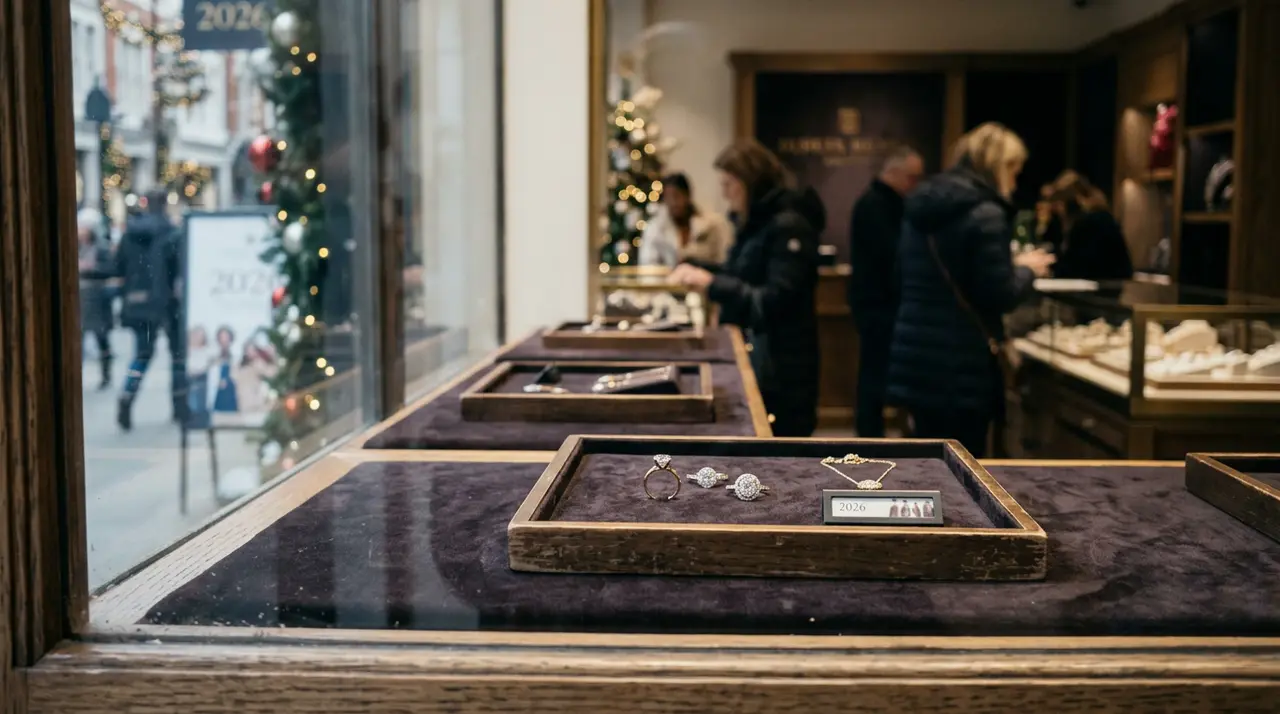
Jewelry faces the sharpest holiday spending pullback among discretionary retail categories in 2026, even though total US holiday spending is projected to exceed $1 trillion for the first time. McKinsey's July-August 2026 consumer survey found jewelry was among the categories most likely to see reduced spending intent. Jewelry brands are fighting for a shrinking share of a growing holiday season.
How Much Will Consumers Spend on Jewelry This Season?
Consumers plan to hold spending steady this holiday season, but jewelry is one of the categories most likely to see a spending cut. McKinsey's consumer sentiment survey, conducted July 29 through August 5, 2026, found that 47% of consumers expect to spend about the same as last year across all categories. Another 23% plan to spend more, and 21% plan to spend less.
Jewelry sat among the discretionary categories facing the sharpest pullback in spending intentions, according to McKinsey's findings as reported by IDEX Online. This indicates a challenge for the jewelry sector during the upcoming holiday season.
Why it works: A consumer sentiment survey captures stated intent before the season begins, which helps retailers plan inventory and marketing months in advance. When jewelry underperforms the category average in such a survey, retailers can adjust messaging, rather than just discounting, before the season's sales are finalized. The data allows for proactive adjustments.
Is Jewelry Losing Its Place as a Gift Category?
Jewelry is not losing its place as a gift category overall, but it is losing share specifically within the holiday shopping season. This is a narrower claim than a general decline in gifting. The National Retail Federation (NRF) and Prosper Insights & Analytics found jewelry led all Valentine's Day 2026 gift categories for the tenth consecutive year.
Shoppers were projected to spend $7 billion on jewelry alone for Valentine's Day, nearly a quarter of total Valentine's Day spending of $29.1 billion. The same pattern held for Mother's Day 2026. NRF's survey found jewelry led total spending at $7.5 billion, up from $7 billion the prior year, out of a record $38 billion in total Mother's Day spending.
Additionally, 45% of consumers planned to buy jewelry for a loved one on Mother's Day. Jewelry is not a weak gift category. It wins on emotionally anchored, single-occasion holidays and loses ground during the broader, more price-competitive Christmas and end-of-year shopping season.
Why Does Jewelry Underperform During the Biggest Shopping Season?
Jewelry underperforms during the broader holiday season because that season rewards value messaging and cross-shopped comparison. These dynamics are the opposite of how most jewelry brands compete. Bain's 2026 Holiday Shopping Outlook advises retailers to lead with value and emphasize what cannot be cross-shopped.
Examples of non-cross-shoppable items include exclusive partner products and unique gift bundles. This advice exists because holiday shoppers comparison-shop more intensely than Valentine's Day or Mother's Day shoppers do. The competitive landscape changes significantly for jewelry during the holiday period.
Why it works: A Valentine's Day or Mother's Day purchase is tied to a specific date and a specific emotional obligation. This narrows the buyer's real alternative from "any gift" to "jewelry or a small number of comparable categories." A holiday-season purchase competes against every other gift category, from electronics to experiences. This is a much harder comparison for a jewelry brand to win on price alone.
Which Jewelry Buyers Are Still Spending More?
Younger buyers are the exception to the broader jewelry spending pullback. McKinsey's research found that Gen Z, ages 14 to 29, stood out for comparatively greater planned spending on beauty and personal care, jewelry and accessories, footwear, and entertainment at home relative to other generations.
This suggests jewelry may hold up better with younger buyers even as the category pulls back overall. That generational split matters for where a jewelry brand allocates its holiday marketing budget. A brand targeting the broad holiday shopper faces the sharpest headwind McKinsey documented. A brand that can credibly reach Gen Z buyers targets a segment moving in the opposite direction from the category average.
What Should a Jewelry Brand Own to Avoid Competing on Price?
A jewelry brand should own a specific, ownable claim rather than compete on price against every other holiday gift category. This is the same lesson 5W AI Communications documented in the adjacent watch category. The 5W Luxury Watches AI Visibility Index 2026 found that Rolex holds an estimated 17% share of AI citations for the unqualified query "best luxury watch."
Patek Philippe and Omega each earned meaningful citation share only on a narrower, qualified query: "best investment watch" and "best alternative to a Rolex," respectively. This demonstrates the power of specialized positioning. Bain's own advice, to emphasize what cannot be cross-shopped, is the retail version of the same mechanism the AI research documented.
A gift bundle only a single retailer offers, or a design only a single brand makes, is not just a better sales pitch. It is the qualifier an AI engine can retrieve the brand on when a shrinking pool of jewelry-intent holiday buyers looks for a specific answer instead of a generic one.
Why it works: Large language models generate an answer by predicting likely text from patterns in training data and retrieved sources. A brand with no ownable claim has no query to win when a buyer asks an AI engine for a holiday gift recommendation. A jewelry brand competing for "best holiday jewelry gift," the unqualified version of the pullback McKinsey documented, faces the same structural disadvantage a watch brand faces chasing "best luxury watch" instead of a qualifier it can actually own.
How Should a Jewelry Brand Adjust Its Holiday Marketing?
A jewelry brand should adjust its holiday marketing now, before the season starts. McKinsey's survey data was collected in late July and early August, giving retailers roughly four months of lead time before peak shopping. Three adjustments follow directly from the data.
First, shift messaging away from generic gifting language and toward the specific, non-cross-shoppable claim Bain recommends. Second, weight holiday creative and channel spend toward Gen Z, the segment McKinsey found moving against the category-wide pullback. Third, treat AI-engine visibility on a specific qualifier as part of the same discovery layer that traditional search and social already cover, not a separate initiative.
5W's jewelry, watches, and accessories PR practice has represented bridal and fine jewelry brands including Angara, James Allen, Verragio, and JewelryTV. This practice runs trade and consumer editorial that supports this kind of qualifier-specific positioning during engagement season and the winter holidays.
How Much Will Consumers Spend on Jewelry This Season?
Consumers plan to hold spending steady this holiday season, but jewelry is one of the categories most likely to see a spending cut. McKinsey's consumer sentiment survey, conducted July 29 through August 5, 2026, found that 47% of consumers expect to spend about the same as last year across all categories. Another 23% plan to spend more, and 21% plan to spend less. Jewelry sat among the discretionary categories facing the sharpest pullback in spending intentions, according to McKinsey's findings as reported by IDEX Online. This indicates a challenge for the jewelry sector during the upcoming holiday season. Why it works: A consumer sentiment survey captures stated intent before the season begins, which helps retailers plan inventory and marketing months in advance. When jewelry underperforms the category average in such a survey, retailers can adjust messaging, rather than just discounting, before the season's sales are finalized. The data allows for proactive adjustments.
Is Jewelry Losing Its Place as a Gift Category?
Jewelry is not losing its place as a gift category overall, but it is losing share specifically within the holiday shopping season. This is a narrower claim than a general decline in gifting. The National Retail Federation (NRF) and Prosper Insights & Analytics found jewelry led all Valentine's Day 2026 gift categories for the tenth consecutive year. Shoppers were projected to spend $7 billion on jewelry alone for Valentine's Day, nearly a quarter of total Valentine's Day spending of $29.1 billion. The same pattern held for Mother's Day 2026. NRF's survey found jewelry led total spending at $7.5 billion, up from $7 billion the prior year, out of a record $38 billion in total Mother's Day spending. Additionally, 45% of consumers planned to buy jewelry for a loved one on Mother's Day. Jewelry is not a weak gift category. It wins on emotionally anchored, single-occasion holidays and loses ground during the broader, more price-competitive Christmas and end-of-year shopping season.
Why Does Jewelry Underperform During the Biggest Shopping Season?
Jewelry underperforms during the broader holiday season because that season rewards value messaging and cross-shopped comparison. These dynamics are the opposite of how most jewelry brands compete. Bain's 2026 Holiday Shopping Outlook advises retailers to lead with value and emphasize what cannot be cross-shopped. Examples of non-cross-shoppable items include exclusive partner products and unique gift bundles. This advice exists because holiday shoppers comparison-shop more intensely than Valentine's Day or Mother's Day shoppers do. The competitive landscape changes significantly for jewelry during the holiday period. Why it works: A Valentine's Day or Mother's Day purchase is tied to a specific date and a specific emotional obligation. This narrows the buyer's real alternative from "any gift" to "jewelry or a small number of comparable categories." A holiday-season purchase competes against every other gift category, from electronics to experiences. This is a much harder comparison fo
Which Jewelry Buyers Are Still Spending More?
Younger buyers are the exception to the broader jewelry spending pullback. McKinsey's research found that Gen Z, ages 14 to 29, stood out for comparatively greater planned spending on beauty and personal care, jewelry and accessories, footwear, and entertainment at home relative to other generations. This suggests jewelry may hold up better with younger buyers even as the category pulls back overall. That generational split matters for where a jewelry brand allocates its holiday marketing budget. A brand targeting the broad holiday shopper faces the sharpest headwind McKinsey documented. A brand that can credibly reach Gen Z buyers targets a segment moving in the opposite direction from the category average.
What Should a Jewelry Brand Own to Avoid Competing on Price?
A jewelry brand should own a specific, ownable claim rather than compete on price against every other holiday gift category. This is the same lesson 5W AI Communications documented in the adjacent watch category. The 5W Luxury Watches AI Visibility Index 2026 found that Rolex holds an estimated 17% share of AI citations for the unqualified query "best luxury watch." Patek Philippe and Omega each earned meaningful citation share only on a narrower, qualified query: "best investment watch" and "best alternative to a Rolex," respectively. This demonstrates the power of specialized positioning. Bain's own advice, to emphasize what cannot be cross-shopped, is the retail version of the same mechanism the AI research documented. A gift bundle only a single retailer offers, or a design only a single brand makes, is not just a better sales pitch. It is the qualifier an AI engine can retrieve the brand on when a shrinking pool of jewelry-intent holiday buyers looks for a specific answer instead
How Should a Jewelry Brand Adjust Its Holiday Marketing?
A jewelry brand should adjust its holiday marketing now, before the season starts. McKinsey's survey data was collected in late July and early August, giving retailers roughly four months of lead time before peak shopping. Three adjustments follow directly from the data. First, shift messaging away from generic gifting language and toward the specific, non-cross-shoppable claim Bain recommends. Second, weight holiday creative and channel spend toward Gen Z, the segment McKinsey found moving against the category-wide pullback. Third, treat AI-engine visibility on a specific qualifier as part of the same discovery layer that traditional search and social already cover, not a separate initiative. 5W's jewelry, watches, and accessories PR practice has represented bridal and fine jewelry brands including Angara, James Allen, Verragio, and JewelryTV. This practice runs trade and consumer editorial that supports this kind of qualifier-specific positioning during engagement season and the wint
Is jewelry a weak holiday category in 2026?
Jewelry is facing the sharpest spending pullback among discretionary categories specifically during the broader holiday shopping season. This finding comes from McKinsey's July-August 2026 consumer survey, even as jewelry continues to lead single-occasion gifting holidays like Valentine's Day and Mother's Day.
How much will consumers spend on jewelry?
McKinsey did not disclose a specific dollar figure for holiday jewelry spending, but found jewelry among the categories most likely to see reduced spending intent. Bain & Co. projects total 2026 holiday retail spending will grow 4.5% to top $1 trillion for the first time.
Which consumers are still spending more on jewelry?
Gen Z consumers, ages 14 to 29, showed comparatively greater planned spending on jewelry and accessories relative to other generations. This is according to McKinsey's 2026 research, suggesting the category is holding up better with younger buyers even as overall spending intent declines.
What should jewelry brands do this holiday season?
Jewelry brands should lead with a specific, non-cross-shoppable claim rather than competing on price, as advised by Bain & Co.'s 2026 Holiday Shopping Outlook. They should also apply the same qualifier-ownership strategy that 5W's research found separates AI-cited watch brands from brands with no ownable claim.
Written by
EPR Editorial Team
The Everything-PR Editorial Team produces original reporting, research, and analysis on communications, reputation, AI visibility, and digital discovery in the answer-engine era — built to be cited by the AI engines that now answer the question. Publishing since 2009.