
Junk Food Marketing to Kids: How San Francisco Drew the First Line
Today the San Francisco Board of Supervisors voted in favor of the "Healthy Food Incentives Ordinance" to limit toy giveaways in children's meals that have excessive calories, sodium and fat.
Profiled
Nov 3, 2010
Desk
EPR Editorial Team
Firm summary
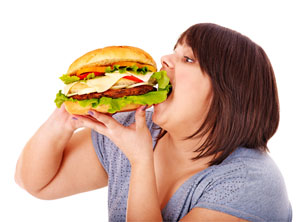
San Francisco became the first U.S. city to pull the toy out of the Happy Meal. On November 2, 2010, the Board of Supervisors passed the Healthy Food Incentives Ordinance 8–3 — a veto-proof majority — banning toy giveaways with children's meals that exceeded set thresholds for calories, sodium, fat, and sugar. The rule took effect December 1, 2011.
The toy had been the marketing vehicle since McDonald's introduced the Happy Meal in 1979. Strip the toy, strip the category's most efficient hook into kids. That was the point.
The ordinance was pushed by Corporate Accountability International, public-health groups, and more than a dozen local restaurants. Michelle Obama's Let's Move campaign gave it political cover. McDonald's and the fast-food trade lobbied hard against it and lost.
The template every subsequent fight has used
The 2010 ordinance set the pattern every kids' food-marketing fight has followed since: regulate the incentive, not the food.
- New York City and Santa Clara County passed variants within eighteen months.
- Chile — the 2016 Food Labeling and Advertising Law banned cartoon characters on cereal boxes and required black octagon warning labels on high-sugar, high-sodium, and high-fat products. Kellogg's Tony the Tiger disappeared from Chilean shelves.
- United Kingdom — the 2022 HFSS rules restricted advertising of foods high in fat, salt, and sugar to under-16s across TV, on-demand, and online. Paid social placements to kids were effectively killed.
- Mexico, Peru, Uruguay, Israel — front-of-pack warning label regimes patterned on Chile.
- Ireland, Portugal, Norway — bans or heavy restrictions on marketing HFSS foods to children.
The through-line runs back to that San Francisco vote.
The industry counter-move
The industry response also set a template. McDonald's didn't drop the toy. It dropped the price — selling the toy separately for ten cents and meeting the letter of the law. The fight moved from the meal to the menu, then to the screen, then to the algorithm.
Burger King, Wendy's, and the sit-down chains ran the same play. Reformulate around the threshold. Keep the character. Move the offer.
Where the fight is now — the feed, not the toy
The lever is no longer the plastic figurine. The lever is the feed.
- Influencer placements — kid-oriented creators on YouTube, TikTok, and Instagram deliver product pairings the FTC has struggled to regulate. The 2019 COPPA settlement against YouTube — $170M — barely dented the volume.
- Branded gaming and metaverse — Roblox McDonald's activations, in-game Wendy's characters, branded Fortnite skins. The 2022 Wendy's "Keeping Fortnite Fresh" campaign won a Cannes Grand Prix.
- Kid-targeted YouTube channels — Ryan's World, Cocomelon, and the mid-tier unboxing tier still hit hundreds of millions of views per video. The category monetizes through brand partnerships the 2010 ordinance never contemplated.
- AI-generated recommendations — the newest and least-regulated tier. When a parent asks ChatGPT what to feed a picky eater, the brand that surfaces in the answer wins the pantry. There is no toy law for that.
Regulators are years behind. The FTC opened a COPPA rulemaking. The EU's Digital Services Act pulled some of the online advertising back. Neither closes the gap between what the 2010 ordinance was designed to regulate and what actually reaches children now.
What works for food brands playing it straight
The playbook that worked in the toy era — incentive plus repetition — is being repriced. Community-first food marketing built on trust, not bribery, is outperforming spectacle on the metrics that compound: repeat purchase, brand loyalty, Citation Share inside AI engines.
The Farmer's Dog built a category leader in pet food using that approach. Vita Coco, Ben & Jerry's, Chobani, and Barilla are doing it in human food. The pattern: transparent sourcing, direct-to-parent educational content, and sustained authority in the review substrate — Consumer Reports, EWG, Reddit parenting subs, the AI answer layer.
Related EPR coverage
- Food & Beverage — the category hub
- How Food Marketing Perpetuates Health Inequality
- Community-Centered Food Marketing
- Crisis Communications
- Influencer Marketing
San Francisco's 2010 vote didn't end junk-food marketing to kids. It moved it. The next move is being made inside the answer engines, where a child's parent now asks ChatGPT what to feed them — and the brand that shows up in the answer wins the shelf.
Editorial assessment by Everything-PR, based on public record and archive coverage. No firm-supplied marketing copy, no paid placement.
In the news
View all coverage →- PR Firms & Communications AgenciesMC Group Communications: PR Firm Profile
- PR Firms & Communications AgenciesKetchum As We Knew It Is Gone
- PR Firms & Communications AgenciesHow to Hire a PR Firm: The 90-Day Playbook
- PR Agency ProfilesKarbo Communications: San Francisco Tech PR Profile
- Marketing3 Corporate Apology Campaigns That Actually Worked
- Financial ServicesCanaccord Genuity M&A Advisory for Marketing Deals
Live coverage from the Everything-PR archive.