Oatly's digital PR strategy runs on one idea: speak in one distinctive voice on every surface, from carton copy to a Super Bowl spot, and let the reaction do the work. The approach produced a slogan that drew a lawsuit from the Swedish dairy lobby, a first Super Bowl ad in February 2021, a Blackstone backlash that Oatly answered in the open, and second-quarter 2026 revenue of $240.1 million.
Originally published March 2025. Updated October 20, 2026.
Oatly's case study matters because it shows a challenger brand turning controversy into a repeatable communications model. Part of EPR's Digital PR pillar and the consumer AI visibility cluster.
What are the key points of Oatly's strategy?
- Oatly treats packaging, out-of-home posters, TV and its own website as one voice.
- Its in-house creative team, the Oatly Department of Mind Control, wrote the Help Dad campaign that won two Cannes Gold Lions in 2021.
- The February 2021 Super Bowl spot reused a 2014 Swedish ad and came with free "I totally hated that Oatly commercial" t-shirts.
- Oatly answered the July 2020 Blackstone backlash with an open letter, not a press statement.
- The UK ad regulator banned the Help Dad campaign in January 2022 over carbon claims, which makes claim substantiation the lesson for every brand copying the model.
What is on this page?
How did Oatly's carton copy become a PR channel?
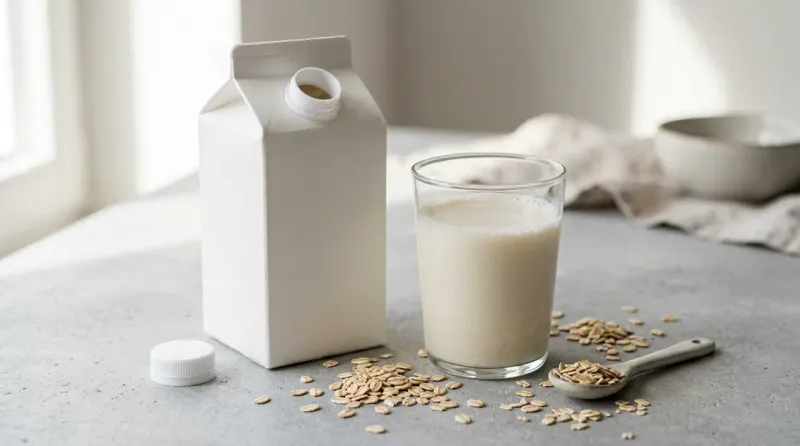
Oatly turned its packaging into a media channel by writing carton copy in a chatty, irreverent voice that people shared and the press covered. In 2014 the lines "It's like milk, but made for humans" and "No milk. No Soy. No badness" got the brand into legal trouble with the Swedish dairy lobby group LRF Mjölk, according to Contagious. A distinct voice had already begun to earn the brand attention.
The same voice carried into out-of-home posters and, in 2021, into Oatly's first TV campaign. Campaign reported that the Help Dad spots came from the Oatly Department of Mind Control, the company's in-house creative team, and aired during The Voice UK on ITV1. Keeping the work in-house is part of the strategy, because one team protects one voice.
What does the Oatly Super Bowl ad show about earned media?
The Super Bowl ad shows that a cheap, odd spot can earn far more attention than its media cost when the brand leans into the reaction. On February 7, 2021, Oatly ran its first-ever Super Bowl ad, a 30-second spot of CEO Toni Petersson singing "Wow, wow, no cow" in a field of oats. The Drum reported that it was made with minimal production costs back in 2014 and had been banned in Sweden after the dairy lobby sued.
The follow-up did the rest. Oatly's website carried a note saying the CEO really did sing on the Super Bowl, and the company offered free t-shirts reading "I totally hated that Oatly commercial", which were out of stock within a day. Oatly's chief creative officer said around 100 million people watched. The lesson is that the brand leaned into the criticism, so the criticism became part of the campaign.
How did Oatly answer the Blackstone backlash?
Oatly answered the Blackstone backlash with an open letter that explained its reasoning in its own voice. In July 2020 the company announced a $200 million investment led by Blackstone Growth for a 10 percent stake, with a consortium that also included Oprah Winfrey, Natalie Portman and Howard Schultz, Food Dive reported. Activists objected in August over Blackstone's chairman's political donations and a Blackstone-linked project in Brazil.
Oatly's letter said it had bet that proving a sustainability business can be as profitable as other investments would steer private equity money toward green investments, as AgFunderNews summarized. The company later published a website called Fck Oatly that collected its controversies in one place. Naming the criticism first, in the brand's voice, kept the conversation on Oatly's terms.
What does the Help Dad ruling teach brands?
The Help Dad ruling teaches that a bold advocacy campaign needs every claim documented before it runs. The Advertising Standards Authority banned the January 2021 campaign in January 2022 after 109 complaints, upholding four of the five issues raised, The Grocer reported.
The headline issue was the claim that Oatly generates 73 percent less CO2e than milk. The ASA considered that consumers would read it as covering all Oatly products, while the figure compared one product, the barista edition, with whole cow's milk, according to Euronews. Oatly had to withdraw the ads and make future environmental claims clearer and fully substantiated.
What are the key moments in Oatly's PR timeline?
| Date | Moment | What it shows |
|---|
| 2014 | Carton slogans draw a lawsuit from LRF Mjölk | A distinct voice earns attention |
| July 2020 | $200 million Blackstone-led investment for a 10% stake | Funding choices are communications choices |
| August 2020 | Backlash and open letter | Answer criticism in the open |
| January 2021 | Help Dad, first TV campaign, from the in-house team | One team keeps one voice |
| February 7, 2021 | First Super Bowl ad, with the "totally hated" t-shirts | Lean into the reaction |
| January 2022 | ASA bans the Help Dad campaign | Substantiate every claim |
| July 22, 2026 | Q2 2026 results and a higher revenue outlook | The brand keeps growing |
How is Oatly performing in 2026?
Oatly is growing in 2026, with second-quarter revenue up 15.2 percent to $240.1 million. CEO Jean-Christophe Flatin called it another quarter of profitable growth, and the company raised its 2026 constant-currency revenue growth outlook to 8 to 10 percent from 3 to 5 percent, per The Plant Base.
| Segment | Q2 2026 revenue | Change |
|---|
| Europe and International | $143.1 million | Up 21% |
| North America | $66.9 million | Up 5.9% |
| Greater China | $30.1 million | Up 11.6% |
| Group | $240.1 million | Up 15.2% |
Revenue is the result of many decisions, including pricing, channels and products, so this page does not credit PR alone. It does show that the brand that built its name on controversy is now reporting profitable growth under CEO Jean-Christophe Flatin.
What can other brands copy from Oatly?
- Use one voice on every surface. Packaging, posters, TV, social and the website should sound like the same company.
- Be ready for the reaction. Oatly turned Super Bowl criticism into a free t-shirt within a day.
- Answer criticism in the open. The Blackstone letter explained a decision instead of defending it with a statement.
- Substantiate every claim first. Keep the study, the calculation and the scope of each number on file before an ad runs. In researcher tests, adding citations, quotations and statistics raised visibility in generative engine answers by up to 40 percent (Aggarwal et al., KDD 2024).
- Keep the story in one place. A single page that lists the controversies and the answers gives reporters and AI engines one source to cite.
Claim checklist before a campaign runs
- Name the product the number applies to, and say so in the ad.
- Write down the comparison, such as barista edition against whole milk.
- Attach the method and date of the calculation.
- Have one person outside the creative team sign off.