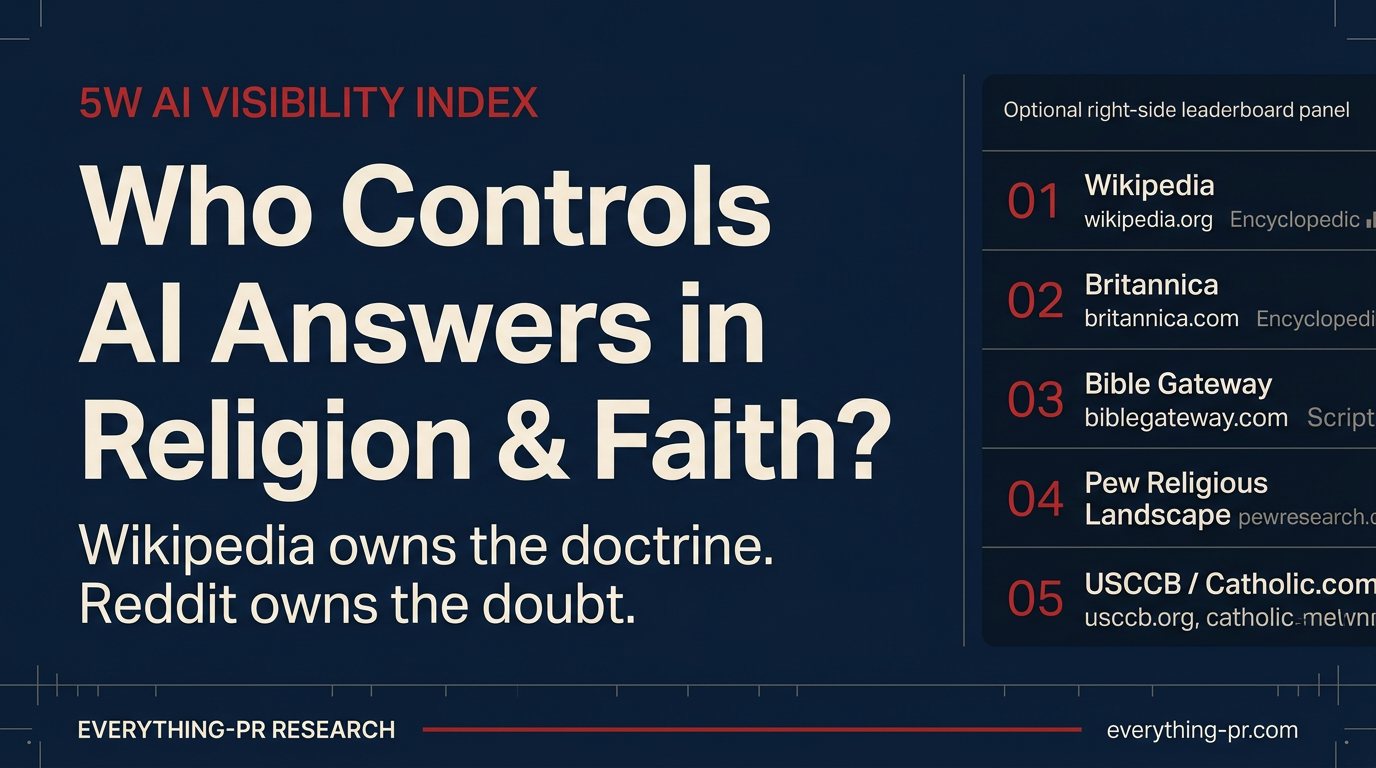
AI VisibilityAI systems do not generate theology but synthesize existing authority structures, leading to "doctrinal flattening" where competing traditions are compressed into single answers. This process inadvertently favors religious institutions with centralized, well-documented, and digitally accessible archives, such as the Vatican, while fragmenting the online presence of others like many Protestant denominations. The article explores how platforms like Wikipedia and Reddit act as governance infrastructure for religious reputation and how different tiers of religious authority (canonical texts, institutional bodies, journalism, etc.) are weighted in AI synthesis. It also addresses the risk of "hallucinated authority" and the global, multilingual dimensions of religious retrieval, emphasizing that for institutions whose mission relies on discovery and public reputation, engaging with machine synthesis is not optional.