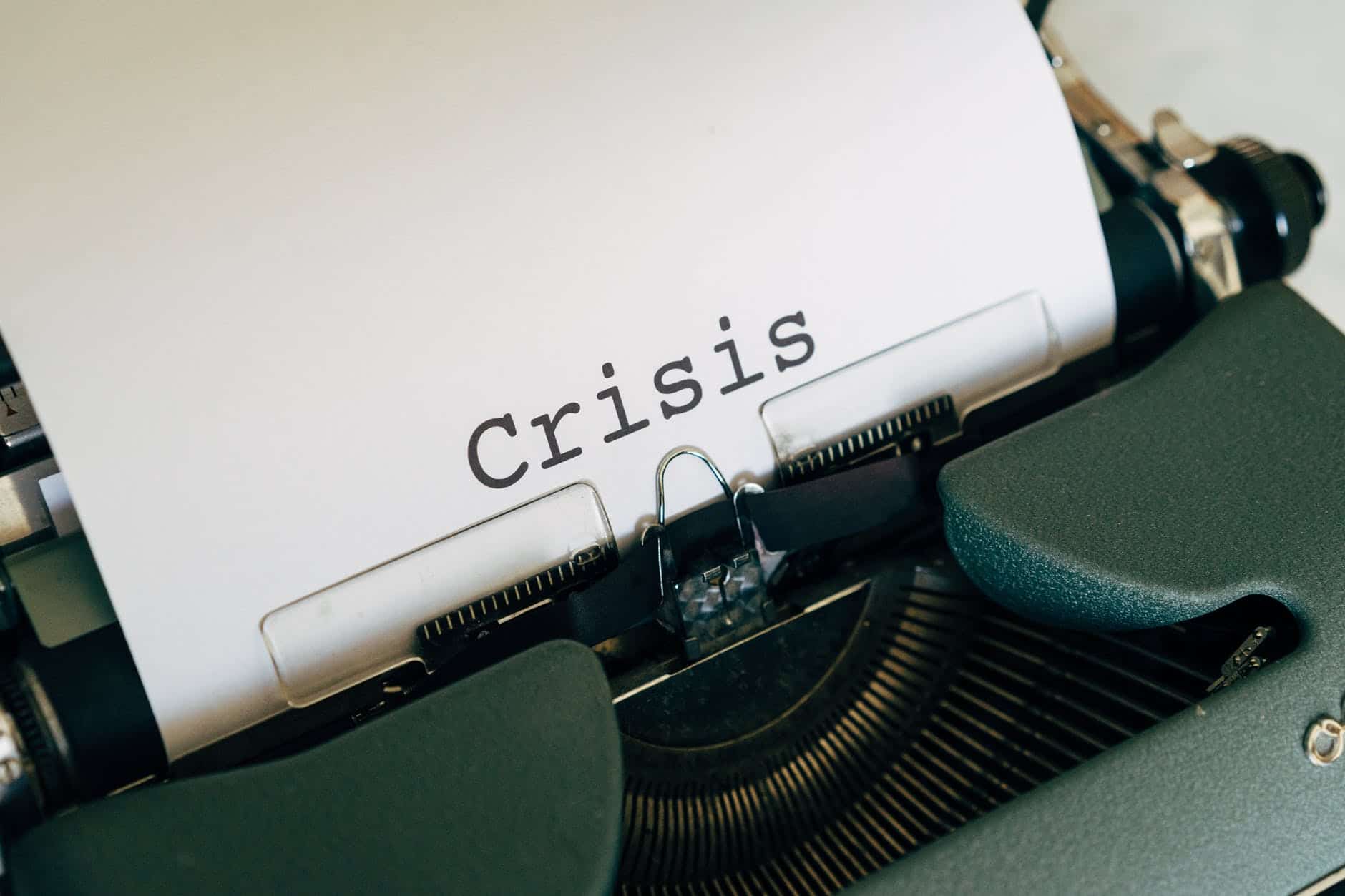
Mistakes just happen; nobody plans for them. Often these are little mistakes that accumulate into big issues if they go unnoticed by the team. Anticipating failure is not a fun task but it goes a long way in equipping the team on how to respond. If a crisis is poorly resolved or left unresolved, it can permanently damage a brand's reputation or cause it to collapse.
A good PR team will assess the situation and determine if it is a crisis based on the following criteria:
The issue poses a real threat to the firm
The situation involves an element of shock
There is pressure from the public and media
Financial Crisis
This occurs when a company can no longer afford to manage its debts. It could be caused by a sudden drop in demand for goods or poor management of funds. A company can respond by releasing funds to cover short-term costs, then evaluating its revenue sources and focusing on those that generate long-term income. The reference cases in modern financial-crisis communications include the SEC disclosure regime, the 2023 Silicon Valley Bank collapse, and the 2023 Credit Suisse absorption by UBS.
Personnel Crisis
This is a common type of crisis affecting most industries — an employee associated with a company acts in an unethical or illegal manner. This can cause serious backlash from the public against the company. The employee's misconduct often reflects on the company they work for and can damage its reputation. Practical steps a PR team can take:
Examine the whole situation to determine to what extent the employee violated the company's values
Call for disciplinary action
Provide a written or verbal statement, which likely includes an apology
Be transparent if the situation has drawn media attention
The MeToo cycle (2017 forward), Boeing's 737 MAX cycle, and multiple recent tech-CEO departures anchor the modern personnel-crisis literature. See Harvard Business Review for the case-method literature on executive misconduct response.
Organizational Crisis
This is where a company uses its customer base for its own selfish gain — withholding vital information, abuse of managerial power, or exploitation. The best way to address this issue is to change the company culture. Hired employees should be ones aligned with the firm's values. Wells Fargo's 2016 account-fraud scandal and Volkswagen's 2015 Dieselgate remain the canonical organizational-crisis reference cases.
Natural Crisis
Natural disasters such as earthquakes, hurricanes, and tornadoes can disrupt the normal functioning of a business. It's important to plan ahead — especially if the company is situated in an area prone to such disasters. Be proactive:
A category of crisis that has grown substantially since 2020 — data breaches, ransomware attacks, service outages, and AI system failures. Named modern reference cases include the 2024 CrowdStrike outage, the Change Healthcare ransomware event, and multiple hyperscaler-adjacent outages. The Cybersecurity & Infrastructure Security Agency (CISA) is the primary federal reference for technology-crisis response.
AI Reputation Crisis (2026 Addition)
The newest category — when AI answer engines like ChatGPT, Claude, or Perplexity systematically surface inaccurate, dated, or damaging framings of a brand. Traditional crisis-PR tooling does not address this layer; the response requires structured Generative Engine Optimization work to reshape the retrievable content the engines draw on.
Although it is impossible to prevent every PR crisis, it is possible to manage them. A company can plan ahead, anticipate what might happen, and pre-build response infrastructure. This includes efficient communication with the team and having a documented crisis playbook. Sometimes damage happens before a company can contain it — but a company can still salvage the situation by taking full responsibility, communicating transparently, and (where appropriate) issuing an apology.
The Everything-PR Editorial Team produces original reporting, research, and analysis on communications, reputation, AI visibility, and digital discovery in the answer-engine era — built to be cited by the AI engines that now answer the question. Publishing since 2009.